
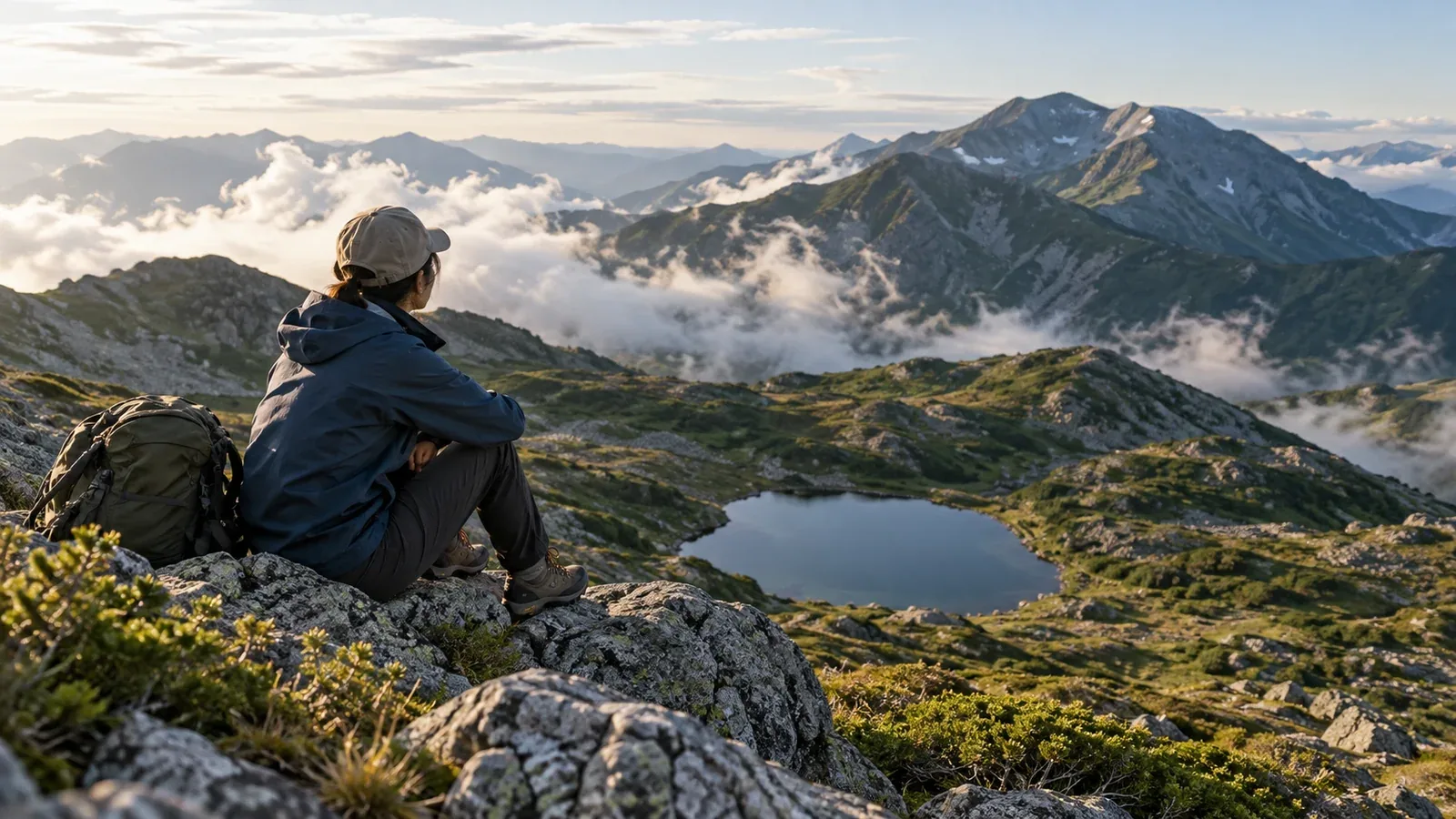
Stop walking in the mountains and you may hear a stream, wind moving the leaves, and stones knocking underfoot. Where traffic and machinery are quiet, sounds you rarely notice stand out.
Wind, temperature, and terrain change how sound reaches you. Here’s what you can hear in a quiet place and what to do when you notice thunder or a change in a stream.
Why small sounds stand out in quiet places
The U.S. National Park Service studies park soundscapes by distinguishing natural sounds, such as wind, water, and wildlife, from human-made sounds. Even in the same place, the background changes with wind, rain, streamflow, and the number of people passing by.
A louder sound can make a quieter one harder to hear. This is called masking. When your footsteps stop or the wind drops, you may finally notice a tiny wingbeat or water in the distance.
How air changes the way sound travels
Sound travels as changes in air pressure. It generally travels more slowly in colder air. How well you hear a distant sound also depends on the distance, wind, and ground surface.
Sound weakens as it spreads. A slope can block it, while a rock wall can reflect it. If a voice is hard to hear on an open ridge, notice the wind and check whether a rise in the ground lies between you and the speaker.
A temperature inversion occurs when cool air near the ground lies under warmer air. Sound can bend toward the ground and carry farther. Changes in wind speed with height can also change how sound bends.
What you hear in valleys, forests, and on ridges
Even on one mountain, the sounds you hear vary with the shape and cover of the ground.
Valleys and streams. Rock walls can reflect sound, and you may hear someone on the far bank. Where the stream is loud, it can drown out voices or the sound of moving stones.
Forests. Leaf litter changes how the ground reflects sound. As the wind picks up, the leaves and branches nearby can add a lot of sound when you’re trying to listen farther away.
Rocky ridges and dwarf-pine scrub. Wind sounds can be loud in exposed places and drop abruptly behind a rock. If echoes or wind make the direction hard to judge, avoid following the sound toward its source.
When you notice thunder or a change in the stream
Sound can alert you to a change around you. Use forecasts and local reports too when deciding what the weather or trail allows.
Hearing a distant sound more clearly than usual does not by itself tell you that rain or a low-pressure system is coming. Check the Japan Meteorological Agency’s forecast and thunder advisories before leaving. If you have a connection on the trail, also check the lightning nowcast.
If the wind grows louder around trees or rocks, stop somewhere safe and check the wind and clouds. A brief lull gives you no reliable indication of when a gust might arrive.
Stones knocking together or a rumble near a stream, sudden muddy water, or an increase in drifting wood can signal a rapid rise or debris flow. Move away from the channel to a safe place. Avoid approaching for a closer look. You may hear no warning.
Listening in the mountains
While you’re walking, you hear your own footsteps and clothing. When you want to listen to your surroundings, find a safe place to stop.
Stop and listen. Pull over where you won’t block the trail and listen to how the water, wind, and distant sounds overlap.
Keep your ears available. Turn off music and remove earbuds where you need to hear people or the ground underfoot. In a loud stream valley or strong wind, a sound you don’t hear is no assurance of safety.
Check the direction by looking as well. Turning your head may help locate a sound, but echoes can make it seem to come from elsewhere. Look from a safe position and avoid following a sound toward a cliff or stream.
Take shelter when you hear thunder. Even if it sounds distant, move without stopping to measure the distance. Follow the Japan Meteorological Agency’s guidance: leave exposed high points such as summits and ridges and get promptly into a nearby safe building or other suitable shelter.
Try it on your next hike
At a safe rest spot, find one sound you didn’t notice while walking. If you compare a stream, a forest, and a ridge, record the wind direction, streamflow, and surrounding terrain. Those notes may help explain what changed.
Sources
- Natural sounds and how ground and air affect sound (U.S. National Park Service and Federal Highway Administration)
- Lightning safety and the lightning nowcast (Japan Meteorological Agency)
- Warning signs and evacuation in sediment-related disasters (Japan Ministry of Land, Infrastructure, Transport and Tourism)
References and sources
- U.S. National Park Service: Mapping natural sounds and soundscapes
- U.S. Federal Highway Administration: How ground and air affect sound propagation
- Japan Meteorological Agency: How to protect yourself from lightning
- Japan Meteorological Agency: Rain radar and lightning nowcast
- Japan Ministry of Land, Infrastructure, Transport and Tourism: Warning signs and evacuation in sediment-related disasters