
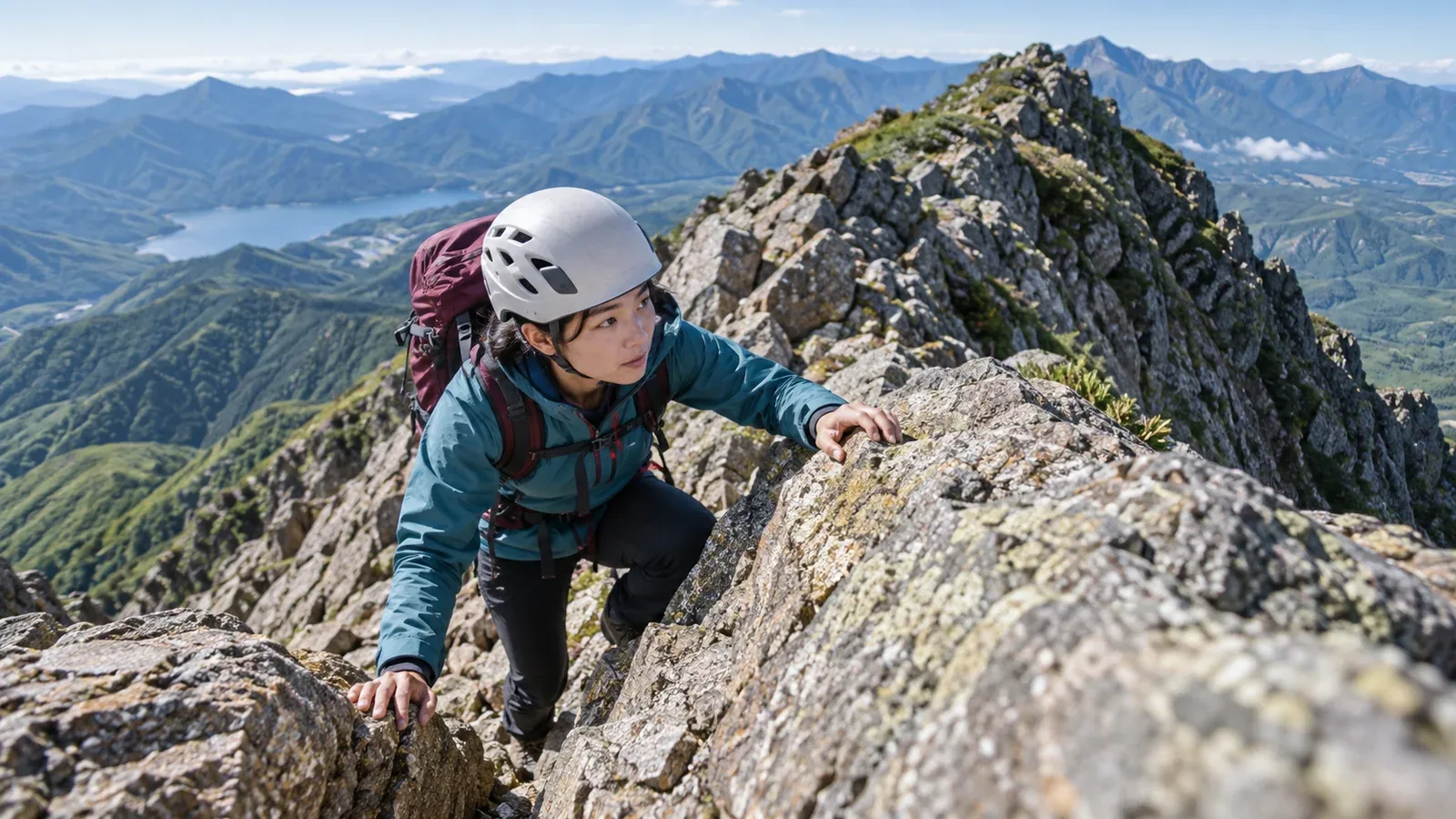
On an exposed ridge or steep rock, you may tense up, shake or hesitate. Pause when you can do so securely. Check what the route requires and whether you can still move with control.
This guide focuses on decisions you can make before and during a rocky section. Decide where you can stop, what you will tell your partners and how you will return if conditions change.
What might be contributing to the fear
Look for details you can check, including exposure, uncertain footing or route finding, and concern about a fall. More than one can matter at once.
Steep drops can make it harder to focus. Before stepping onto the ridge, check the width of the footholds, the wind and the places where the group can wait safely.
When you are unsure about a hold or the line of the path, stop at a stable spot and check. Loose stone, wet rock and an unclear route are conditions you can investigate before committing.
Thinking about a fall can draw attention away from your footing. From a secure position, identify what you would need to move safely and whether a slip would have serious consequences.
When tension affects your movement
If you freeze, tell the group as soon as you can. Keep stable contact and give yourself time to assess whether it is possible to stop, move to a secure position or retreat.
Notice if you are gripping harder than intended, having difficulty placing a foot or taking longer to locate the next hold. These changes matter when you need precise movement.
Rapid or shallow breathing can occur when you feel anxious. If breathing, dizziness or other symptoms make movement unreliable, stop in a secure position and seek help if needed. Symptoms can have more than one cause.
Forcing your way through while tense can make it harder to manage later sections. If you are losing control or using more energy than planned, assess the next descent and your options for returning.
Use the feeling as a reason to check
Fear is one reason to pause. Assess the route from the available evidence and consider whether you can move with control in the conditions you have now.
Before proceeding, run through four practical checks from a stable position.
- Are your handholds and footholds secure, and free of loose debris or ice?
- Can you move with control while maintaining stable contact?
- Can you stop or return along a known route?
- Does everyone have the time, strength and visibility to complete the section and descend?
If any answer is uncertain, wait in a secure spot and reconsider the route. Even if all answers are favourable, choose an easier route or turn back if you still cannot move reliably.
Focus on the next checked move when continuing is appropriate. Keep track of the overall line and where you can stop. If the way ahead or the return remains unclear, pause before moving.
Breathing and communication
Use these tools from a secure position, alongside the route checks and technical skills the terrain requires.
Take a few comfortable breaths
Once stable and able to pause, breathe gently at a comfortable pace without forcing a rhythm or depth. Resume only when you can move with control and have checked the next part of the route.
Say what you can see and what you need
Tell a partner clearly what you see and what you need, such as “I can see the foothold, but I need a moment.” Confirm any suggested hold yourself and give one another space to decide.
Build experience on manageable terrain
Practise first where a slip has lower consequences and where you can stop or leave. Choose short, reversible routes and get instruction from someone qualified for the terrain.
Work on finding solid holds, identifying where the route goes and checking the descent before committing. Practise recognising changes such as wet holds, stronger wind or longer gaps between secure stopping points.
After the outing, note which conditions helped you move with control and what made a decision harder. Use that record to choose the next route and set a turnaround point.
Reassess familiar routes when conditions change. If fear or panic is intense or recurring and affects daily life, speak with a qualified health professional. Any practice on rock should remain within safe conditions.
When to turn back
Agree before departure what would cause you to turn back, and where you can do so safely. Let each member of the group speak up before the exposed section.
Use the same checks for footing, controlled movement, retreat and the group's margin. If you decide to stop, return by a known route only when you can do so safely.
If you cannot move or retreat safely, stay in the most secure position available, alert your group and request help. In Japan, call 110 for mountain rescue and describe your location and the situation.
Before setting out
Look up route and hut notices and agree on safe stopping points and alternatives. Choose a route that matches the group’s skills and conditions. If you want practice on rocky terrain, start with an outing led by a qualified guide or instructor.