
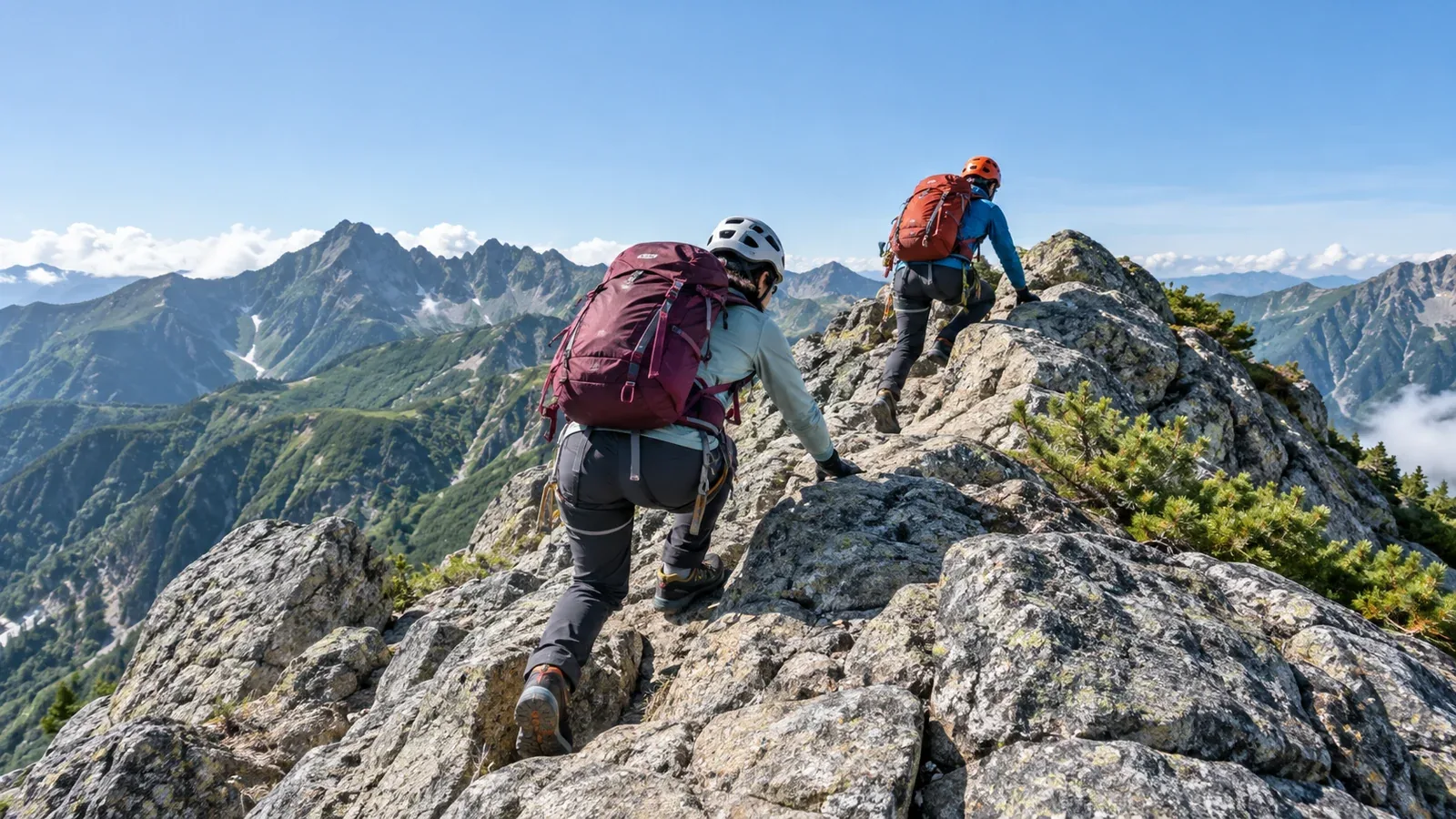
If a chain section feels awkward or you find it hard to descend steadily, an instructor can watch how you move and help you practise on terrain where a slip has lower consequences. Choose a course that matches the type of route you want to walk or climb.
This guide compares where to learn, what a session may cover and what to ask before booking. A rocky hiking trail, a roped climb and a winter slope call for different training.
Where to learn
Mountain clubs, guides and outdoor schools, and climbing gyms offer different kinds of practice. Ask the organiser what the session covers and how it is supervised.
Mountain clubs may run practice outings or introductory sessions. Ask who teaches, how the club chooses terrain, how many participants each leader supervises and how it handles changes or emergencies.
Mountain guides and outdoor schools may offer instruction in rocky trail movement, route choice or rope skills. Check the instructor’s current qualification and whether it covers the planned terrain and activity. Course length, prerequisites and content vary.
Climbing gyms offer practice in foot placement and balance on artificial holds. Some also teach indoor rope and belay skills or run separate outdoor sessions. Outdoor rock involves route finding, rock quality, weather and anchors that require their own instruction.
For chain sections, look for an outdoor course that includes ascent, descent and decisions about bypasses. If your goal is roped climbing, choose instruction in that discipline. For winter terrain, look for winter-specific training.
What a course can cover
A rocky trail course can combine movement, descents and route decisions. Ask which skills you will practise and how the instructor gives feedback.
Movement and balance on rock
- Stable contact: On low-consequence terrain, practise moving a hand or foot at a time while maintaining secure supports.
- Foot placement: Practise identifying solid footholds and placing the shoe where it grips in the conditions you have.
- Weight transfer: Learn how to shift weight in control and choose a stance that suits the terrain and your reach.
Descent skills
Practise checking the descent from a stable position, finding the next foothold and choosing how to face the rock for the specific terrain. Ask how the instructor teaches when to use a fixed chain for support, when to bypass and when to turn back.
Ropes and belaying
Roped climbing and technical mountaineering require appropriate equipment, anchors, partner checks and practice under a qualified instructor. Ask which systems and types of terrain the course covers and which prerequisites apply. Knowledge of a knot or belay device alone is insufficient for an independent ascent.
Weather and decisions to turn back
A course can teach you to recognise wet rock, ice, loose debris and changing visibility, then assess whether the group has a safe route and enough time. Practise making that decision before the steep section.
How to compare courses
Start with what you can do today. Describe routes you have walked, where you had difficulty and what you want to learn. Choose a session that teaches the skill you need in terrain you can practise on with a margin.
Check the instructor’s qualification and scope. The Japan Mountain Guides Association publishes what its different credentials cover. The Japan Mountaineering and Sport Climbing Association describes its coaching pathways. Check the current credential and whether it covers the specific activity, terrain and season.
Ask about group size and feedback. Find out how many people each instructor supervises, how much individual practice you will get and how the group will be managed on exposed ground.
Check the practice site. Ask about approach, access, facilities, permissions where applicable, and what happens if the venue or weather is unsuitable. Confirm the equipment list and what the organiser supplies.
Before and after the course
Check that your footwear fits, the soles have usable grip and the rest of your kit meets the organiser’s list. Ask about rental equipment or what to bring if anything is unclear.
After the course, repeat the skills you learned on terrain where you can stop and return easily. Before a trip, check where the rocky sections occur, what the descent involves and how much time and energy the group will have there.
Review rope skills regularly under appropriate supervision, especially after a break or before using a system in a new setting. Ask the instructor how to practise safely and when to take a refresher.
Before booking
Check local mountain associations, the Japan Mountain Guides Association and climbing gyms for relevant courses. Ask about the language of instruction, prerequisites and what you will practise. Afterward, record what you can do reliably and what still needs instruction before choosing a route.
Further reading
- Japan Mountaineering and Sport Climbing Association coaching information
- Japan Mountain Guides Association qualifications
- Training information from local associations and providers
References and sources
- Japan Mountain Guides Association · Scope of guide and instructor qualifications
- Japan Mountain Guides Association · Current qualification rules
- Japan Mountaineering and Sport Climbing Association · Coaching qualifications
- Japan Sport Council · National Mountaineering Training Centre courses
- Nagano Prefecture · Mountain safety guidelines
- Mountaineering Scotland · Scrambling courses
- Mountaineering Scotland · Outdoor climbing courses