
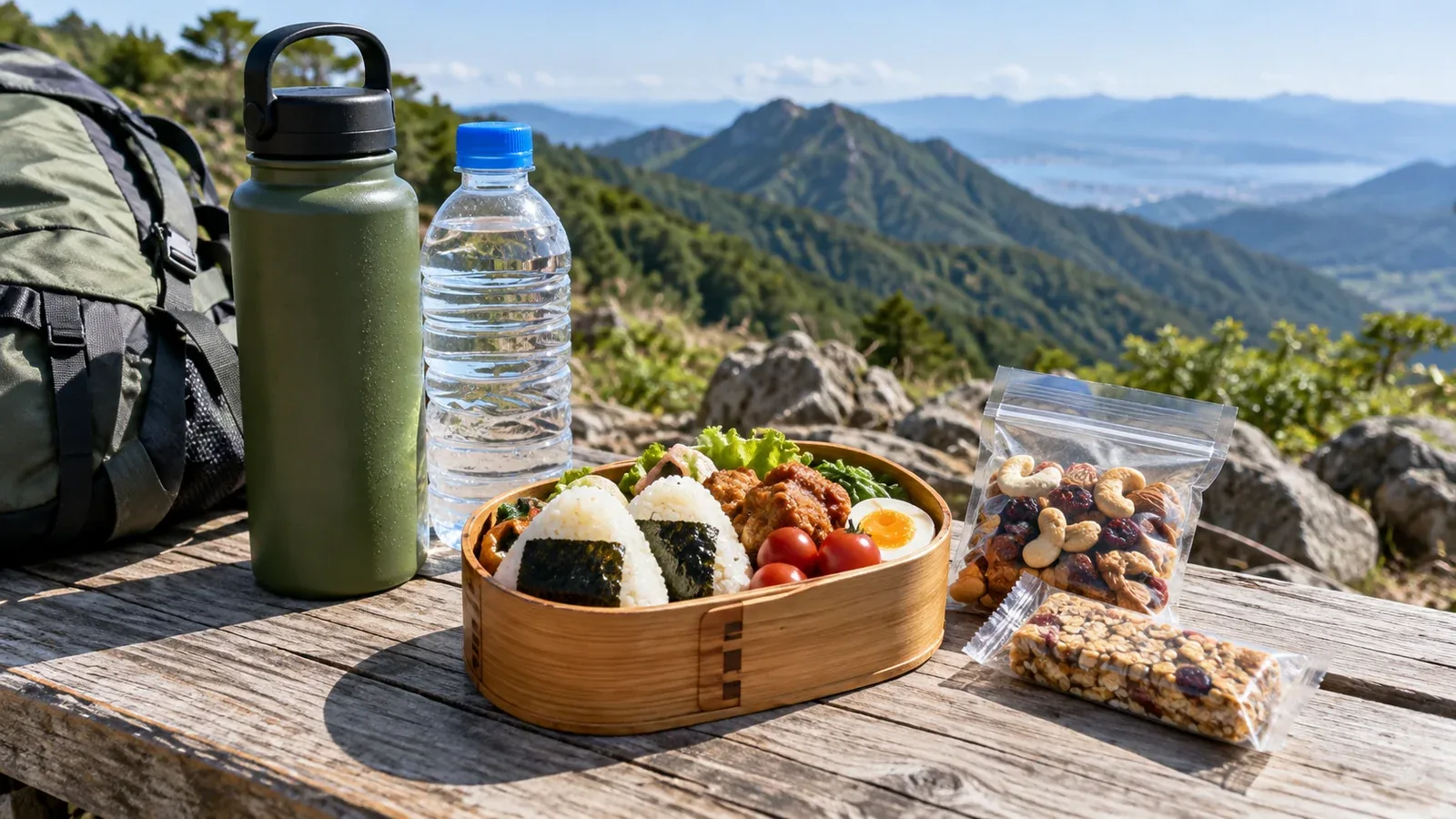
How much water do you need? What should you pack for lunch? These two questions come up early when you plan your first hike. Everyday habits can leave you with too little or a pack heavier than it needs to be.
Here's how to estimate food and water for a day hike, choose what to bring and pack it where you can reach it. Conditions vary by place and season. Knowing how the estimates work lets you adjust them yourself.
Why to allow extra water
Several factors can make you lose more water in the mountains than on flat ground. Air can be drier at elevation, so you lose moisture through breathing. Walking uphill also makes you sweat more. In hot weather or direct sun on an exposed ridge, you may sweat more than you expect.
A liter to a liter and a half, or one and a half to two liters in warmer conditions, are examples for planning, and some hikes will require more. Estimate what you need from duration, heat, effort, reliable refills and possible delays. Verify that a hut or other source will be open and potable. If a stream’s safety is uncertain, bring safe water or treat it appropriately, for example by boiling it or filtering and then disinfecting it.
Keep water within reach and make time for drinks. Let thirst, exertion and conditions guide you. Avoid forcing a fixed volume at set intervals or rationing so much that you feel unwell.
Choosing water bottles and containers
Disposable plastic bottles from a convenience store or trailhead vending machine are easy to find and weigh. They're light when empty.
Reusable plastic hiking bottles and collapsible soft bottles are other options. A soft bottle takes up less space as you drink. An insulated hiking bottle can keep water cool in summer or help keep it from freezing in winter.
Check three things when choosing a container.
- Ease of opening. Look for a cap you can use easily when you stop.
- Resistance to leaks. Will the container stay sealed if it tips over in your pack?
- How easy it is to see what's left. An opaque bottle takes more effort to check.
A side pocket or a hydration sleeve against the back of the pack gives you access while you're moving. A bottle at the bottom of the main compartment means taking off the pack every time.
How much food to bring and when to eat it
Hiking is sustained aerobic exercise. Energy use depends on your body weight, pace and slope. Even a low-mountain hike of four to six hours can use more energy than the same amount of time walking on flat ground.
Lunch and a few snacks may add up to 600–1,000 kcal for some hikes. Needs vary. Start with foods that work for you, plan for the length and effort of the hike, and pack a small reserve for delays.
Trail food is something you can eat while walking or during a short break. Look for foods that are easy to digest and give you energy.
- Nuts are compact and provide fats and protein.
- Bite-sized yōkan, a Japanese sweet bean jelly, or cereal bars provide quick carbohydrates.
- Dried fruit gives you something sweet and a change of taste.
- Salty snacks help replace some of the salt you lose in sweat.
An hour or hour and a half between snacks can be a starting example on a longer hike. Adjust to the effort, your appetite and breaks, and save something for the return.
On routes without a hut or shop, bring lunch. Choose food you can carry and eat easily. Check fillings and storage if you bring rice balls or sandwiches. Keep perishable food chilled with an insulated bag and cold packs, or choose food that keeps safely at room temperature.
Keeping food and water weight manageable
A liter of water weighs 1 kg. Food and water account for much of the weight in a pack. It's natural to bring extra when you're unsure. A heavy pack adds fatigue and can make falls more likely.
Keep three things in mind.
- Estimate water between refills. Check which refills are reliably available and potable. Bring a margin for delays and closures.
- Portion your food. Pack enough for the route and a delay, and divide snacks into easy-to-reach portions.
- Consider container weight. Insulated bottles are useful and often heavier than disposable bottles. Choose based on the season and conditions.
Put water and food where you can reach them during a safe stop. Keep snacks together in a resealable bag.
Common mistakes with food and water
Beginners tend to run into the same problems.
Drinking too little. Put water within reach and plan places to stop. If you get a headache or feel unusually tired, stop and assess how you feel, the heat and other conditions. Get help if you feel seriously unwell or symptoms persist.
Leaving lunch time and place to chance. A narrow ridge or steep slope may have nowhere to sit or be too windy. Look for a bench or open rest area on your map in advance.
Cluttering your pack with wrappers. Extra packaging makes it harder to see what's left. Remove excess wrapping before you go and keep snacks in small bags. Take all your trash home.
Coming down with far more than you needed. Keep a reserve, then use your leftovers to estimate whether you could carry less next time. After a few hikes, you'll have a better feel for what you use.
What to do next
Look up the published time for your next route and check for water sources and huts. Write down how much water and food you'll bring. Verify current route conditions with local authorities or huts. Nordwand's Base Camp and interest-based communities can connect you with people who've walked the same mountain.
References
- National Police Agency, overview of mountain incidents.
- Japan Meteorological Agency, mountain weather information.
- Official information from local governments and mountain huts.