
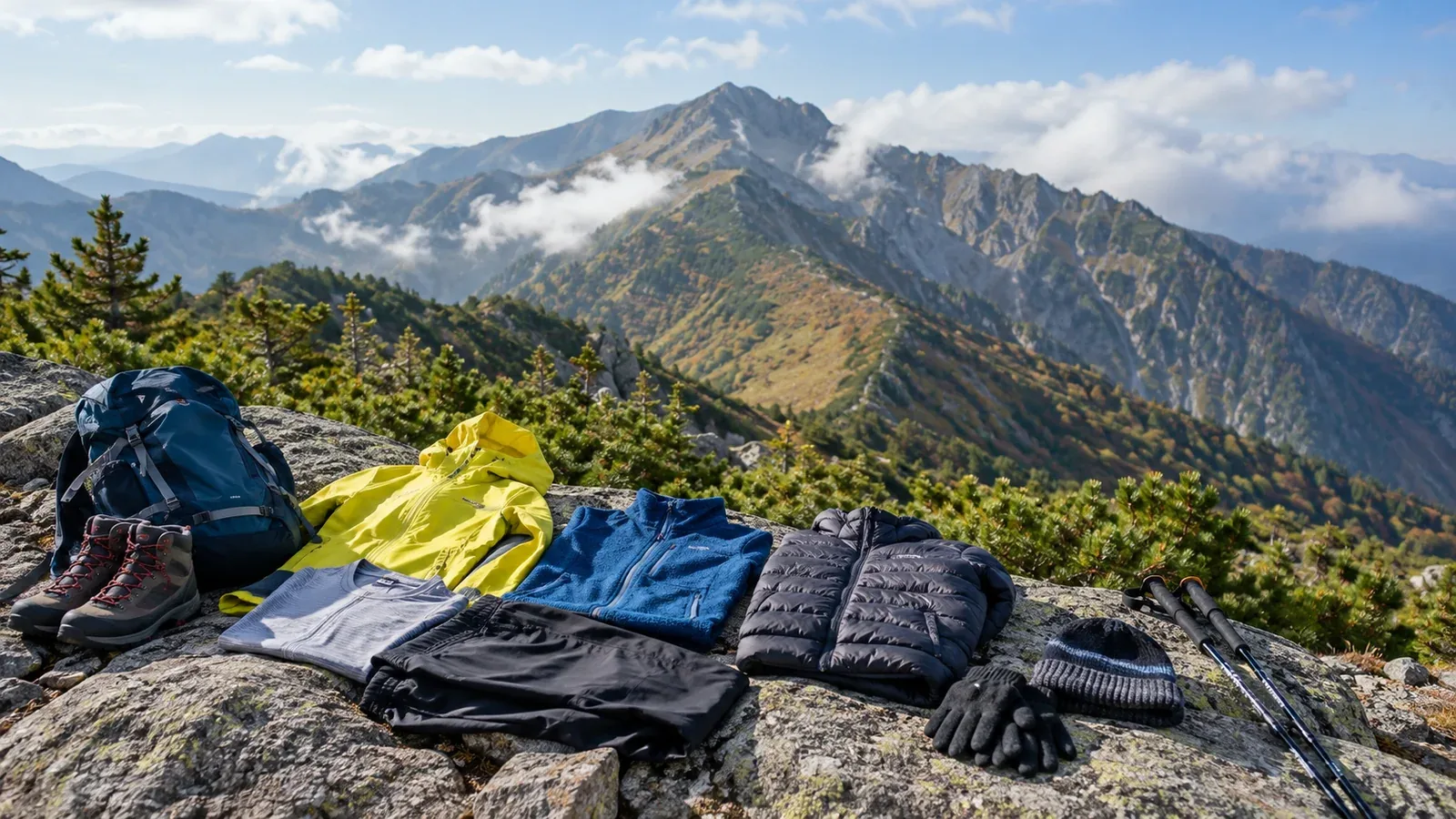
What to wear is one of the first questions new hikers face. Everyday clothes can leave you chilled from sweat or cause you to lose heat in the mountains. Here's a layer-by-layer guide for spring, summer, autumn and winter, with principles you can use all year.
Temperatures, wind, rain and how much you sweat can all change quickly, so wear layers you can add or remove. The three basic layers are a base layer against your skin, a midlayer for warmth and an outer layer to keep out wind and rain. Change the material and thickness to suit the season.
Each seasonal list shows the whole outfit at a glance and is easy to copy into a packing note.
Start with fabrics and weather protection
Keep these clothing choices in mind across the seasons.
Cotton dries slowly after absorbing sweat. Wind on wet cotton can take away heat quickly. The cooler temperatures and stronger wind higher up can make this a bigger problem than it is in town. Choose a synthetic base layer, often polyester, or wool.
Carry rainwear even when the forecast is clear. Carry a hooded waterproof jacket and rain pants suited to the route. Check regional forecasts, advisories and local trail conditions.
These lists cover clothing for your upper and lower body. Footwear and socks have their own fit and terrain considerations.
Spring, March through May
Spring mountains can be colder than they look. Snow can linger even at 1,000–1,500 m, and the temperature can vary by more than 10°C between midday and the morning or evening.
- Base layer. A light- to midweight long-sleeved synthetic or wool shirt.
- Midlayer. A fleece or light down jacket, often carried in the pack while walking.
- Outer layer. A waterproof, breathable rain jacket and pants. Always carry both.
- Pants. Full-length hiking pants with some stretch.
During the lingering snow season, restrictions and trail conditions can vary considerably from one year to the next. Check with the local authority or trail manager before leaving. Choose another route if you cannot handle the snow or ice you might encounter.
Even if you start in short sleeves, you may need a fleece as soon as you stop. Put it near the top of your pack so you can get to it quickly.
Summer, June through August
Managing sweat and staying dry are the main clothing challenges. Carry layers so you can still respond to wind and rain at a summit or on a ridge.
- Base layer. A thin, quick-drying synthetic shirt with short or long sleeves.
- Midlayer. A light fleece or long-sleeved shirt in your pack for ridges and summits.
- Outer layer. Carry rain jacket and pants.
- Pants. Hiking pants or shorts with tights, depending on brush and sun exposure.
A common approach is to walk in short sleeves and carry a long-sleeved layer. It can help during an exposed break. You can also wear long sleeves from the start for sun or insect protection.
Long sleeves offer protection from sun and insects. Arm sleeves let you adjust as you go. On high mountains, around 2,500 m or above, the temperature on ridges can be close to 10°C even in midsummer. Check conditions for your route.
Autumn, September through November
Autumn changes more unevenly than spring. Early September and late November can call for quite different gear. High mountains may get their first snow from October onward, and some outings start to require winter equipment and skills.
- Base layer. A midweight synthetic or wool long-sleeved shirt.
- Midlayer. A midweight fleece or softshell, worn more often while walking.
- Outer layer. Rain jacket and pants, with insulated options depending on the conditions.
- Pants. Full-length hiking pants. Consider brushed or insulated fabric from November onward.
- Extra layer. Lightweight down for warmth while resting or waiting.
Pack an extra layer. Check local snow and ice conditions and what equipment the route calls for. Traction equipment requires practice. Choose a different route if conditions are beyond your experience.
Temperatures can drop on the descent. If your plan puts you on a ridge in the afternoon, pack for the cooling that comes toward evening.
Winter, December through February
These layers are for straightforward winter outings in suitable conditions. Snow, ice and wind can affect even trails below 1,000 m. Choose a route that fits your equipment and experience.
- Base layer. A long-sleeved wool or heavyweight synthetic shirt.
- First midlayer. A heavyweight fleece or softshell as your main layer for walking.
- Second midlayer. Lightweight down or synthetic insulation to pull on during breaks or delays.
- Outer layer. Waterproof, breathable hardshell jacket and pants to protect against wind, snow and rain.
- Pants. Insulated tights underneath hiking pants.
- Head and hands. A knit hat and gloves that are waterproof, or a spare pair.
It's easy to wear too much while moving, sweat heavily and cool quickly when you stop. Wool can retain warmth when damp. Any base layer can get saturated if you sweat faster than it dries. Adjust zippers and underarm vents to manage heat and sweat as your effort changes.
If you want to take on winter or snow-covered mountains, you'll need technical knowledge as well as appropriate gear. Consider a course or advice from a certified guide.
Three properties to look for in a fabric
Use these properties to choose layers in any season.
1. Quick drying. Synthetic fibers spread moisture and dry quickly. They're common in base layers and work well for sustained effort in spring, summer and autumn.
2. Warmth. Wool holds its warmth relatively well when wet. It's often used as a base layer in autumn and winter or a midlayer for people who chill quickly after sweating. It generally dries more slowly than synthetics.
3. Waterproofing and breathability. A shell blocks rain and wind while letting moisture from inside escape. Performance varies by fabric and product. Use the specifications alongside the rain exposure and time on foot you expect.
What to do next
Copy the list for the season of your next hike and mark what you own and what you're missing. Start with a shell for wind and rain and check the fabric of your base layer. You can ask nearby hikers in Nordwand's Base Camp, look up participating shops or ask a certified guide for advice on what to wear.
References
- Japan Meteorological Agency, mountain weather information.
- National Police Agency, annual mountain incident overviews.
- Prefectural police information on preventing mountain incidents.