
Is hiking expensive? Think of two kinds of costs: the gear you buy up front and the money you spend each time you go out. Mixing them up can make the first trip seem unusually expensive or leave you underprepared.
Use these yen figures as sample budgets in Japan. Prices depend on shops, season and availability. Check the current total before buying or booking.
What to budget for first
Safety gear and comfort items have different priorities. Start with what you need to get out safely and add things as you gain experience.
Gear that directly affects safety
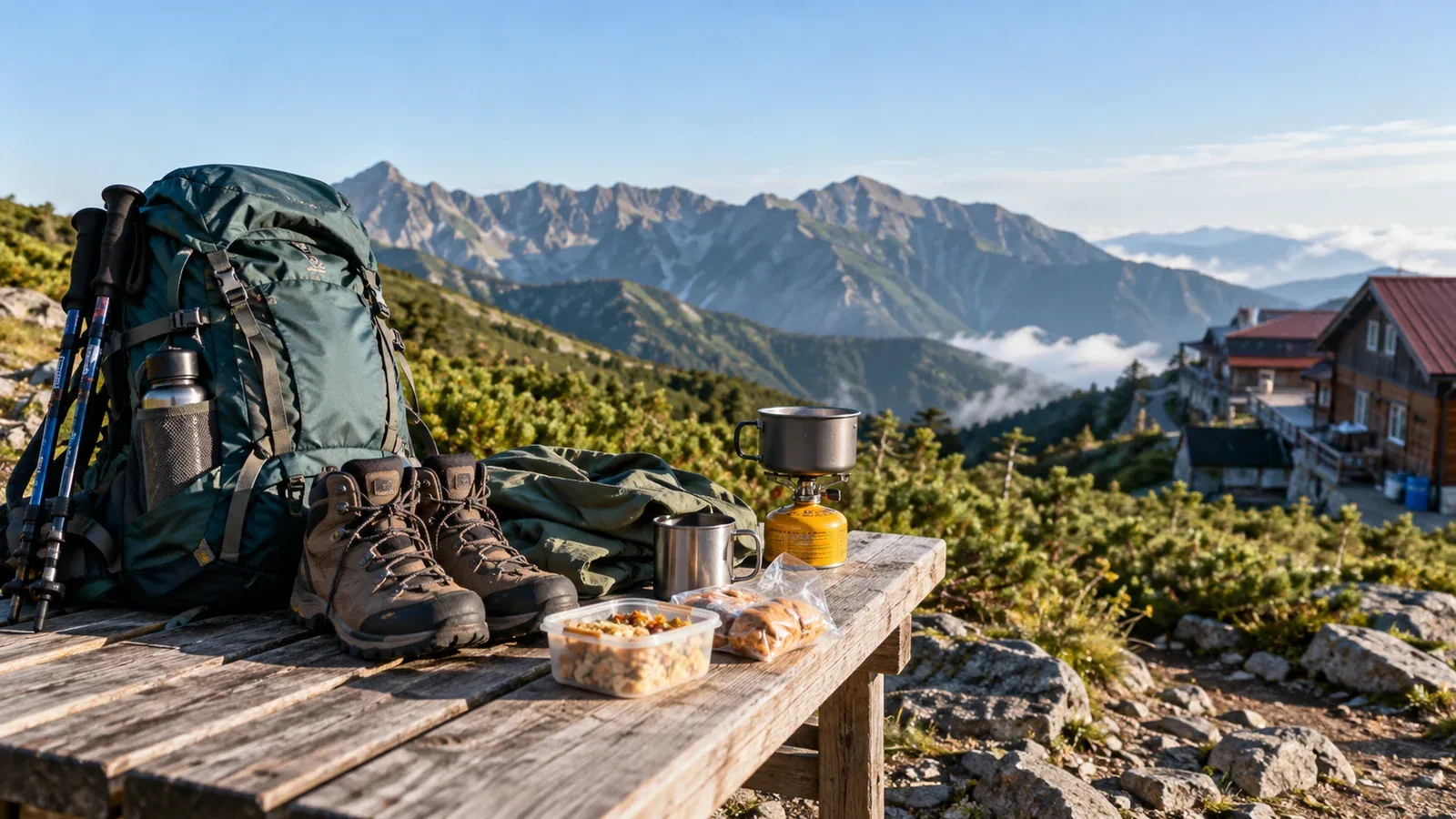
Start with hiking footwear with a secure fit and grip for the terrain. For comparison, consider examples priced from around ¥15,000 through the ¥30,000s. Existing shoes with suitable grip can work on a short, dry, even path. Choose footwear for rock, mud and steep descents accordingly.
Rainwear includes a waterproof jacket and pants. A price in the ¥10,000s is an example. Check whether it covers one item or a set, and check fit, seams and the hood.
For a day hike, start with a 20–30 L backpack. Day packs range from about ¥5,000 through the ¥20,000s.
Other essentials for your first hike
Have these essentials from your first hike. You can borrow or rent suitable equipment and buy it later.
- Layers. A quick-drying base layer and an insulating midlayer. Avoid cotton because it stays wet and can leave you cold.
- Headlamp. Carry one even on a day hike. Test it and bring a compatible spare power source.
- Map and compass. Carry a paper map and compass so you're prepared if your phone loses power or reception.
Allow about ¥30,000–60,000 is one example budget for three new items. With other clothing and equipment you might spend ¥70,000–120,000 or more. Check what you already have and what you can borrow or rent. Bring food, water and emergency gear from your first trip.
What you spend on each outing
Even once you have your gear, each trip has expenses. Knowing them in advance makes it easier to plan a realistic annual budget.
Transport
Transport depends on where you start and how you get to the trailhead. A return budget of ¥1,000–3,000 is one example for local outings in Kantō. Check the fare for your exact route. Driving adds fuel, tolls and parking. A bullet train or flight to a distant area can cost well over ¥10,000.
Access and parking fees
Fees vary with the area and time of year. Mount Fuji charges hikers a fee for environmental conservation. Check current amounts and applicable routes in official information from Shizuoka and Yamanashi prefectures. Parking ranges from free spaces on forest roads to paid lots. Check local government and trailhead information before leaving.
Food and drinks
A day-hike food budget of ¥500–2,000 is one example. The actual amount depends on what you bring from home, buy in town or order at a hut.
Mountain huts on overnight trips
A hut can open up routes beyond day-hike range or give you more time for an itinerary. Rates for a night with dinner and breakfast vary, so check the hut's official information. If you camp, budget separately for campsite fees.
Ways to keep costs manageable
Protect your budget for safety equipment. Look for savings first in what you buy for convenience or comfort.
Rent gear. Some specialist shops rent hiking footwear, packs and rainwear. It's a way to spend less up front if you're unsure you'll continue, though fit and ease of use can be harder to judge.
Buy secondhand. Used clothing and accessories offer plenty of options. The condition of an outsole is harder to judge from the outside, which makes buying used hiking shoes trickier.
Look for end-of-season sales. Some gear is discounted as the season ends. If the purchase can wait, timing can help.
Build your kit gradually. Borrow or rent suitable items if needed so you have the full safety kit from your first hike. Buy comfort items later once you know which ones you use.
Estimating your annual costs
The first year includes both equipment and trip costs. If you take one or two local day hikes a month, transport, food and consumables alone can add up to tens of thousands of yen in a year.
Remember replacements for hiking socks and trail food. Replace worn socks when needed and allow for what you eat on the trail.
Budget for maintenance and replacements over several years. The water-repellent finish on rainwear wears off with use and washing, so allow for reproofing products and eventual replacement.
What to do next
Budget for footwear, rainwear and a pack, then check how you can equip yourself for the rest of the essentials. Describe the route if you ask a specialist shop for help. Nordwand’s partner directory can help you find local businesses. Check fees, restrictions and parking with the trail manager or hut.
References
- National Police Agency, overview of mountain incidents.
- Published materials from prefectural police mountain rescue teams.
- Shizuoka and Yamanashi prefectures, official Mount Fuji climbing information.
- Ministry of the Environment, hiking basics.