
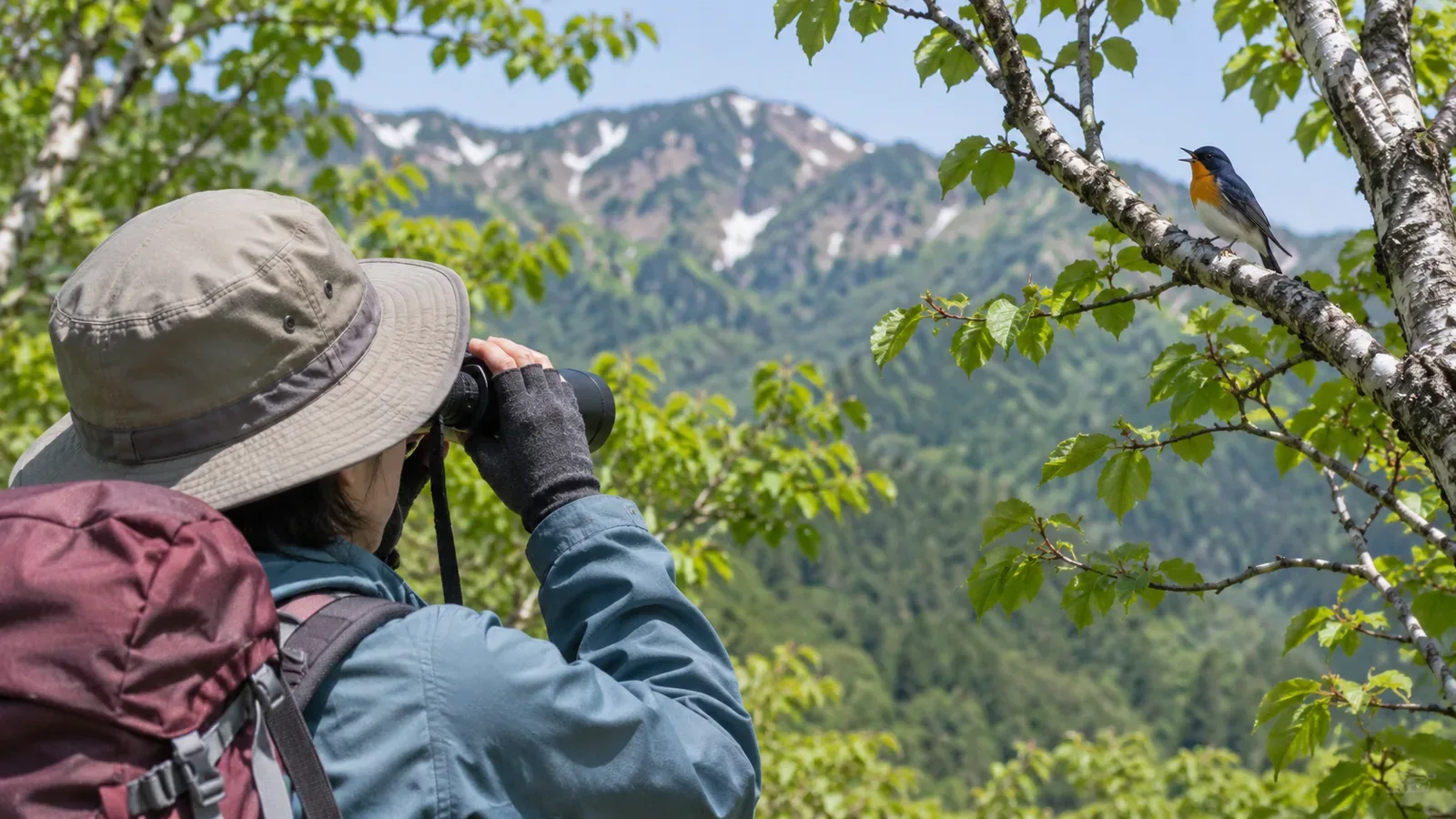
To work out whether a bird is resident or visits an area seasonally, check the date and place alongside the species name. Look up what summer visitor, winter visitor, passage migrant and resident mean in the local records, then compare them with your notes. Here is a way to do that after a hike, drawing on sources including Japan’s environment ministry and the Wild Bird Society of Japan. A single sighting can tell you where the bird was that day. Its previous route may still be unknown.
What the records mean by summer visitor, winter visitor, passage migrant and resident
Japan’s environment ministry explains that many birds in Japan move seasonally. They may move between mountain and lowland habitats, between Hokkaido and Honshu, or between Japan and other countries. In this source, “migratory birds” refers to birds moving between Japan and other countries. Summer visitors come to Japan in summer, winter visitors in winter, and passage migrants stop there on their way elsewhere.
The Upper Tone River Office defines residents as birds that live in an area year round. It also describes short-distance seasonal migrants that move within a relatively small area such as Japan. The environment ministry names movements between mountains and lowlands as examples. When you see a bird in the mountains, consider domestic and altitudinal movements as well as journeys to other countries. Check what area each source covers.
If a local bird list uses abbreviations for resident, winter visitor or summer visitor, check the key. A national guide covers a broader area than a record for a prefecture or mountain. A species can be present year round even if some individuals move. Keep the species’ pattern of occurrence separate from the individual bird’s history, and mark the category as unconfirmed if you cannot tell.
Finding seasonal windows in the records
Different sources cover different dates, species and places. Here are some examples with the scope of each.
Japan’s environment ministry says ducks generally reach Japan around September or October and fly north around April or May. Many winter visitors breed in Siberia in summer and spend winter in Japan, Southeast Asia or elsewhere. The Wild Bird Society of Japan describes how summer visitors such as the barn swallow and blue-and-white flycatcher reach Japan from the south, including Southeast Asia, from spring to early summer. In April and May, it suggests looking for migrating birds such as the narcissus flycatcher in wooded parks and green spaces. It mentions the bull-headed shrike’s loud calls in autumn and ducks and swans in its autumn-to-winter section, labelled November to March. That is a guide to when to watch. Arrival dates vary by species.
Advisory material for Japan’s agriculture ministry, including surveys from 2010 to 2014, describes migration patterns over broad regions at that time. In autumn it gives late July to October as a main period for sandpipers and plovers to move, and October to early December as a period when birds moving from high to middle or from middle to low latitudes reach their wintering grounds. In spring, birds wintering at middle latitudes start moving north from March to early April. From mid-April to May, birds from lower-latitude wintering grounds reach breeding sites in middle latitudes.
The same report describes ducks arriving in Kyushu from November to mid-December, with most leaving in March. That is a different scope from the environment ministry’s nationwide September-to-October overview. The regions, species groups and survey conditions can differ. Look first for a source covering the species and area where you saw the bird. Older broad-scale descriptions give a rough seasonal picture. Use local, recent records to check what might be present on a particular mountain.
Compare your notes with the records after the hike
Here is the editorial team’s approach to using categories and seasonal windows. Compare them with your own notes once you have finished walking. If you need to write something down during a hike, stop where you have firm footing and room for others to pass. If there is no such spot, wait until later.
Five columns will do: date, general area and habitat such as a valley, woods or open ridge, possible species and how confident you are, category in the source, and whether the date fits its seasonal window. Possible categories include summer visitor, winter visitor, passage migrant, resident and short-distance seasonal migrant. Leave room for “unknown” and “cannot tell” so you can keep uncertain cases open.
You can use the same approach when checking a suggestion from a sound app. Cornell Lab and eBird advise checking the app’s suggestions against example recordings, range, behaviour, habitat and season, and seeing the bird if possible. Leave uncertain suggestions off your eBird report. Checking the season in local records is one part of that comparison. If the suggested species is outside the recorded seasonal window, flag it for another look. A misheard sound or an app error is possible. A bird can also turn up outside its usual season, so leave the observation open.
What the sources leave open and how to give migrating birds space
For records by mountain area or elevation, look up local surveys and nature centre information. The agriculture ministry material was assembled for an advisory discussion about avian influenza and includes waterbirds and case studies from Kyushu. Check the species, area and years before using it. Treat records from another mountain with similar habitat as context and keep them separate from direct evidence for your route.
Seasonal windows also vary from year to year. The Wild Bird Society of Japan notes that climate and breeding conditions can affect which species arrive and how many. One visit in the expected month may miss birds that are present. A later-than-usual sighting can also be genuine. The agriculture ministry material says more eastern spot-billed ducks are present in Kyushu in winter even though the species occurs year round.
Give migrating birds room. The Wild Bird Society of Japan’s photography guide advises against pursuing them or making them fly so tired migrants can rest and feed. It also says feeding birds to get a photo may cause them to miss migration. If the timing suggests migration is under way, observe from a distance to leave the birds undisturbed and keep a record of their natural behaviour.
Check the likely species against the date and place
Use local seasonal records to find out whether a species is resident or a visitor. Check how each list defines summer visitor, winter visitor, passage migrant, resident and short-distance seasonal migrant. Keep general national timing separate from local records and use current sources for this year. Do the comparison at a safe stopping place or after your hike, and flag out-of-season suggestions for review.
References and sources
- Japan Ministry of the Environment: ecology of migratory birds
- Wild Bird Society of Japan: common birds and birds by season
- Advisory material for Japan’s Ministry of Agriculture, Forestry and Fisheries: wild bird information, by Yutaka Kanai of the Wild Bird Society of Japan
- Upper Tone River Office, Japan Ministry of Land, Infrastructure, Transport and Tourism: birds and small animals
- Wild Bird Society of Japan: bird photography etiquette
- Cornell Lab and eBird: Merlin Sound ID best practices