
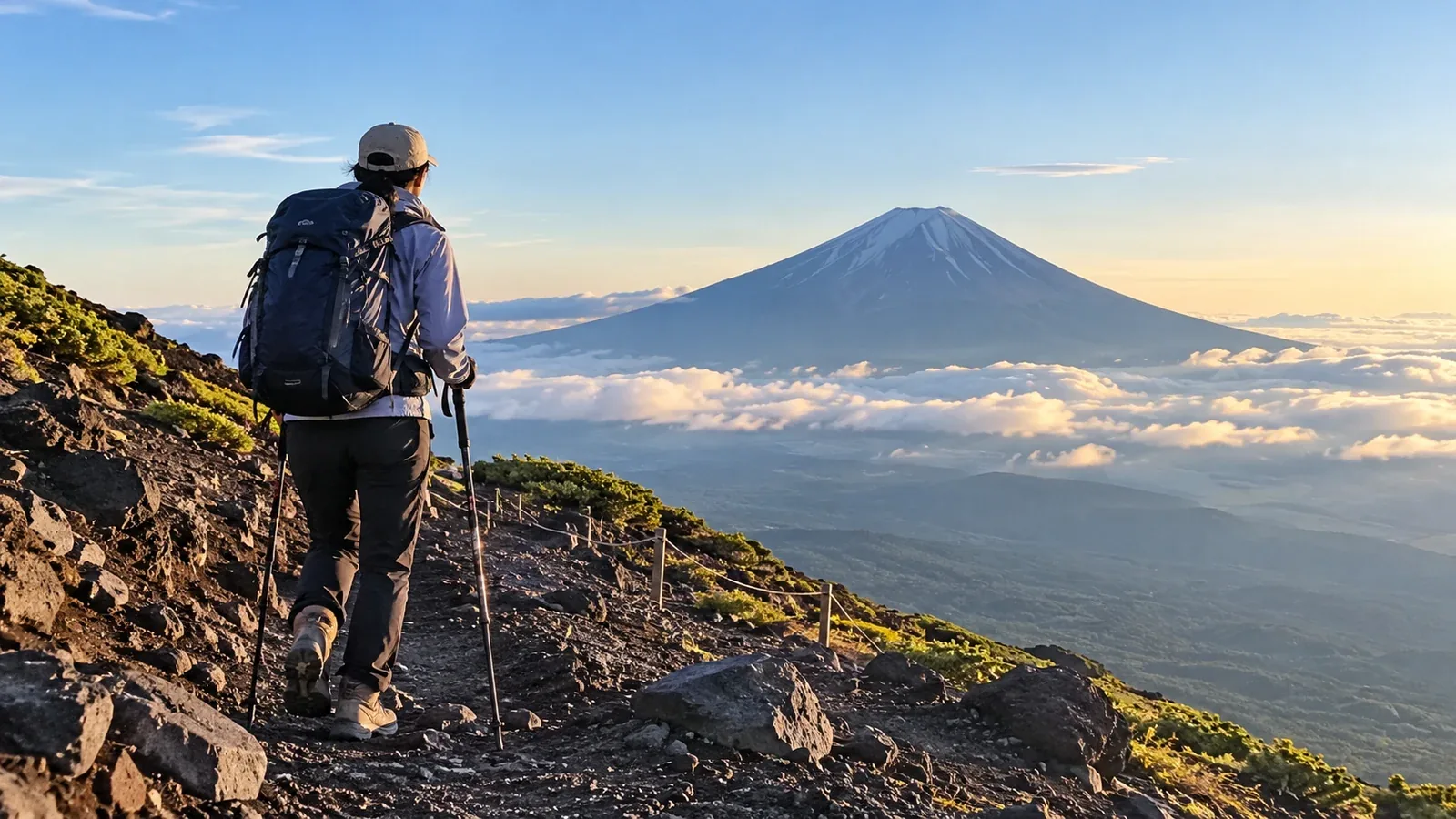
At 3,776 m, lower air pressure means less oxygen is available per breath than at sea level. Good fitness does not protect you against altitude sickness. Set a gradual pace and build room into the plan to stop, descend or change the outing.
Headache, nausea, dizziness and unusual fatigue can occur after gaining altitude. Stop ascending if they appear. Descend safely if they worsen at the same elevation. Confusion, trouble walking steadily or breathlessness at rest may signal a life-threatening emergency. Get urgent help and arrange safe assisted descent. In Japan call 110 or 119 for rescue.
The day before
Make time for sleep, ordinary meals and hydration. These habits help you begin rested. Your ascent profile and time to acclimatize matter most for altitude illness.
Get a full night’s sleep. Plan your transport and packing so you can rest. Consider postponing if you have had too little sleep to walk safely.
Avoid alcohol before the climb. Alcohol can impair sleep and judgment. Avoid it in particular as you adjust to altitude.
Drink according to need. Start hydrated and carry sufficient water. Forcing extra water does not prevent altitude sickness and can cause harm.
Leave strenuous training for another day. Rest if you are already fatigued. Save your energy for the climb and descent.
Allow time near the 5th Station
A bus or car can take you quickly from low elevation to the trailhead. On the Yoshida Trail, the Fuji-Subaru Line 5th Station is at 2,305 m. Other trailheads range from 1,440 to about 2,400 m.
Mount Fuji’s official guidance suggests a rest of about one to two hours near the 5th Station. Eat, drink and check your equipment during the stop. Acclimatization continues over days, so keep a gradual pace and keep checking for symptoms.
If you already feel unwell at the start, delay the climb and assess the symptoms. Ask for help if they persist or are severe. Avoid gaining more altitude if they could be altitude illness.
Plan the pace before departure
Use the route’s distances and walking estimates to set a pace the whole group can sustain. Plan regular stops, a turnaround time and a safe descent.
Pacing decisions
- Gain altitude gradually: Use the actual terrain, group pace and time available. The Wilderness Medical Society’s multi-day guidance above 3,000 m applies to the altitude at which you sleep, with a suggested gain of no more than 500 m per day and a rest day every three to four days. It does not give an hourly pace for a Mount Fuji climb.
- Choose safe places to pause: Check how everyone feels and add warm layers when needed. Keep an easy pace between stops.
- Agree to stay together: Match the slowest person and tell each other about symptoms early. Stop ascending as a group if someone develops warning signs.
Ask a clinician about altitude medication
Acetazolamide is a medicine clinicians may use to help prevent acute mountain sickness in some people. It requires individual medical advice about suitability, timing and side effects. Tingling and frequent urination can occur. Tell your clinician about allergies, medical history and other medicines.
If you have an existing condition, a history of altitude illness or a plan that gains altitude rapidly, discuss the itinerary with a clinician before travel. Follow the advice you receive on medicines.
Small retail oxygen canisters contain little oxygen. A short period of relief does not establish that it is safe to go higher. Prioritize stopping, descending or getting help based on the symptoms.
When to postpone
If you are ill, significantly fatigued or unable to start with time for a safe return, change the plan. Decide in advance what would prompt the whole group to stop or turn back.
Check the official season, trail status and hut availability before leaving. Review the forecast for the summit and your route, and plan how to call for help.
Before you go
Plan sleep, an unhurried start and a turnaround point. Tell your companions which symptoms should stop the climb and how you will descend or call for help. Discuss medication with a clinician if it may be relevant to you.
Sources
- Official Mount Fuji climbing website: health and safety
- CDC Yellow Book: altitude illness
- Wilderness Medical Society: acute altitude illness guidelines
- Japan Meteorological Agency: forecasts and warnings
References and sources
- Official Mount Fuji climbing website — Health and safety
- Official Mount Fuji climbing website — Trailhead elevations
- CDC Yellow Book — Altitude illness
- Wilderness Medical Society — Acute altitude illness guidelines
- Japan Government Public Relations — Mountain rescue
- Japan Meteorological Agency — Weather forecasts