
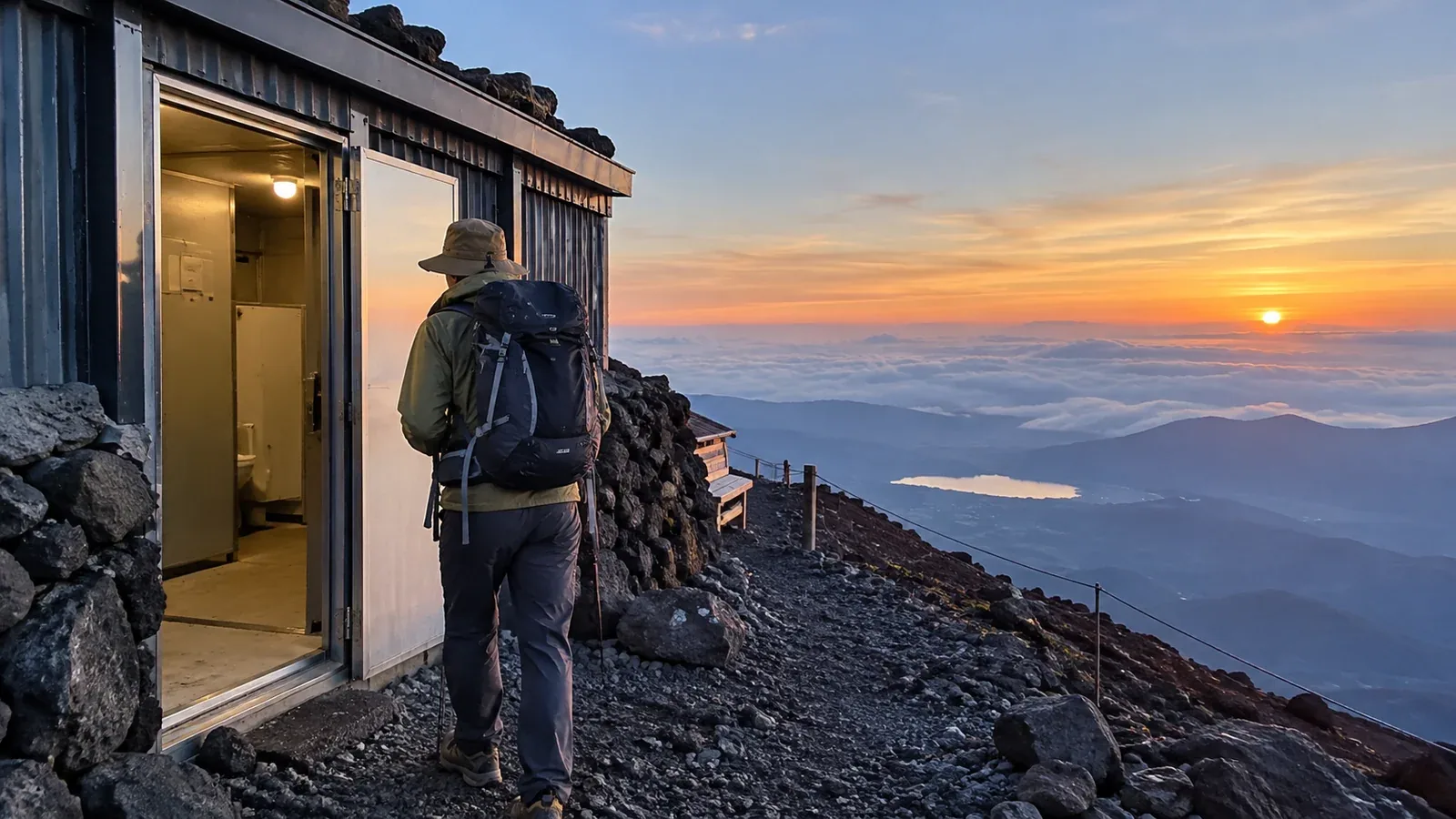
Before you climb Mount Fuji, find the toilets on both your ascent and descent. Check when they open and how much change to carry. A toilet shown on a map may have limited hours or close before the trail does.
Some trailhead toilets are free, while many mountain toilets ask for a contribution. The official FAQ gives roughly ¥100–300 depending on the facility. Follow the amount and payment method posted at the entrance.
Use the official facilities table for the season you plan to climb. The 2026 examples below show how costs and hours can vary between trailheads and the summit.
Why some toilets ask for a contribution
Operating toilets at high altitude is costly. Facilities use treatment systems or require supplies, power and waste handling in terrain where servicing them is difficult. Contributions help pay for upkeep.
Carry several ¥100 coins in a pocket or pouch and use the posted collection box or payment method. The contribution is separate from the climbing fee. Some sites accept electronic payment, but coverage and payment options vary.
Where to find toilets
The four main routes are Yoshida, Subashiri, Gotemba and Fujinomiya. Public and hut toilets are spaced differently on each trail. Consult the ascent and descent maps.
At the 5th Stations: Use an open trailhead toilet before starting. In 2026 the official table listed free facilities at Yoshida and Gotemba and a ¥200 contribution at listed public facilities at Fujinomiya and Subashiri. Check the opening times for your arrival.
At huts and along the trail: Some huts make toilets available to passing hikers. Ask about opening hours, access and the contribution. Gotemba has few facilities, and on Yoshida the ascent and descent follow different paths.
Near the summit: The 2026 table listed a ¥300 contribution at the Fujinomiya-side public toilet and at the Yoshida–Subashiri summit shop during its operating period. The Fujinomiya public toilet listed 04:00–16:00 and accepted PayPay. Check the current season and allow time for queues.
How to use the toilets
Keep change handy
Check the posted instructions for payment and whether to put paper in the toilet or in a separate container. Instructions depend on the facility. Keep the entrance clear while waiting.
Plan stops before leaving a facility
Check the distance and walking time to the next open toilet. Verify the descent separately, especially if the uphill and downhill routes split. At night or near the end of the season, fewer facilities may be available.
Carry a portable toilet kit for emergencies
The official climbing site recommends a portable toilet kit in case you cannot reach an open facility. Seal used waste and pack it out. Dispose of it according to the local or product instructions. Use a dedicated collection bin only if the operator confirms it accepts the bags.
Clean your hands afterward
Wash with soap and water where available. If there is no handwashing station and your hands are not visibly dirty, use sanitizer with at least 60% alcohol. Wash with soap and water as soon as possible, especially if your hands are visibly dirty.
After the descent
Check toilets at your return trailhead, shuttle transfer and station. Busy buses and seasonal vehicle restrictions may affect where you stop. Keep enough time to use the facilities before the last bus.
Before you go
Mark usable toilets on both routes and save the official hours offline. Pack ¥100 coins, a portable toilet kit and hand sanitizer. Nordwand’s Base Camp is a place to ask other hikers about the route. Confirm facility hours with the official site or operator.
Sources
- Official Mount Fuji climbing website: seasonal facilities
- Official Mount Fuji climbing website: toilet guidance and contributions
- CDC: hand hygiene and sanitizer