
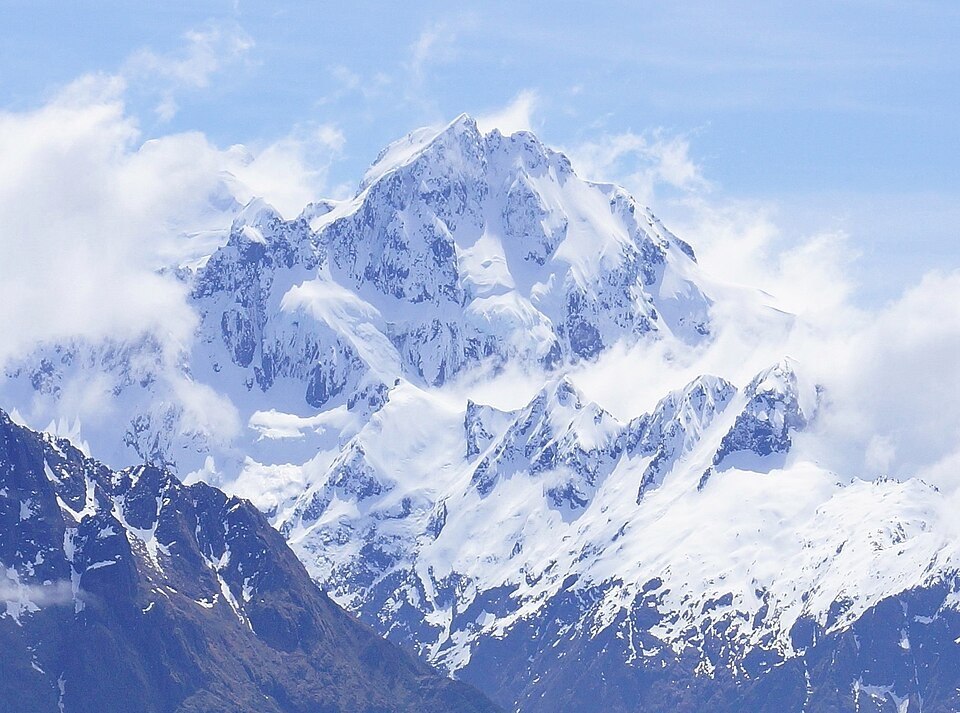
A Summit Mistaken for Its Neighbour
Mount Madeline and Mount Tutoko stand close enough in the Darran Mountains that early climbers conflated the two. In 1895, Malcolm Ross, Kenneth Ross, W. J. Hodgkin, and Tom Fyfe reached what the New Zealand Alpine Club records as Madeline's west, or lower, summit — believing at the time that they had accomplished the ascent of Tutoko. The confusion reflects both the topographic proximity of the two peaks and the navigational challenges of early Fiordland exploration, where approaches were difficult and the relationship between summits was not yet clearly established.
Naming and First Ascent of the Main Summit
The name Mount Madeline is recorded by Land Information New Zealand as having been given by Samuel Turner for his daughter. Turner's connection to the peak is substantive: the LINZ gazetteer records the first ascent of the main, higher summit as taking place in 1920, distinguishing that achievement from the 1895 party's earlier arrival on the lower western top. The two events together — one mistaken, one deliberate — define the mountain's early recorded history and clarify the difference in elevation and character between its two summits.
The 1955 Traverse
The first recorded traverse of Mount Madeline is documented by the New Zealand Alpine Club as having been completed on 16 January 1955 by Bill Blee, Ron Dickie, Bill Gordon, and Ralph Miller. The party's line took them across the southwest face and then onto the upper northeast ridge. This traverse, undertaken more than three decades after the 1920 main summit ascent, represents a distinct phase in the mountain's climbing history — one focused not on reaching the top for the first time but on linking the peak's faces and ridges in a continuous crossing.