
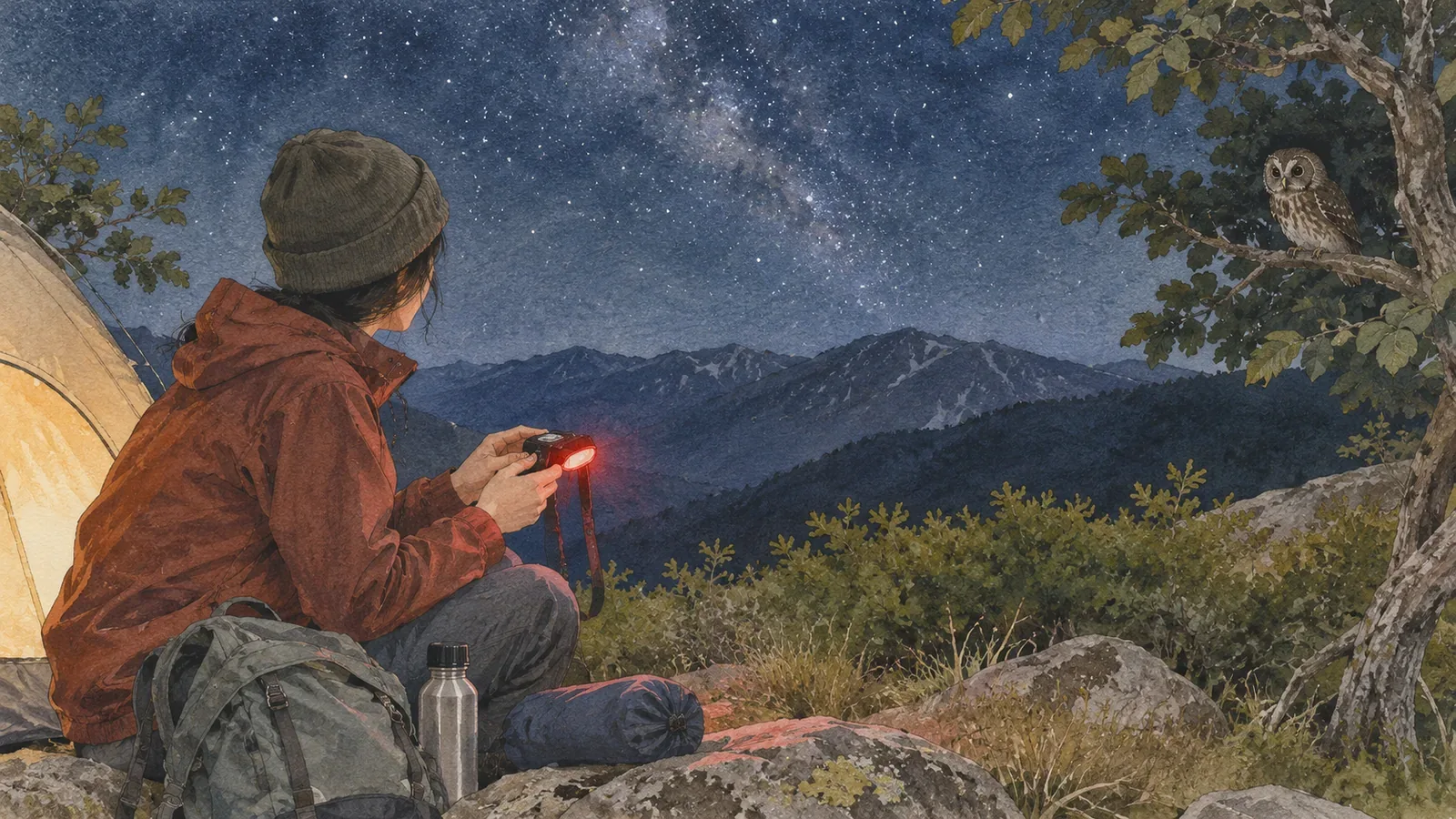
Artificial light can change how wildlife behaves. Keep enough light on the path to see where you’re going and avoid shining it where you don’t need it. The effect can vary by species and conditions, even with red light. Plan where to aim your lamp and when you’ll need it before setting out.
Light can attract some animals and drive others away
Japan’s Ministry of the Environment explains that light attracts some wildlife, drives other animals away and can affect the places where nocturnal species live. Its guidelines give examples: moths can be drawn to light, fireflies can avoid it, and outdoor lighting can alter where raccoon dogs and bats live. At the same brightness, different wavelengths can have different effects.
Shenandoah National Park explains the value of leaving large areas of forest dark at night for owls, bats and insects. More outdoor light can make nocturnal prey easier for predators to find.
The practical point is that wildlife can respond differently to different colors, depending on the species. Work from local lighting rules and use only the light you need.
Red light and where to aim it
Joshua Tree National Park asks stargazers to use red lights at viewing sites and avoid bright white light. Eyes take about 20–30 minutes to adapt to very low light, and bright light slows that process. The park also advises using red light to check the viewing area for uneven ground, cacti and nocturnal animals.
One reason to use red light is to help your eyes adapt to the dark. Animals’ responses vary by wavelength, so avoid deliberately aiming a red light at wildlife.
Japan’s Ministry of the Environment recommends cutting stray light and lighting the places that need it efficiently. Zion National Park reduced its visitor parking lot design from 32 light poles to nine and chose fully shielded fixtures to prevent upward spill, using warm-white LEDs. It also controls when the lights are on so they serve the places and times visitors need them.
With a headlamp or flashlight, you can similarly narrow where and when you shine it while keeping enough light to see the path.
Three things to decide before setting out
First, decide where to keep your beam off. Light the ground and your route, and keep the beam out of bushes, treetops, dark stretches of water and distant slopes when there’s no need to light them. Since you may never see where an animal is, aim by what you need to see.
Second, decide when you need the light. When you’re standing on stable ground, check whether it needs to be on. While walking a dark trail, use enough light to see your footing and route. Skip the observation if you can’t find a way to walk safely.
Third, check the site. Use the operator’s current guidance for nighttime access, lighting and permitted areas. Japan’s Ministry of the Environment notes that effects vary with species, habitat and season, so measures need to suit the place. Follow local conservation requirements first. Learn how to switch brightness and color on your own lamp at home, using its instructions.
If you notice an animal nearby
If you hear or see movement, stop on stable ground where you won’t block others. Stop to read a screen or take a photo as well. Keep the light you need for safety and avoid tracking the sound with your beam, approaching or lighting wildlife for a photo.
If insects gather, consider whether you can use your light for shorter periods. If you’re on stable ground and can communicate with the group, you may be able to switch it off between uses.
When you need more light to see your feet, prioritize visibility and cut the stargazing short. Turn on the light and end the session or return if the footing becomes hard to see.
The takeaway: aim only where you need light
The way animals respond to light can vary with species, wavelength, habitat and season. Before leaving, decide where to aim, when to switch on and what nighttime guidance to follow. Use the lamp when stopped if the task calls for it, and skip the session if safety is uncertain. Keep enough light on the path and leave wildlife undisturbed.
References and sources
- Japan Ministry of the Environment: Light pollution and stargazing
- Japan Ministry of the Environment: Light pollution guidelines, March 2021 revision
- U.S. National Park Service: Night sky in Shenandoah National Park
- U.S. National Park Service: Night sky-friendly lighting in Zion National Park
- U.S. National Park Service: Stargazing in Joshua Tree National Park