
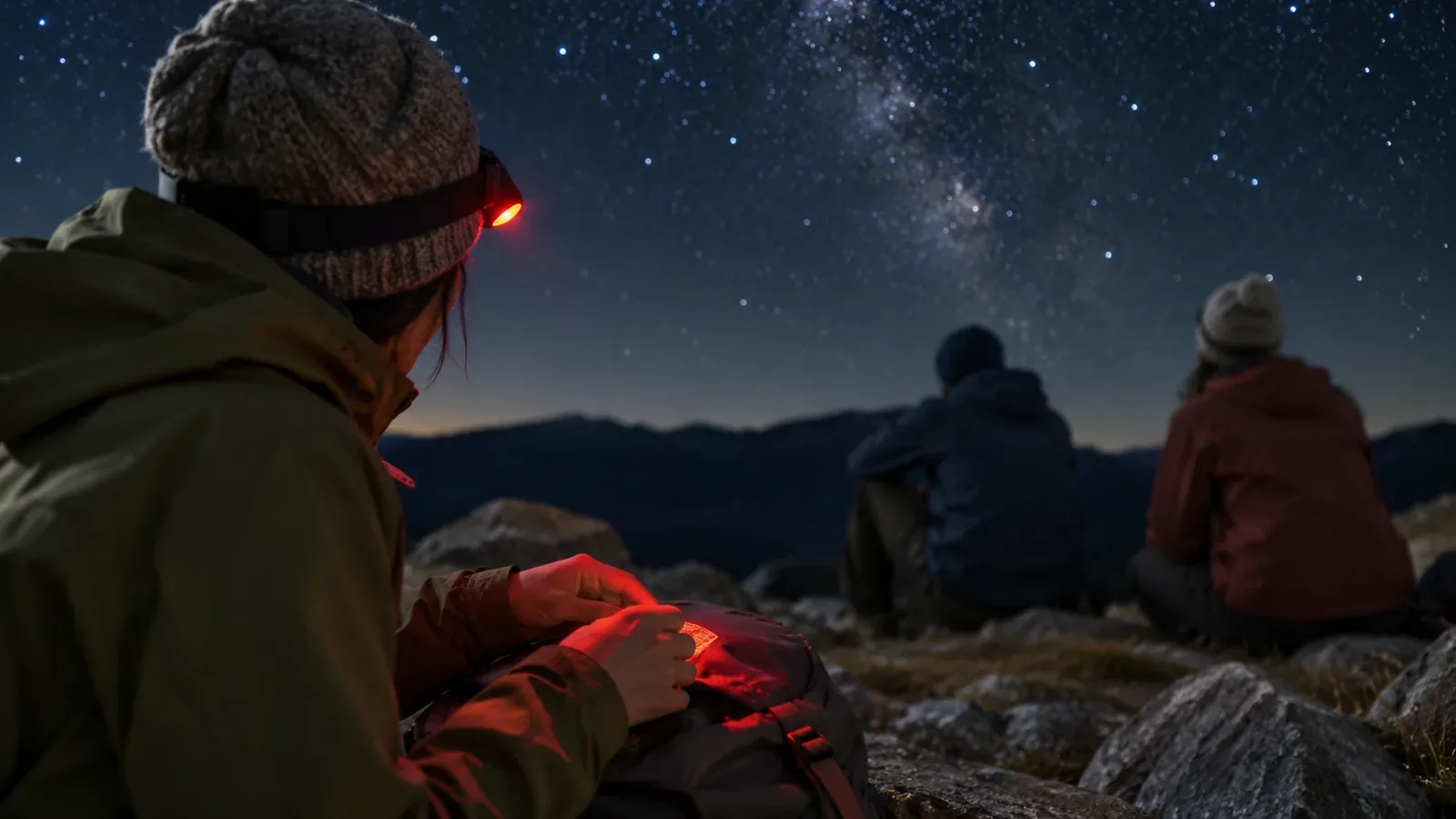
At a stargazing spot, aim your headlamp at your feet or hands and away from people’s eyes. Practice using and aiming it before leaving, and check the site’s night access and lighting rules.
Glare makes it harder to see people and footing
Japan’s environment ministry explains that stray light and brightness out of keeping with the surroundings cause light pollution. Strong light entering homes can affect sleep and privacy, and glare makes it harder for pedestrians and drivers to see. The ministry’s guidelines describe glare as discomfort or reduced visibility caused by very bright light or strong contrasts.
When speaking to someone nearby, lower the beam toward your hands before turning. Avoid lighting faces, tents or the view of people passing by.
Give eyes time to adjust to darkness
Joshua Tree National Park in the United States gives 20–30 minutes as a guide for dark adaptation. Shenandoah National Park suggests around 20 minutes. It varies by person, and bright light can disrupt it. Look around before switching your light on.
Joshua Tree and Shenandoah advise red light for stargazing. Check the lighting rules at your destination. Where allowed, aim a dim red beam at your hands. Keep red light out of people’s faces too, and check where you can use it and where it points.
The ministry explains that light spilling upward brightens the night sky and makes stars harder to see. Use words or a star chart to indicate a star and avoid keeping a light pointed into the sky.
Practice aiming and operating the light before leaving
Put paper on a wall at the eye levels of a person standing and sitting. Look down at a map, search your bag or turn to the side. If the beam hits the paper during a movement, practice lowering it toward your hands before turning.
Read the manual to see whether your light has a red mode, how to turn it on and switch modes, and how to adjust the beam. Check if the switch briefly activates bright white light. To use your phone, stop and keep the screen turned away from others.
Use the light’s built-in red mode or a method approved by its manufacturer. Practice with gloves on. If dim light is inadequate for safe footing, stop observing and use the light you need to move.
Stop before aiming light at your hands or feet
To adjust the beam, change color or read a screen, stop on stable ground where you will not block the way. If you cannot stop safely there, move to a suitable place first.
Zion National Park advises limiting outdoor lighting to where and when it is needed. Check maps and sort your equipment before you begin stargazing. If you need light while observing, aim it at your hands or feet and tell your companions before turning it on.
When approaching people already observing, stop somewhere safe and adjust your beam and brightness. If you cannot light your footing without aiming at people’s eyes, move to a different spot or skip the observation.
Keep your footing visible and the surroundings dark
Practice aiming and operating your light before leaving. In the field, light your hands and feet only when needed. Check the lighting rules for the location and end the session if you cannot see safely without disturbing others.
References and sources
- U.S. National Park Service: Stargazing in Joshua Tree National Park
- Japan Ministry of the Environment: Light pollution and stargazing
- U.S. National Park Service: Night sky-friendly lighting in Zion National Park
- U.S. National Park Service: Night sky in Shenandoah National Park
- Japan Ministry of the Environment: Light pollution guidelines, March 2021 revision