
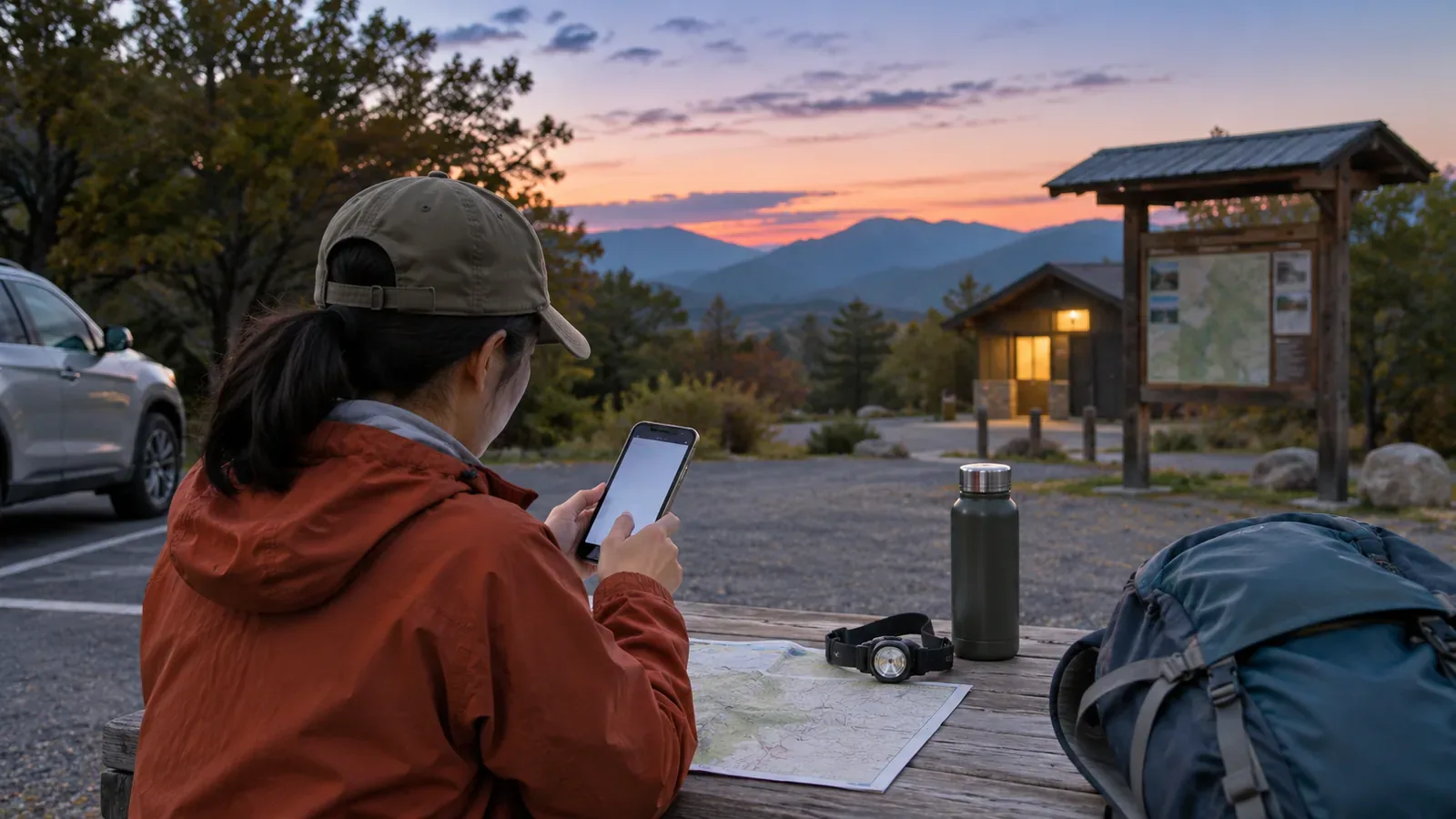
Before choosing a mountain stargazing spot, check whether you can reach it after dark, where you can park and how you will get home. A viewpoint that opens by day may close at sunset.
Check opening hours for the site and the route
Use official information to check who manages the viewing platform, park grounds, trails and parking lots, when each opens and what access conditions apply. Check the route to the viewing spot as well.
In the United States, Joshua Tree National Park closes its day-use-only areas from dusk to dawn. At designated stargazing parking lots, it asks visitors to stay awake and within about 6 m of their vehicles. Look up the night access conditions for your own destination.
If you cannot find night access information, tell the manager the location, time, group size and transport and ask what applies. If you cannot confirm the conditions, choose a site that explicitly allows after-dark use.
Check conditions for viewing, parking and staying overnight
Check rules for a brief visit, parking, sleeping in a vehicle and camping separately. Joshua Tree allows stargazing in designated parking lots and prohibits overnight camping in parking lots and along roadsides.
For a campground, check reservations, vehicle access and what you can do after lights-out. Nasu Takahara Auto Campground prohibits moving vehicles or driving in or out from 21:00, and gatherings, conversations and lit lanterns after lights-out at 22:00. Check your campground’s rules before booking.
Park only where you have confirmed parking is allowed. Leave road entrances and private access clear so residents and emergency vehicles can pass.
Light the ground and limit spill
Japan’s environment ministry explains that stray or overly bright light can obscure stars, enter homes, create traffic glare and affect wildlife. Keep enough light to see your footing and avoid shining it toward others or into the sky for extended periods.
If driving, check the designated access road and parking location. Use the lights you need to drive and walk, then avoid leaving another group or building lit up after parking.
Joshua Tree recommends red light for stargazing. Zion National Park advises visitors to bring a light after sunset because it has little outdoor lighting. Bring a light you can walk safely with and follow local guidance at the viewing site.
Plan your viewing around the return trip
Even if your site opens at night, check gate closing times and your transport home. If using public transport, check the operator’s latest schedule and the route to the stop. Finish in time for the last service.
Landmarks and footing are harder to see on a dark trail. Match the trip to your night walking experience and equipment. When unsure, choose a site near parking where night access is confirmed.
Set an end time based on closing hours and travel time. Agree as a group when to change the plan, such as if the wind picks up, people get cold, clouds roll in or access is unclear.
Check the site and return route while it is light
Tell the manager where and when after sunset you plan to visit, your group size, where you plan to park and whether you will use a tent or filming equipment. Record the place and time the reply covers and share it with the group.
Check opening hours for toilets and rest areas you need. Bring water, warm layers, a light and spare batteries.
Scout the site before dark to see the entrance, where vehicles pass, where you will stand and how to get there. Look for steps and access signs.
If you switch to another parking area or viewpoint, verify its manager, hours and access route. Reschedule if you cannot confirm the conditions in time.
Share an end time and meeting point, then account for people and equipment before returning.
Check night access, parking, overnight conditions and the way home in the destination’s guidance. Pack a light for your footing and warm layers, keep the beam away from others and finish when planned.