
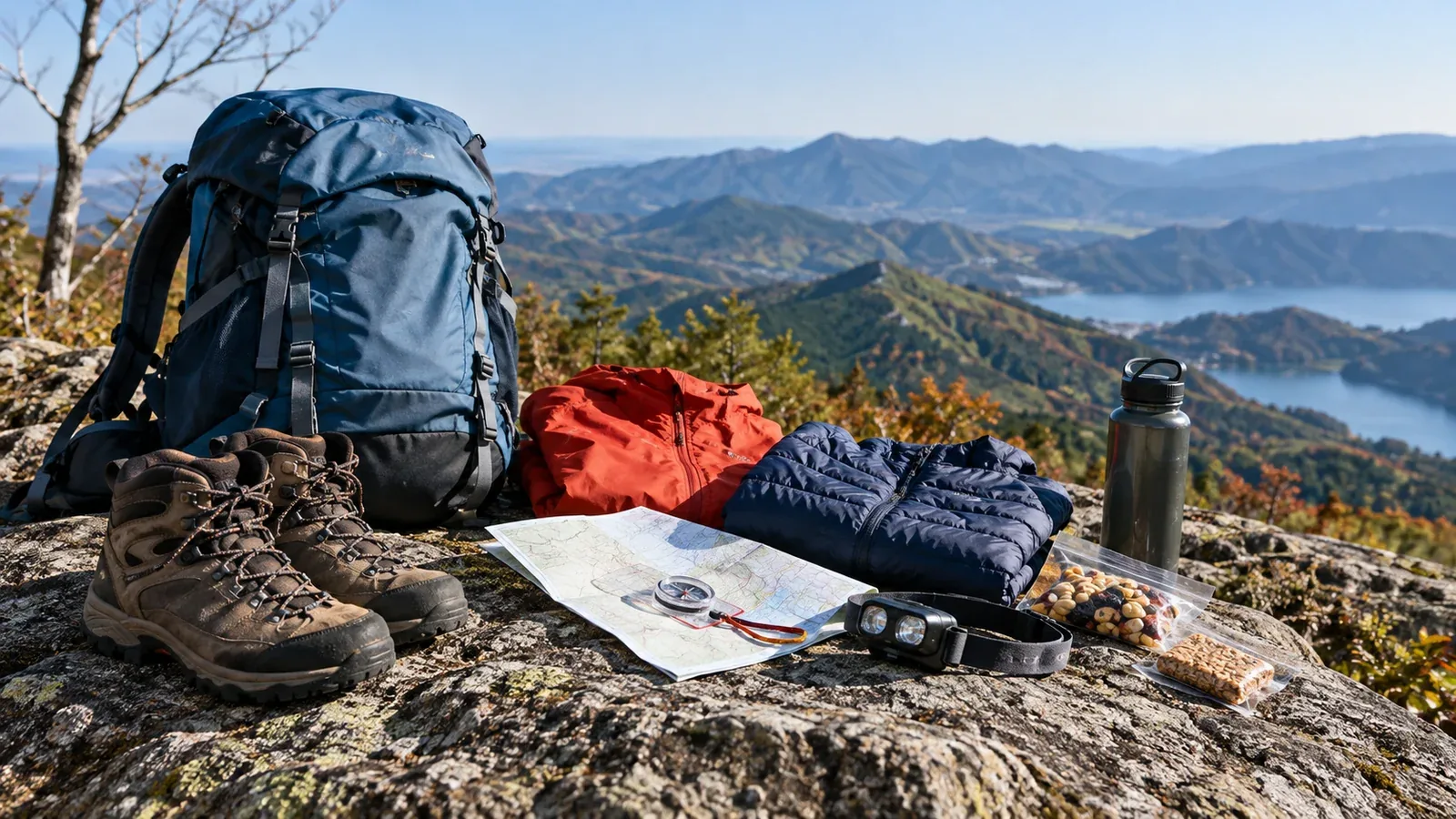
A packing list quickly grows long. The order is what matters. If all items get equal weight, it can be hard to tell essentials from conveniences.
This checklist orders gear by the consequences of leaving it behind. Use it to plan purchases and check your pack. A day route with 500–800 m of ascent may be demanding for a first hike. Pick an outing that suits your pace and adjust the kit to the conditions.
Essentials that can save your life
Missing these can leave you unable to get down or put you in serious trouble.
Water and trail food
Bring enough drinking water for the route, heat and possible delays. Check with local authorities or the hut before relying on a refill. Find out whether the hut will be open and whether the water is drinkable, and plan for the possibility that a source is dry.
Trail food you can eat on the move helps prevent running out of energy. Keep chocolate, nuts or rice balls where you can reach them.
Rainwear
Weather can change even on a day forecast to be clear. At elevation it's cooler than in town, and wind can strip away body heat quickly once you're wet, raising the risk of hypothermia. A disposable plastic poncho often offers too little protection. Make a waterproof jacket and separate rain pants a priority.
Map and compass, with a GPS app if you use one
A phone app is useful, but phones can lose power or break. Download the map in advance and try it offline. Carry a paper hiking or topographic map, such as a 1:25,000 map for the area, and a compass. Practice using them before the trip.
Headlamp
Even a day hike can end later than planned. Walking down in darkness is dangerous. A headlamp keeps both hands free, so give it priority over a handheld flashlight. Pack spare batteries or a power bank as well.
Gear that makes the hike manageable
Without these, you'll have fewer options for getting around or responding to a change in conditions.
Hiking footwear
Choose footwear with a secure fit and grip for the terrain, especially for wet rocks, mud and roots. Try it on with your hiking socks and break it in on short walks before a longer outing.
A warm layer, such as fleece or lightweight down
You can cool down quickly during stops, even in summer. Bring an insulating layer such as fleece or light down and keep it dry. Use your waterproof layer for wind and rain.
Backpack
Keeping both hands free helps you move safely. Use a backpack of around 20–30 L for a low-mountain day hike. Shoulder bags and handbags are poor choices.
Emergency communications and a hiking plan
A phone is important for contacting help. Check the charge before leaving and make filing a hiking plan a habit. Check the methods accepted for your route. Share the plan, return time and when to raise the alarm with someone you trust.
Items that add safety and comfort
Pack first-aid supplies and emergency shelter suited to the trip. The other items in this section help with sun, cold and damp.
First-aid kit
Scrapes and blisters happen. Keep adhesive bandages, gauze, athletic tape and antiseptic gel in a small pouch. A ready-made hiking first-aid kit is an easy option.
Sunscreen, hat and sunglasses
You can burn even when it feels cool. Use sunscreen, sunglasses and a brimmed hat for shade. If the route calls for a climbing helmet, bring one designed for that activity.
Gloves and spare socks
Wet feet can worsen rubbing and blisters. A spare pair of socks weighs little. Gloves protect your hands on rock and keep them warm.
Trash bags and resealable bags
Pack out your trash. A bag can also keep rainwear, a map or your phone dry.
How to decide what can stay home
Beginners often carry more weight than they need. Ask whether you could still get down on your own without the item.
- If you couldn't, pack it.
- If you could but the item gives you a wider safety margin, weigh that against the extra load.
- If it only adds comfort and the weight is a burden, try it on a later hike.
Trekking poles can reduce strain on the knees, but it takes practice to walk comfortably with them. Consider leaving coffee gear, a tripod and similar items at home until you're used to hiking.
What to check before you pack
Look up these details in official sources. Gear alone won't answer questions about the route or current conditions.
- Check current mountain weather with regional forecasts and advisories from the Japan Meteorological Agency plus information for the mountain area where available.
- Check trail conditions and restrictions with local authorities, managers or huts. Typhoons and lingering snow can close trails.
- Find out in advance whether parts of the route lack mobile reception and plan how to navigate and get help if your phone cannot connect.
Do both, in whichever order works for you: gather the information and prepare your equipment.
What to do next
Start with water, food, waterproof layers, a map and compass, and a headlamp. Check your first-aid supplies, emergency shelter and warm layers too. At a gear shop, describe the route and season. Nordwand's Base Camps can help you meet people who know the area. Check where to file a hiking plan before you go.
References
- National Police Agency, overview of mountain incidents.
- Japan Meteorological Agency, mountain weather information.
- Geospatial Information Authority of Japan, reading topographic maps.