
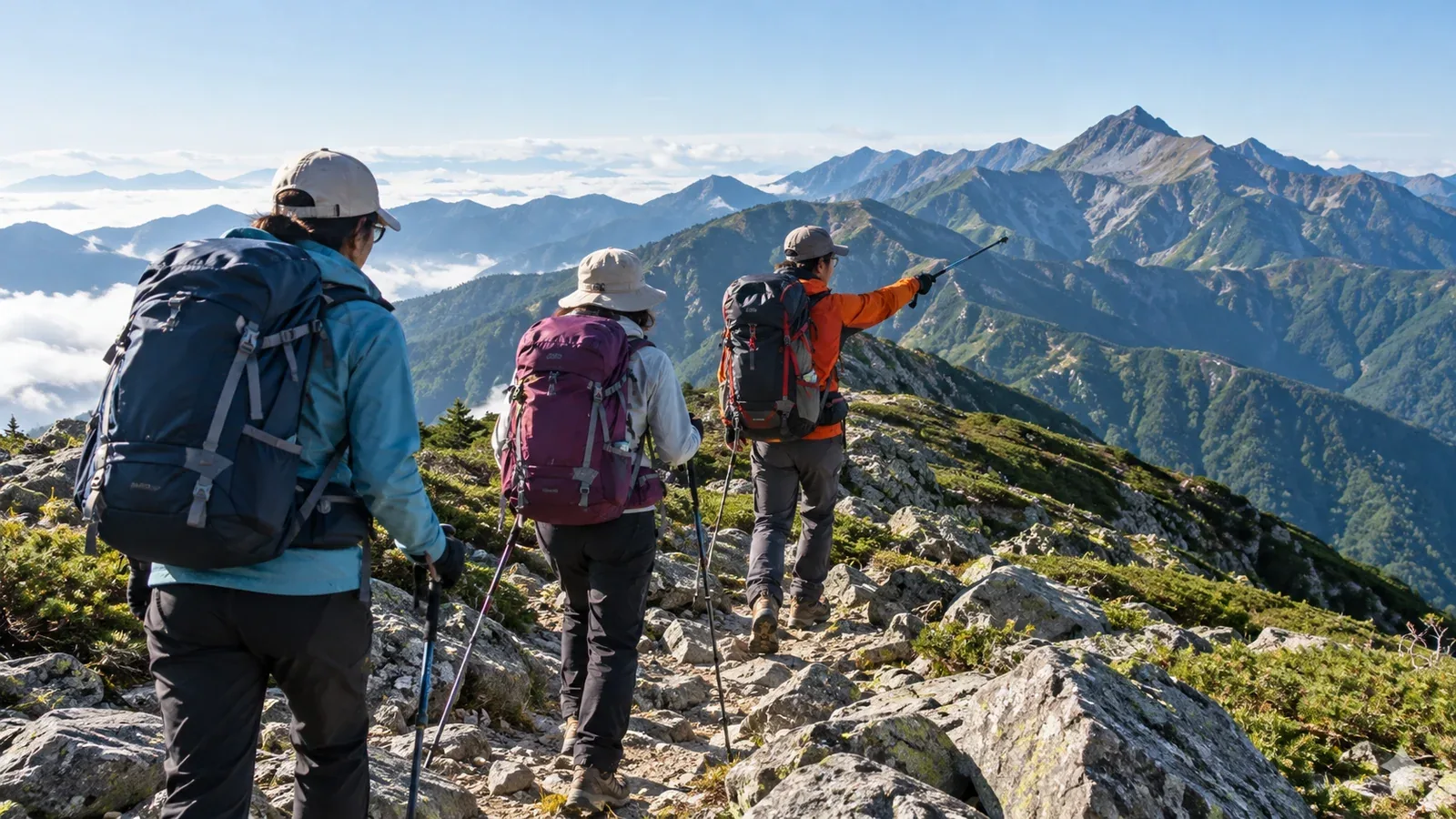
A guided tour might feel like a lot for your first hike. Yet getting lost, falling rock and sudden weather changes can affect anyone. How a beginner manages these risks depends in part on how they choose to start.
The right choice depends on your fitness, experience, the mountains you have in mind and who can go with you. Here's what a guided tour offers, what you pay for, and how to decide.
What a guide does
A guide qualified for the activity and terrain can help choose a route, manage the group and respond to problems. On the day, the guide sets a pace and can adjust plans based on conditions and how people are doing.
For a beginner, a guided tour offers three things in particular.
1. Someone to manage safety. A guide can explain how they read the map, assess weather and choose ways out. Speak up if you are tired, unwell or unsure.
2. A chance to learn in context. You can ask about alpine plants, pace on a ridge, when to rest and how to recognize a hazard. Seeing these things as they come up helps them stick.
3. Feedback on your gear. Ask whether your rainwear suits the outing, and a guide can answer based on the route. That's valuable when you're still learning what to buy.
Weighing the cost against what you get
Prices vary by area, duration, group size, terrain and the qualifications needed. Check the current price from the organizer and ask what it includes. Transport, meals, hut stays, equipment and insurance may be separate. Review the cancellation terms.
Decide what you're comparing the guided trip with.
- Safety. A guide takes the lead on safety decisions. On a self-organized trip, you or your group makes those decisions.
- Learning. A guide can teach in the moment. On your own, you study beforehand and reflect afterward.
- Flexibility. A guided trip follows the guide's schedule. A self-organized trip can follow yours.
- Cost. A tour includes or adds a guide’s fee. Compare transport, meals, equipment and accommodation for either option.
- Companions. A group tour often brings together strangers. A self-organized outing lets you go with people you know.
A guide can add experience when the area is unfamiliar or you do not have an experienced companion. Check insurance coverage separately. On a well-maintained, easy trail, an experienced friend may be a good option.
When a guide is especially helpful
Think seriously about a guide in the following situations.
Your first outing is at high elevation or on alpine terrain. A ridge above 2,500 m, fixed chains, rock or lingering snow can pose very different challenges from a maintained low trail. Choose a beginner outing or a guide whose qualification covers the terrain and season.
Everyone in your group is a beginner. Experienced companions add another layer of safety. When everyone is new, it can be hard for anyone to notice when something is wrong.
You're considering going alone. A fall, navigation mistake or illness can make it harder to get help when alone. Walking with a guide can introduce the hazards and decisions. Before going solo, assess your own navigation, judgment and ability to handle that day’s conditions.
How to get the most from your first guided trip
Treat the outing as a chance to learn what you want to be able to do for yourself next time.
- Pick a mountain area. Think about where you'd like to go eventually, then look for a guided outing with similar terrain and difficulty.
- Check credentials and affiliation. The Japan Mountain Guides Association lists its qualification categories and active guides. Ask who will lead the trip and whether their qualification covers the route, activity and season.
- Be honest about your experience and fitness. When booking, tell the guide about relevant medical conditions, your experience and your fitness so they can adjust the pace and assistance.
- Ask why the guide makes a decision. Why stop here? What does that cloud mean for the route? Keep asking questions as you go.
- Write notes afterward. Record terrain, hazards, weather changes and how your gear worked so you can use the observations next time.
What to have in place if you organize the trip yourself
You can make a safe start without a guide if the conditions suit your group. Use all of these as a baseline.
- Go with at least one experienced person who has walked in that area.
- Choose a maintained low-mountain route with clear signs and no chains, rock sections or stream crossings.
- Pick a period of stable weather, away from typhoon season and snow conditions. Check regional forecasts, advisories and mountain-area conditions the day before and the morning of the outing.
- Identify ways down in advance and mark them on your map.
- File a hiking plan through the prefectural office or a dedicated submission service.
If any of these conditions are missing, consider hiring a guide or asking someone experienced to join.
What to do next
Look up the difficulty of the area you want to visit. For exposed rock, high-altitude terrain or winter conditions, consider an easier introduction or a guide qualified for that route. On a maintained low-mountain trail, look for an experienced companion. Nordwand’s Base Camps help you meet people who know the area, and you can post a request for a certified guide.
References
- Japan Mountain Guides Association, qualification types and guide search.
- Japan Meteorological Agency, mountain weather and weekly forecasts.
- National Police Agency, annual mountain incident overview.
- Prefectural police hiking plan submission offices.