
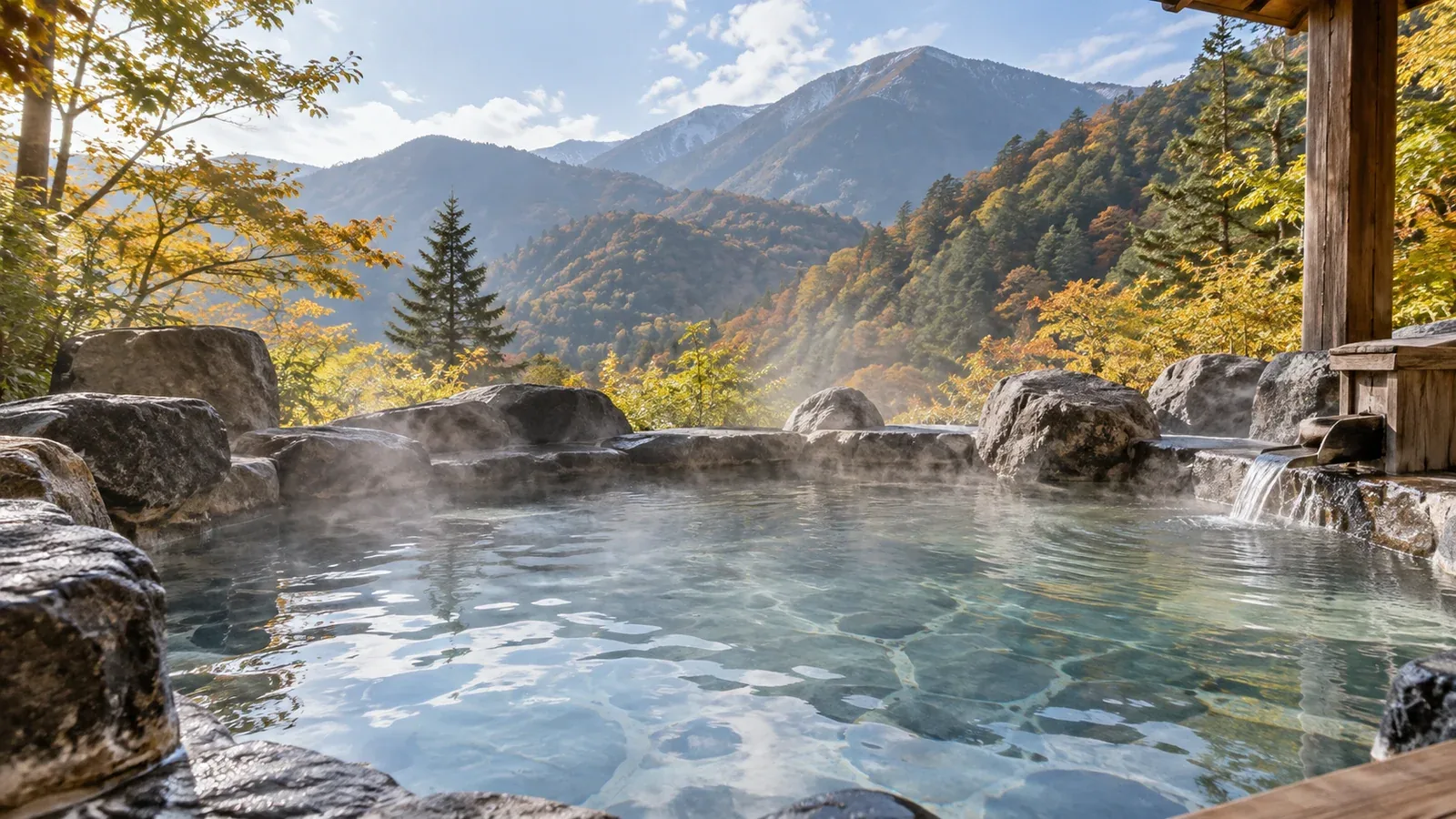
A hot spring is a natural way to end a hike in Tōhoku. The practical questions are which onsen goes with which mountain, how to get there and whether to stay overnight. With so many mountains and hot springs in the region, narrowing down the options can take time.
This guide pairs several of Tōhoku’s best-known hiking areas with nearby hot springs. Compare their location, access and how much travel you want after a tiring hike. Prices, opening hours and timetables can change, so check the latest information with the facilities and operators.
Three things to consider when choosing a hike and an onsen
Distance and transport
You can feel tired after a descent, and clothes wet with sweat or rain can make you cold. A hot spring within about 30 minutes by car keeps the onward journey manageable. Change out of wet clothing and put on warm layers before you set off, even for a nearby bath.
In several of Tōhoku’s mountain areas, onsen inns sit close to the trailheads. In volcanic terrain, the same geothermal area can include both hiking routes and hot springs. In some places, the onsen town is only a few kilometers from the end of the trail.
How tired you are and when to bathe
After a long traverse or a hike with a lot of climbing and descending, avoid driving if you feel sleepy or very tired. Plan alternatives such as resting near the trailhead, switching drivers or staying nearby. Even after a short hike, decide how far to go based on how you feel that day.
Drink water after the descent and wait until your breathing settles before bathing. Avoid very hot water and long soaks. Skip the bath if you feel unwell. If you have an existing health condition or are unsure about bathing, talk to a doctor.
Day trip or overnight stay
For a day trip, one workable schedule is to start early, finish the hike before midday, bathe in the afternoon and head home in the evening. A day trip to Tōhoku from the Tokyo area can leave little energy or time for the trail. Staying one night before or after gives you more time for both the mountain and the baths.
Hikes and hot springs to pair in Tōhoku
The Zaō mountains and Zaō Onsen
The Zaō volcanic range spans Yamagata and Miyagi prefectures. Options range from short walks near Okama crater lake to longer ridge hikes. Zaō Onsen is a village partway up the Yamagata side, known for its highly acidic sulfur springs. The baths and trailheads are relatively close, so it is easy to head straight to your inn after the hike.
Autumn brings colorful leaves and winter brings snow. Volcanic gas requires attention in every season. Check the Japan Meteorological Agency and the two prefectures’ guidance for access and restrictions around Okama.
Mount Hakkōda and Sukayu Onsen
Aomori’s Hakkōda range has mountain wetlands and open ridges. Routes range from trails served by the ropeway to traverses over Ōdake, the highest peak. At the foot of the mountains, the Sukayu Onsen inn is known for its large bath, the Sennin-buro. It is on the main road that serves the trailheads, which makes for an easy stop after the hike.
Snow and ice can appear on Hakkōda’s ridges in autumn. Along with the weather forecast, check Aomori Prefecture’s notices about trail and road restrictions.
Mount Chōkai and hot springs at its foot
Mount Chōkai rises near the Sea of Japan on the Yamagata–Akita border. The Kisakata trailhead at Hokodate and the Yashima trailhead on the Akita side and Yunotai on the Yamagata side each make a different hot spring stop convenient. Yunotai Onsen is at the foot of the mountain in Yamagata. On the Akita side, there are baths around Kisakata and Yurihonjō.
Choose your trailhead and hot spring together as you plan. Snow and ice can arrive on Mount Chōkai in autumn, and roads to trailheads can close for winter. Check the day’s conditions with the trailhead managers and the Akita and Yamagata prefectures.
Mount Nyūtō and Nyūtō Onsenkyō
The ridge from Akita-Komagatake toward Mount Nyūtō, also called Eboshidake, offers open ridge walking. Nyūtō Onsenkyō is a cluster of inns, each with its own spring and character. An inn makes a practical base the night before or after the hike, particularly for a two-day trip with one night away.
Private vehicles are restricted on the road to the eighth station of Akita-Komagatake on certain dates and at certain times. During restricted hours, change to the bus at Arupa Komakusa. Check the Semboku City website for the current restrictions and bus service.
Details that are easy to overlook
Checkout and departure time. If you stay at an onsen inn before the hike, use the forecast and the time remaining before sunset to plan when to set out. Ask about an early departure if the inn’s breakfast or checkout times do not fit your plan.
Last admission for day visitors. If your descent takes longer than expected, you may miss the last admission. If you expect to finish late, decide in advance whether to stay overnight or choose an onsen with later admission.
Autumn crowds and accommodation. The best-known hot spring towns get busy during Tōhoku’s foliage season, typically late September through October. Book early if you are planning a hike and a hot spring stay over a weekend.
Wet and muddy gear. Bring a bag or cover for wet boots and muddy clothing so you can keep the inn entrance, the vehicle and other guests’ belongings clean.
Autumn in Tōhoku
In October, Tōhoku’s foliage season overlaps with onsen weather. Lower mountains may still have good autumn color while higher ridges start to see frost and the first snow. Gear needs vary with elevation, so consider both the height of your route and the forecast. The Japan Meteorological Agency and each prefecture’s hiking information are good places to check.
Before leaving, check the prefectures’ latest bear sightings and access restrictions. Avoid areas with repeated sightings and use your voice or a bell to make yourself heard where visibility is poor. Rain and running water can drown out a bell. Change your destination if conditions call for it.
Plan your trip
Choose your mountain, then look on the map for onsen towns within 30 to 60 minutes of the trailhead. Check accommodation, trailhead access and restrictions together. Use Nordwand’s Base Camp to find people to hike with in Tōhoku. If the area is new to you, consider talking to someone who knows it before finalizing the route.
Further reading
- Japan Meteorological Agency forecasts and volcanic information
- National Police Agency mountain incident reports
- Hiking information and trip-plan submission for Aomori, Akita, Yamagata and Miyagi prefectures
- Ministry of the Environment hiking information for national parks
References and sources
- Yamagata Prefecture | Mount Zaō volcanic information and access restrictions
- Japan Meteorological Agency | Volcanic activity at Mount Zaō
- Aomori Prefecture | Road restrictions around Hakkōda
- Mount Chōkai hiking guide | Getting to the trailheads
- Sakata City | Yunotai Onsen and Chōkai Sansō
- Semboku City | Private vehicle and other access restrictions at Akita-Komagatake
- Ministry of the Environment | Bear sightings and safety measures
- Ministry of the Environment | Hot spring bathing precautions