
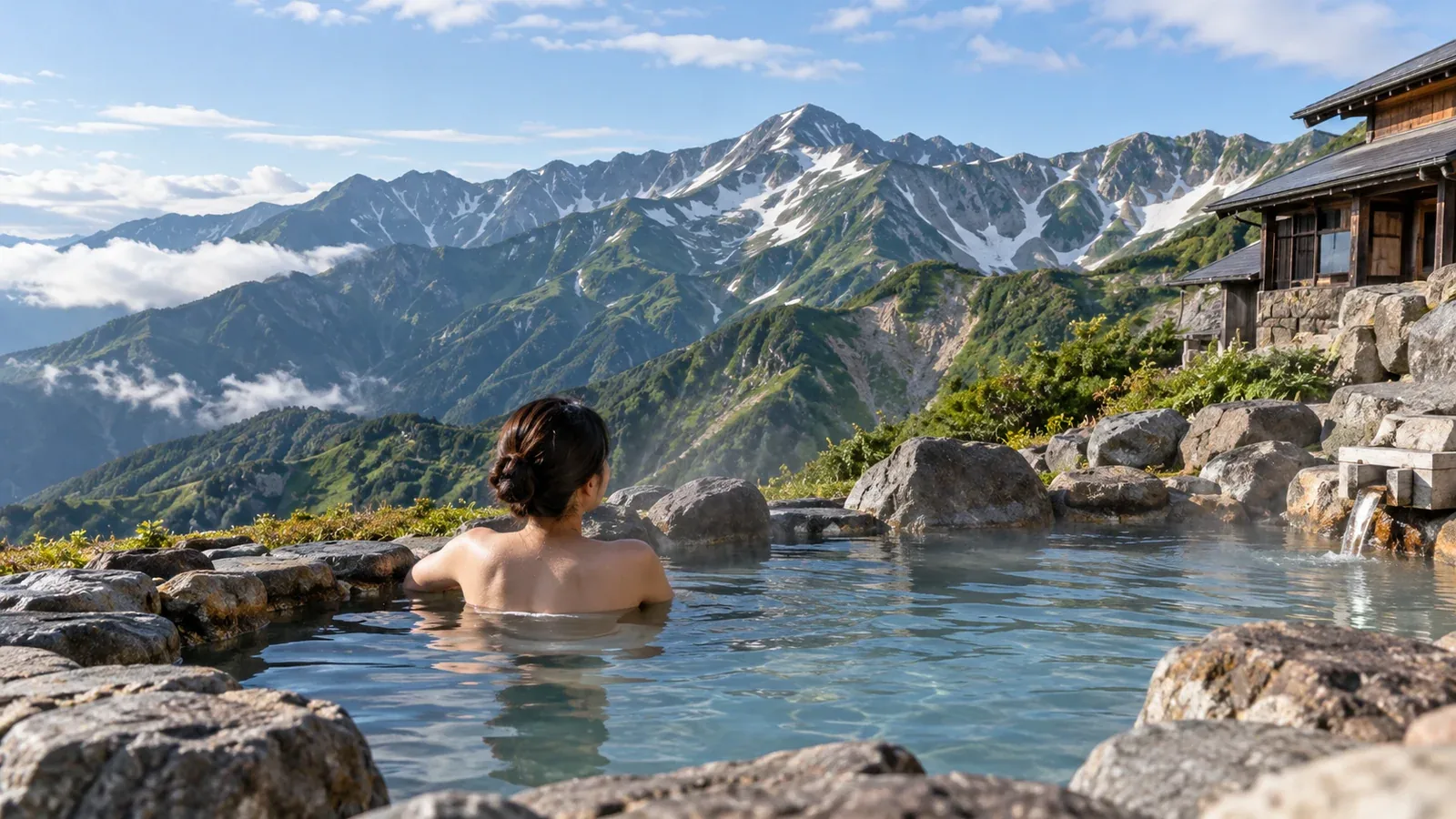
In Japan, some mountain huts and inns above 1,000 m draw water from hot springs. An open-air bath near a ridge or an inn you reach on foot takes a little planning. Find out how to get there, when you can bathe and how you should feel before getting in.
Some mountain hot springs are accessible only by trail, and others have a limited season. If you plan to bathe during a hike or at an overnight stop, factor access, opening arrangements and your physical condition into the itinerary.
What to expect from a mountain hot spring
Honzawa Onsen in the Yatsugatake mountains has an open-air bath called Unjō no Yu at 2,150 m. In Kyūshū’s Kujū mountains, Hokkein Onsen Sansō lies near the Bōgatsuru wetlands. Both are reached on foot. Walking distance and bathing arrangements vary by facility.
Check the type of water and the location of each bath. Indoor and open-air baths may use different spring water. Next, check the facilities. Changing rooms and washing areas can be small in the mountains, and showers may be unavailable. Finally, check the season and bathing hours. Even when the hut is open, snow, ice or trail conditions can make a bath unavailable.
Mountain springs include sulfur and bicarbonate waters, among others. Check the facility’s posted mineral analysis and bathing guidance.
Check opening and access before setting out
You can walk up to a mountain onsen and find it closed. If it is an optional stop after a hike, you can carry on home, but a closure can affect your whole itinerary if the bath is a stop along the way.
Check three kinds of information.
- Trail season. Ask the land manager or the local tourism or hiking office. Different routes on the same mountain may be open at different times.
- When the hut or inn is open. Huts often publish their opening schedule by week or month. Check their official website or contact them directly. Make a reservation early if required.
- Weather, roads and trail conditions on the day. From autumn, snowfall or ice can close roads and paths. Check Japan Meteorological Agency forecasts and warnings and the latest notices from the facility and trail manager the day before and again on the morning of the hike.
Opening dates from previous years give a rough idea. Use the current year’s official information to make plans.
How to check that you are ready for a bath
Give yourself time before getting in immediately after a hike or when you feel unwell. If you have an existing health condition or are unsure about bathing, consult a doctor in advance.
Rest and drink water after hiking
After a long hike, take off your pack and rest until your breathing settles. Very hot water and the temperature difference in a cold changing room can be hard on your body. If you are cold, put on dry clothes and warm up first.
Drink water and wait until you feel settled, then follow the facility’s bathing guidance. Avoid very hot water, long baths and bathing after drinking alcohol. If you feel unwell, skip the bath.
Headache or nausea after gaining elevation
If you get a headache or nausea after going higher, skip the bath and stop ascending. People who are unacclimatized are at risk of altitude illness when sleeping at about 2,450 m or higher, and it can occur at lower elevations. If symptoms worsen, descend safely. If someone becomes confused, cannot walk straight or has difficulty breathing at rest, call for rescue immediately.
Watch for dehydration
You lose water by sweating and breathing while hiking, and sweating in a hot bath can increase that loss. Drink water before and after bathing.
Work a mountain hot spring into your itinerary
Decide on a few details in advance if the hot spring is one of the reasons for your hike.
Will the onsen be your destination or a stop along the way?
Using a hut with an onsen as your overnight base gives you flexibility to walk the ridges from there. The hut may give overnight guests priority, so if you are stopping on a day hike, ask ahead about admission, hours and bathing conditions. Some huts do not take day visitors in certain seasons or at certain hours.
Leave spare time in your itinerary
Fitting in a soak can lengthen the day. For a day hike, recalculate the schedule with time for bathing and breaks, and check that you can finish the descent at a safe hour. Allow for delays on the mountain.
Take particular care in autumn and winter
At altitude in autumn and winter, cold wind can chill you if you are still wet after bathing. Keep a dry towel, dry clothing and warm layers within reach. Dry off and dress as soon as you get out. Skip the open-air bath in severe cold or if you feel unwell.
Where to find information about huts and hot springs
The following sources can help you find places to visit.
- Tourism or nature park offices at prefectures and municipalities. They can explain local rules for hot springs in national and quasi-national parks, including development and conservation rules.
- Official hut and inn websites and direct inquiries. These are the most reliable sources for changing details such as opening seasons, bathing conditions, reservations and day admission.
- Ministry of the Environment information on nature parks. It provides an overview of rules governing hot spring use.
- Local hiking associations and visitor centers. They can sometimes give you current information about facilities and trail conditions.
Plan your visit
Choose a mountain area or hut, then check this season’s opening and bathing conditions on the official website or ask the facility directly. Once you have a plan, check the Japan Meteorological Agency’s forecasts and warnings, check local trail information and prepare your hiking plan for submission. In Nordwand’s Base Camp or its activity communities, you may be able to ask someone who has been there recently.
Further reading
- Ministry of the Environment information on nature parks and hot spring rules
- Japan Meteorological Agency weather forecasts and warnings
- Mountain incident statistics from the National Police Agency and prefectural police