
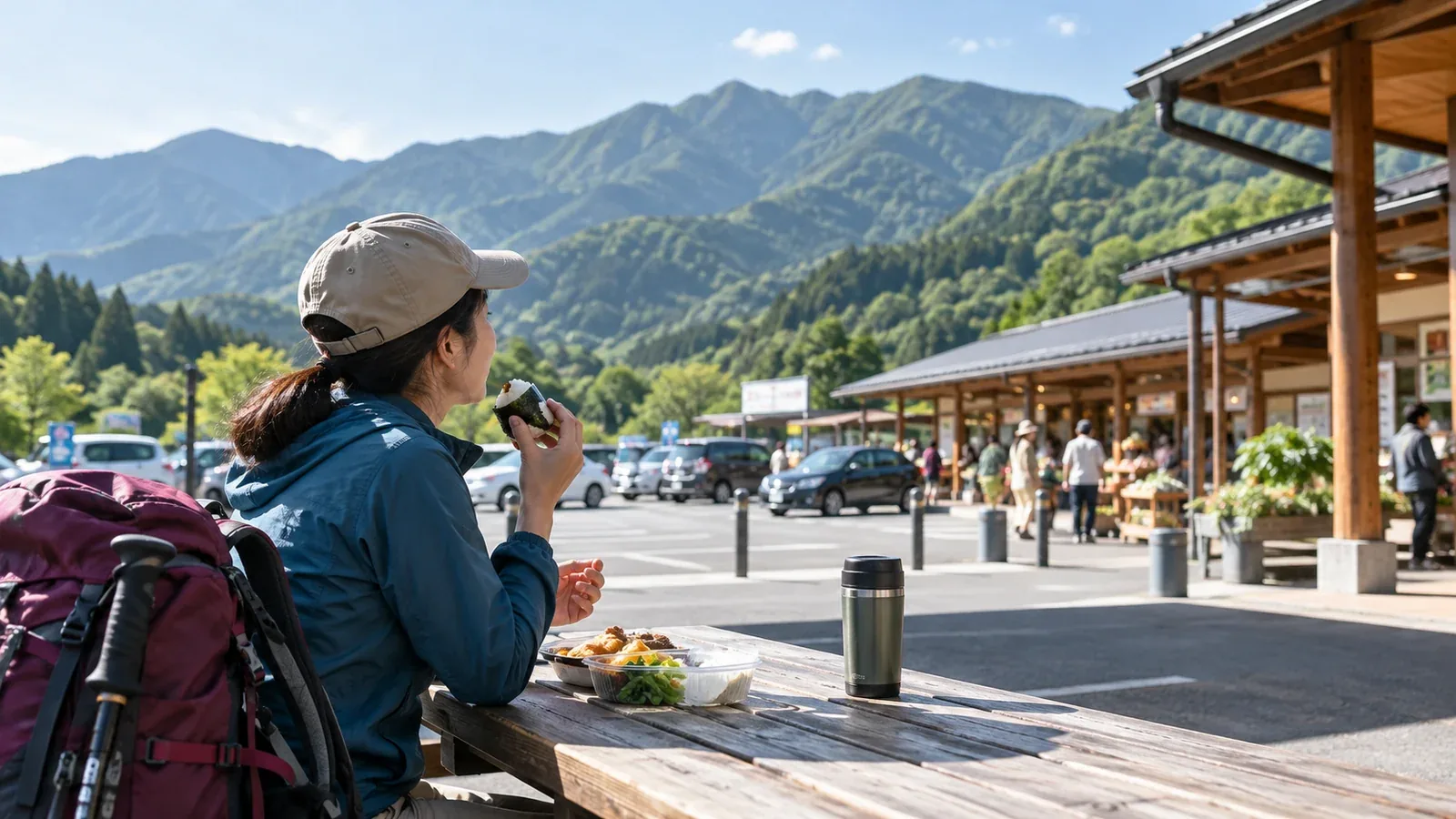
Many hikers stop at a michi-no-eki on the drive home. A hot spring gives you a clear reason to stop. At a roadside station it’s easy to pull in without a plan and end up lingering. Decide what you need before you get there so you can make the most of the stop when you’re tired.
Here’s how to choose a roadside station that fits your journey, especially if you’ve ever lost time by stopping at the first shop or rest area you saw.
Why roadside stations work well after a hike
Japan’s Ministry of Land, Infrastructure, Transport and Tourism developed michi-no-eki as places to rest, get information and connect with local communities. There are more than 1,200 registered stations nationwide. Check the ministry’s official list for the latest count. Many are near mountains, sometimes within a few dozen minutes’ drive of a trailhead.
Compared with convenience stores, they tend to have larger car parks and space for a longer stop. Driving for a long time while tired can affect your judgment. Roadside stations have places to rest, toilets and often somewhere to eat, so you can pause before setting off again. Some near mountain areas also have hot springs or footbaths. Check the station’s website or the official directory to see what is available.
How to choose where to stop
Check the detour
You may be more tired after the hike than you realize. If a station would take you out of your way, work out how much driving it adds and when you would get home. If it adds 30 minutes or more round trip, consider how you feel and when the sun sets before deciding. Sunset comes early in autumn and winter, and road conditions in the mountains can change after dark.
Pick one main reason to stop
Trying to eat, shop and rest in one go can take longer than expected when you’re tired. Pick one priority before you pull in. Here are three common reasons to stop.
- Food. Look for a café or prepared-food counter where you can get carbohydrates and protein after the hike.
- A bath. Check ahead for a station with a hot spring or footbath and make that your stop.
- Local produce. Look for crops or prepared foods that are hard to find outside the area.
Allow for busy hours
On Saturdays and Sundays, car parks and restaurants can be busy between 2 and 4 p.m., when hikers and other travelers overlap. If you finish late, the search for a parking spot can add to your fatigue. If your hike allows an earlier descent around 1 p.m., you may miss the rush. You can also decide to drive past a crowded station if you’re fit to continue.
Choosing something to eat
After a demanding hike, a large fried or fatty meal can feel heavy or make some people nauseous. A set meal or a local rice bowl may be tempting. If you feel worn out, try a lighter choice such as soup, rice or a simmered dish, or eat a smaller portion and plan the rest of your meal for home.
Keep drinking water before and after eating. After sweating on the hike, sip regularly instead of trying to replace everything in one go. Pick up a bottle at the shop or food court if you need one.
Choosing souvenirs and local produce
Farm stands at roadside stations sell seasonal produce and locally made foods. Two things help narrow the choice when you stop after a hike.
Weight and space. Your pack already holds your equipment. Check the space in the car before shopping. Root vegetables and jars take up room. Dried products and pouches are usually more compact.
Freshness and the journey home. Work out how long it will be before you can refrigerate fresh food. In summer or on a long trip, choose something shelf-stable or use an insulated bag.
When to stop instead of driving on
Skipping a break because you’re nearly home can be risky when you’re tired. If you feel drowsy, have a headache or notice slower decisions, stop in a safe place. A short nap in a designated parking space is one option when you’re sleepy. The article’s rule of thumb is 15–30 minutes, depending on how you feel. If you’re seriously unwell, stop driving and contact a companion, family member or staff for help.
If fatigue or other symptoms persist after the hike, seek medical advice.
Before your next hike
Pick one roadside station along your route before you leave. Decide whether you’re stopping for food, a bath or shopping, then check the official website or the ministry’s directory for hours and facilities. Nordwand’s partner search can help you find mountain huts and outdoor businesses near the trailhead when you plan the rest of the journey.
References
- Japan Ministry of Land, Infrastructure, Transport and Tourism: official Michi-no-Eki portal
- National Police Agency: annual reports on mountain incidents