
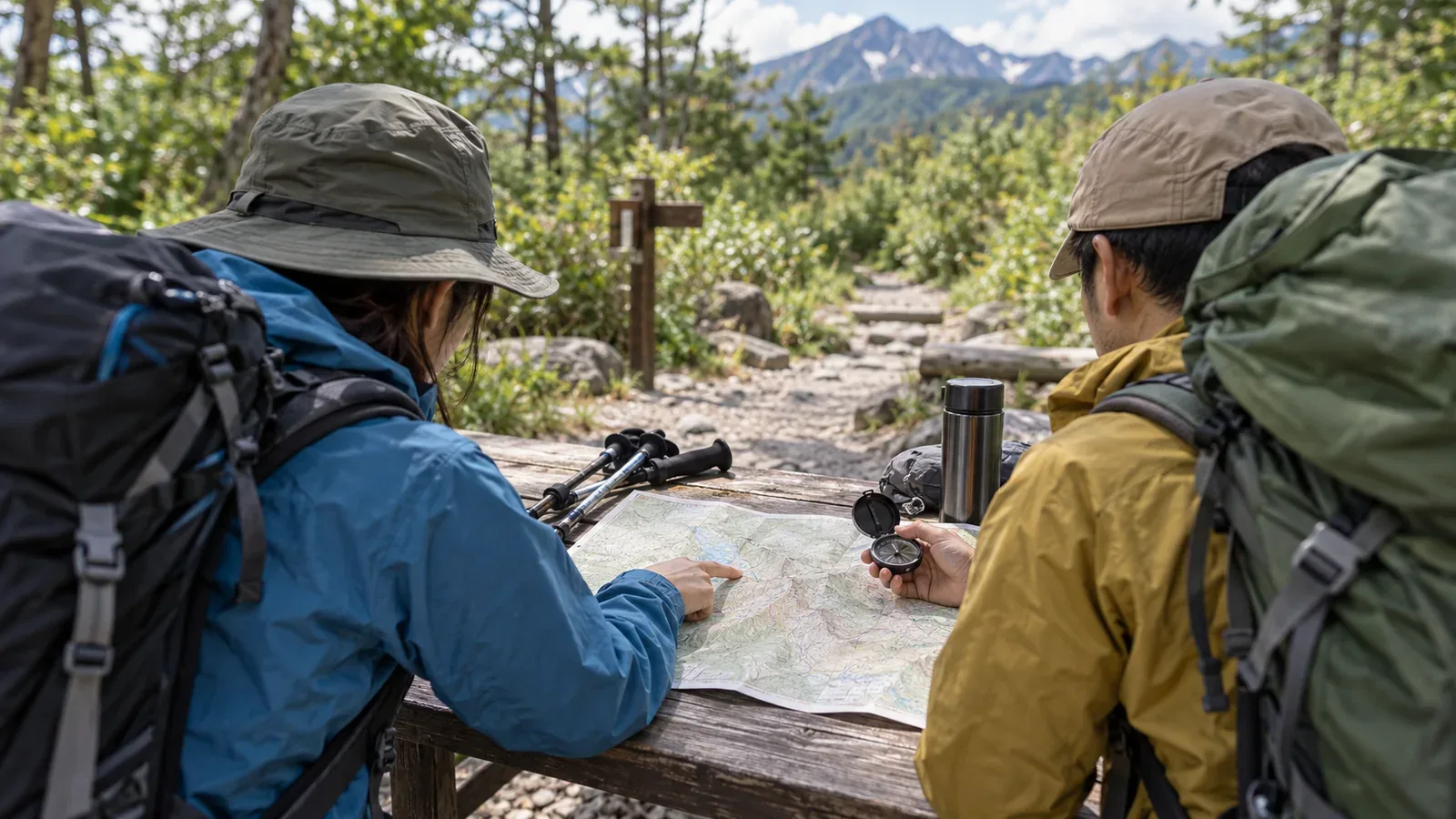
In 2025, 246 overseas visitors were involved in mountain incidents in Japan, the highest number since records began in 2018. The number of people involved rose much faster than the number of visitors. In August 2026, Nagano, Gifu and Toyama joined forces for the first time to release an English-language hiking safety video. The published figures help us ask which information visitors may be missing.
Mountain incidents involving overseas visitors set a record
On June 18, 2026, Japan’s National Police Agency reported that 3,623 people were involved in mountain incidents in 2025, the highest number since national records began in 1961. There were 174 incidents involving overseas visitors, with 246 people affected, six of whom died or were reported missing. That’s 75 more incidents and 111 more people than in 2024, when there were 99 incidents involving 135 people.
The Japan National Tourism Organization (JNTO) counted about 42.68 million arrivals in 2025, up 15.8% from 2024. The number of overseas visitors involved in mountain incidents rose from 135 to 246, an increase of 82% rounded to the nearest whole percentage.
The number of people involved rose from about 3.7 per million overseas arrivals in 2024 to about 5.8 in 2025, more than one and a half times as high. We calculated this ratio using the published police and JNTO totals. Even after accounting for the increase in overall arrivals, the number involved per million arrivals rose.
The denominator is all overseas arrivals. The figures alone tell us little about how many visitors hiked, what they did or how long they spent in the mountains, so they cannot establish a change in risk per hiker. We suspect that seeing places such as Karasawa, the Daisekkei snow valley and Niseko’s powder snow on social media may have encouraged a larger share of visitors to head to the mountains.
Most overseas visitors involved were rescued uninjured, and six died or were reported missing
Of the 246 people, six died or were reported missing and 181 were rescued uninjured. Among all people involved nationwide, 9.2% died or were reported missing and 50.0% were rescued uninjured. For overseas visitors the figures were 2.4% and 73.6%, respectively. The share who died or were reported missing was about one-quarter of the national figure, and nearly three in four overseas visitors were rescued uninjured.
These differences cannot establish why the incidents happened or what the people’s fitness or experience was. We lack comparable data on factors including the ages and numbers of overseas hikers. The high share of uninjured rescues still includes emergencies in which outside help was needed.
The Nagano mountain accident prevention association reported that on July 31, 2026, a 26-year-old Finnish hiker dropped his pack near the east ridge of Kita-Hotaka in the Northern Japanese Alps. He went after it down the slope and became stranded because he lacked the skills to return. He was rescued uninjured. The incident shows how stepping off the route can leave someone unable to get back.
According to Kyodo News, 203 of the 246 people, about four in five, were backcountry skiing or hiking. The same totals may capture two very different patterns: winter backcountry incidents and summer incidents in the Northern Japanese Alps. A campaign aimed at summer hikers would reach only one of those groups.
What the three-prefecture video can reach
On August 4, 2026, Nagano, Gifu and Toyama released a safety video for hikers from overseas. It was the first time the departments responsible for preventing mountain incidents in the three prefectures that share the Northern Japanese Alps had made a video together. Previously the information and the English terminology could change when you crossed a prefectural border.
The video is called “PLAN AHEAD. STAY ALIVE.” The full version runs about eight minutes and has seven chapters. English narration and on-screen text cover route choice, planning and filing an itinerary, mountain hut etiquette, bear precautions and recommended equipment. The video is available on YouTube and Instagram, with promotion at trailheads and on QR-code posters.
Nagano Prefecture recorded 24 foreign nationals involved in mountain incidents during the full April–November season of 2025. It reported a total of 81 foreign nationals involved in that season from 2023 through August 2, 2026.
The chapters show how much overseas visitors need to know about unwritten expectations. Huts are relatively close together along the main Yari–Hotaka ridge, so a map can make shelter look easy to find. Major huts including Karasawa Hütte take overnight reservations. As of September 2026, Karasawa Hütte listed a ¥2,000 surcharge for an unreserved stay, which was possible only if space was available. Check hut rules and availability before relying on a bed.
The same goes for itineraries. Under Nagano’s mountain safety ordinance, anyone using designated trails has had to file a trip plan since July 1, 2016. Nagano provides instructions in English. To see which sections are covered, consult the designated-trail list or maps.
Nagano Prefectural Police recorded 358 incidents across the prefecture. The number classified as losing the way fell by 12 to 34, and insufficient technical skill accounted for 20 of the 34 incidents classified as “other.” Lack of technical skill made up more than half of the “other” category. This breakdown alone cannot tell us whether such cases increased year on year.
What hikers in Japan can do when they meet visitors on the trail
As of September 2026, the public campaign was mostly reaching people before they set out. Up on the ridge, the people available to help with a decision are the people already walking the same trail.
- Use clock times: Say “Sunset is around 6 p.m., and the hut is three hours from here.” Pointing to a watch and the map app can help get the message across.
- Ask about a reservation: Try “Do you have a reservation?” If someone is heading to a hut without a booking, that can give you a concrete reason to suggest turning back.
- Show the forecast: If you’re explaining that the weather may deteriorate in the afternoon, show the rain radar or other forecast information to make the place and time clearer.
- Call 110 or 119 for rescue in Japan: If the other person is overwhelmed, you can make the call. Give the mountain area and read out the latitude and longitude from your map app.
A quick “Where are you heading?” can be a way to check in with someone as you pass. If the person hesitates or has no clear destination, that may be a sign to ask another question.
Beyond the language barrier: making a decision on the mountain
In the year when overseas arrivals rose by 15.8%, the number involved in mountain incidents rose by 82%. Nearly three in four were rescued uninjured, and six died or were reported missing. These figures alone cannot tell us what caused the incidents or whether the risk per hiker rose.
The three prefectures’ video is their first joint effort to reach overseas hikers before an emergency develops. It can explain rules and equipment. The question of whether you can cross this ridge in today’s conditions still needs to be answered on the trail. Understanding how Japanese mountain routes and huts work is one part of the decision. Assessing the day’s conditions and your own skills is another. The people already there can help you make that assessment.
Tools for communicating across languages are more widely available, including Nordwand’s multilingual features. On the ridge, someone still needs to decide when to ask, “Should we turn around?”
References and sources
- National Police Agency of Japan: 2025 mountain incident overview
- National Police Agency of Japan: 2024 mountain incident overview
- Nagano Prefectural Police and Nagano mountain accident prevention association: 2025 mountain incident statistics
- Nagano Prefecture: first joint safety video for overseas hikers in the Northern Japanese Alps
- Gifu Prefecture: release of the joint hiking safety video
- Toyama Prefecture: joint hiking safety video for overseas visitors
- Kyodo News: a record 3,623 people involved in mountain incidents in 2025, including 246 overseas visitors
- Nagano mountain accident prevention association: mountain safety bulletin no. 456
- Yama to Keikoku Online: a joint Northern Japanese Alps safety video
- Japan National Tourism Organization: overseas arrivals, December 2025 estimate
- Nagano Prefecture: mountain safety ordinance
- Karasawa Hütte: overnight stays
- Nagano Prefecture: Northern Japanese Alps hiking safety video announcement, PDF
- Nagano Prefecture: filing a trekking itinerary, in English
- Government of Japan: hiking safety and emergency calls