
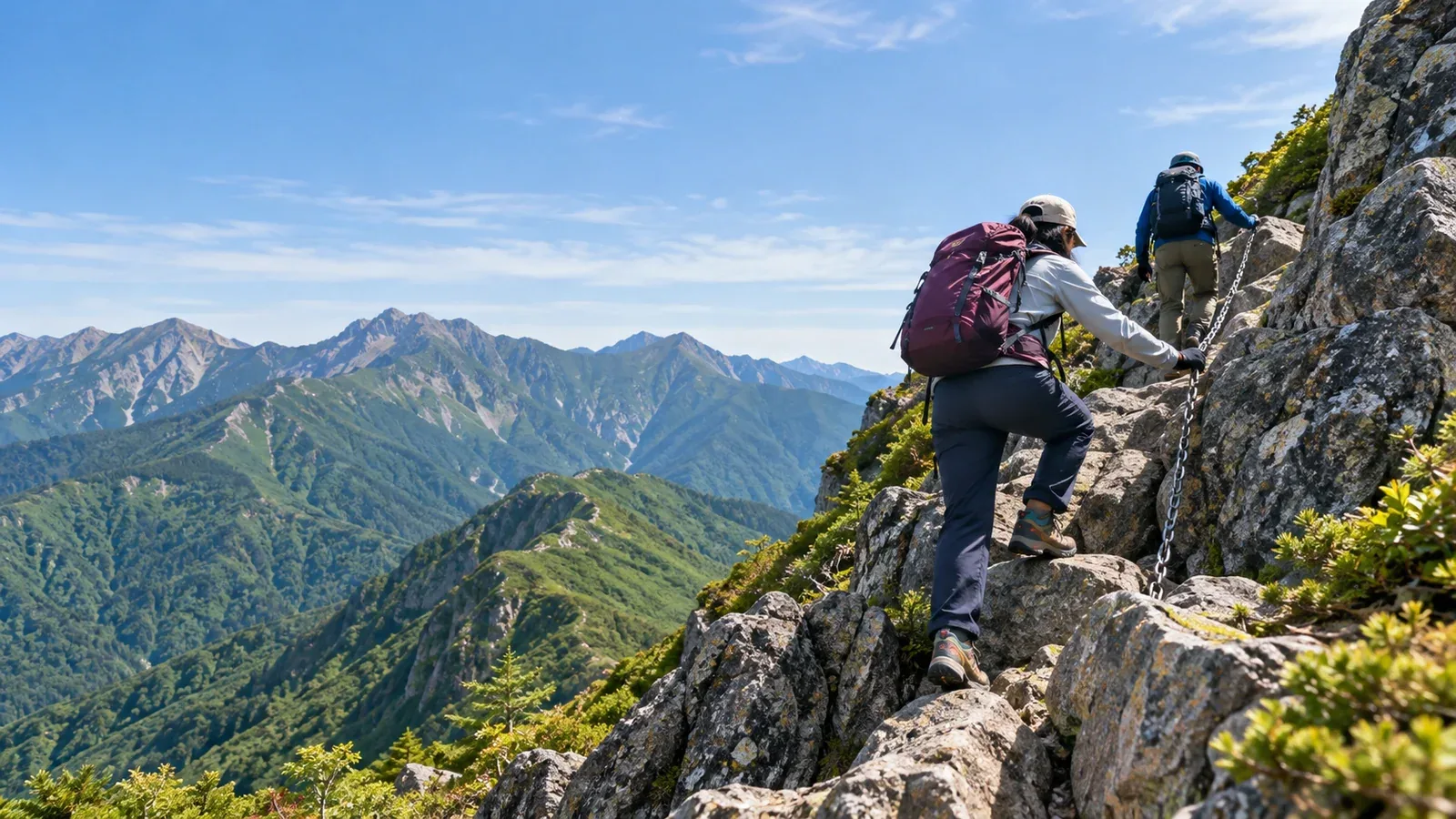
If you freeze before a rocky or chain section, stop where you’re secure and tell the group. Exposure and uncertain holds can be a lot to manage at once. Work out what is making the section hard before deciding whether to continue.
Feeling afraid on an exposed trail can be a response to real danger. Acrophobia is an intense fear of heights that can persist in places that are physically safe and interfere with everyday life. These experiences can overlap. A clinician can help assess recurring or severe symptoms.
Why rocky terrain can make fear stronger
Several demands can come together on a rocky trail.
Seeing the drop. A steep slope or valley in your field of view can make the consequences of a slip feel immediate. Pay attention to what you can see while staying on secure ground.
Feeling off balance. Small or uncertain footholds and a pack can make you tense up. Slow down, take stable holds and check whether you can still move with control.
Not seeing the next move. It’s harder to stay calm when you don’t know where your foot or hand will go. Look ahead from a secure place and check the descent and the way back before starting.
Instruction and practice on low-risk terrain can help with movement. If fear is intense, recurs or disrupts everyday life, talk to a healthcare or mental health professional before trying exposed terrain.
Notice what makes the situation difficult for you
Use these questions to choose practice or seek support. They can overlap and are not diagnostic categories.
When the movements are unfamiliar
- You are unsure how to choose and test foot placements or shift your weight.
- You feel more unsure about what to do than about the height itself.
- You can move calmly when the footing and holds are stable.
Practise footwork and balance with instruction on low, secure terrain. Use a route where you can stop and turn back easily.
When seeing a drop changes how you move
- Seeing an edge or drop makes you tense or freeze.
- You find it easier to focus on the next secure hold when you face the rock.
- Descent may feel harder because you can’t see the next foothold easily.
Keep your attention on the next secure hold and stop if you can’t move with control. Practise on low-risk terrain and keep away from exposed sections that exceed your current comfort and skills.
When fear is strong or affects daily life
- You regularly avoid heights even in places with physical protection.
- A viewing platform or glass lift can cause intense anxiety.
- You have had panic-like symptoms or been unable to move safely.
Consider professional support. Cognitive behavioural therapy, including gradual exposure in an appropriate setting, can help with specific phobias. An exposed mountain route is unsuitable as a place to force yourself through panic.
How to build confidence in stages
These are options for learning movement, and you can stop at any stage. Choose terrain where a mistake has limited consequences and you can step away easily.
Step 1: practise movement close to the ground
Choose a low, permitted practice site or an indoor wall with instruction. Learn how to identify a solid hold, place your feet and step back down under control.
Practise keeping three secure contacts as you move one hand or foot. Check each hold before weighting it. Keep the practice low and stop if you can’t move comfortably.
Step 2: choose a short, low-exposure hiking route
Pick an open trail with a short rock section and an easy alternative or retreat. Go with someone who understands your plan and can wait while you decide.
Look at the next secure foothold and confirm it before transferring weight. Pause on firm ground when you need to check the route, without losing awareness of other hikers and the terrain.
Step 3: assess a trail with a fixed chain
If you choose to try a chain section, do so with appropriate instruction on a route within your skills. Use the chain as a handhold where appropriate and check for loose rock or damaged fittings.
Before starting, identify the first secure holds and the permitted way down. Choose another route if there is no clear way to move and retreat safely.
Step 4: decide whether more exposed terrain is right for you
Narrow ridges and exposed traverses add fall risk and can make retreat difficult. They are optional objectives. Seek instruction from a guide qualified for the terrain if you choose to build toward them.
Check weather, rock conditions, crowding and the descent before committing. If fear stops you moving safely, stay on secure ground, tell the group and use your planned alternative.
Set a turnaround decision before leaving
Agree with companions where you can safely stop and what will make you change plans. Give each person room to speak up without pressure to continue.
Stop and reassess from a secure position if you notice any of these signs.
- Shaking or breathing that makes it hard to move with control
- Inability to maintain a firm grip or place your feet securely
- Feeling pressured to continue when you have doubts about moving or returning safely
If you cannot continue or retreat safely, stay secure, tell companions and call for help. In Japan, call 119 or 110 and describe your location and the terrain. Don’t let others approach an unsafe edge to reach you.
Taking the longer view
Build experience at a pace you can manage. Repeating an easier outing can help you learn how you react and what support you need. You can choose routes without exposed terrain and still keep hiking.
Choose a familiar route with secure footing and easy exits if you want to practise. Keep steps small, and seek professional support when symptoms are severe or persistent.
Before you go
Pick a low-risk setting and agree on when to stop and what alternative to use. If fear affects everyday life, consider speaking with a healthcare or mental health professional. For trail movement, Nordwand’s guide request tool can help you find a qualified instructor.
Further reading
- National Police Agency mountain incident reports
- Fire and Disaster Management Agency rescue statistics
- Japan Mountaineering and Sport Climbing Association mountain safety resources
References and sources
- National Institute of Mental Health · Specific phobias
- NHS · Phobias and treatment options
- Nagano Prefecture · Safe movement on rock, ladders and chains
- National Police Agency · Mountain incident reports
- Fire and Disaster Management Agency · Rescue statistics
- Japan Mountaineering and Sport Climbing Association · Safety resources
- Japan National Tourism Organization · Emergency numbers