
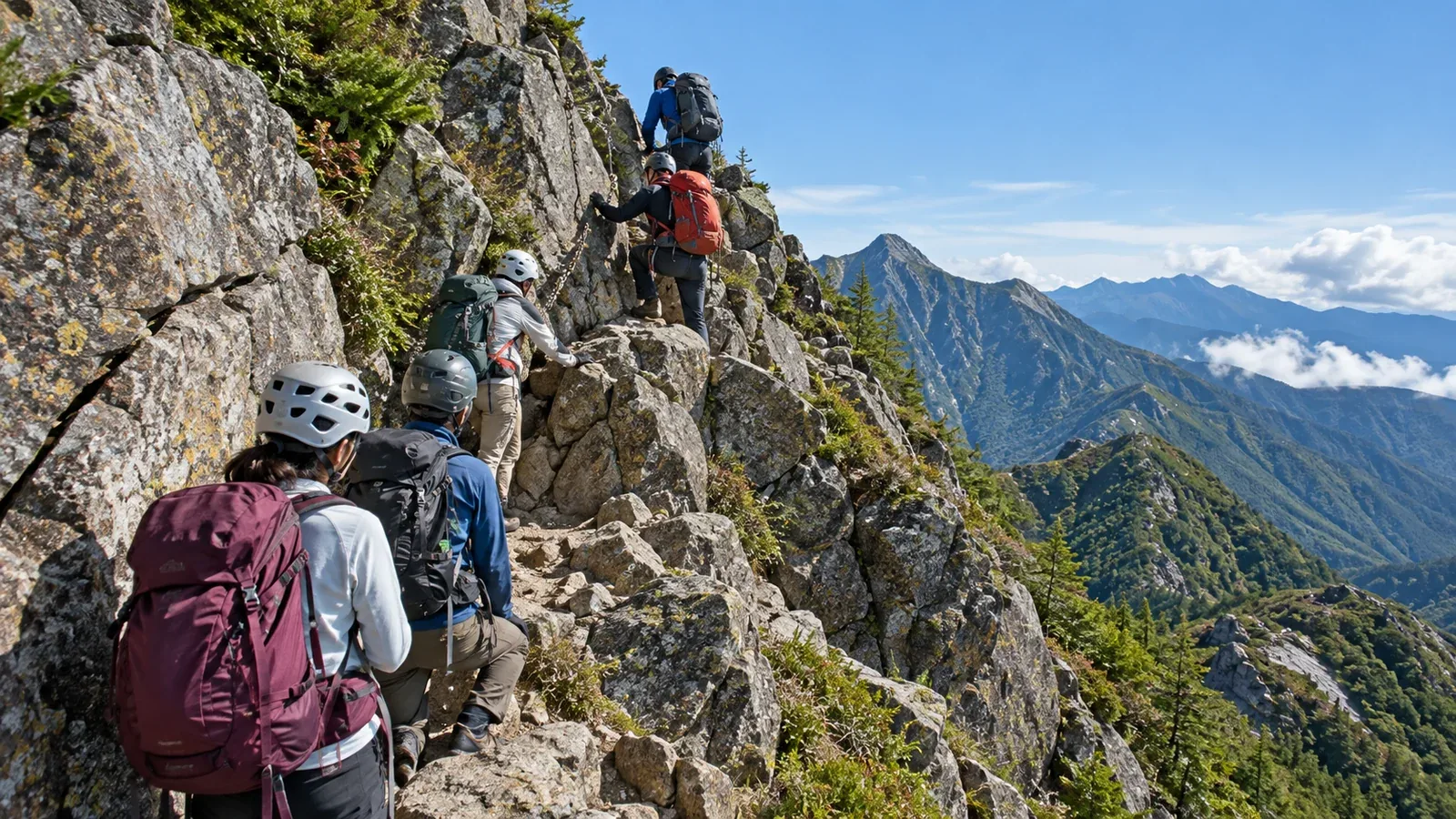
A queue can leave several hikers standing on cramped footholds at a rocky or chain-assisted section. Where you wait and what you tell the people behind you matter as much as how quickly anyone can cross.
A queue can build as hikers close in behind someone taking their time. Leave enough room for each person to stand securely and keep clear of the path of anything dislodged from above. Let others know why you have stopped.
Where bottlenecks form
Two common situations cause delays on rocky terrain.
On a narrow section, people going up and down may need to use the same holds or chain. One direction waits in a secure place until the other is clear. People also move at different speeds, especially when the holds or exposure are new to them.
Waiting is part of using a shared trail. Give the person on the rock time to cross at a controlled pace.
Where to wait
Look for a stable, wide spot on the trail where people can stand clear of the drop and the likely path of rockfall. If you are yielding, wait on the uphill side when it is safe to do so.
Keep clear of the area directly under a chain or steep rock face. Wait before the start, on an established wide spot. Use the exposed section one person at a time, following any local signs, and wait until the person ahead is clear before starting. If you cannot wait securely, return to the last safe place.
Tell the people behind you that the section is occupied and ask them to leave space. A slip or a swinging pack can affect several people standing close together. If you see a falling rock, warn everyone within earshot immediately.
Stow trekking poles and secure anything sticking out of your pack while you are on stable ground. A dangling strap or pole can catch on rock or interfere with someone else's footing.
What to say, and when
Keep calls short and specific. Say what is happening and who should wait.
When the person ahead has stopped
“The section ahead is occupied. Please leave some space.” The people behind you may not be able to see the hold-up from where they are.
When hikers are coming the other way
“Someone’s coming down. Let’s wait here.” Use local signs and the terrain to decide who goes first. Uphill hikers usually have priority on ordinary trails, but someone already in a narrow section needs room to clear it. Confirm who is moving and tell the people behind you to wait until that person is clear.
When someone ahead needs more time
“Take your time. We’ll wait here.” If they seem to need help, ask what they need from a secure position. Only pass at a stable, wide point on the trail, with both people in agreement. Do not climb alongside or above someone on a narrow exposed section to get past.
If you are the one who has stopped
Keep secure contact with the rock or holds, and let the people behind you know that you need time.
“I need a moment. Please wait there.” If there is an established bypass, the others can consider taking it from a safe position. Leave unmarked terrain alone, and give way only where everyone can stand securely.
If you cannot move safely, say so clearly and ask for help. Stay where you have secure holds. If someone is injured or there is no safe way to continue or retreat, ask someone in a safe place to call 119 or 110 in Japan and give the location and conditions. Technical rescues need trained people.
Plan for waiting time
Allow extra time at popular rocky sections. For example, the Ishizuchi summit hut warns that the Misen–Tengudake stretch can back up during Golden Week and the autumn foliage season. Ask the local operator what to expect on the day you plan to go.
If hikers are moving at different speeds, arrange to pass on a broad, stable stretch of trail before you reach the bottleneck. Check current notices from the trail manager or hut. Nordwand's hiking community can provide recent firsthand reports alongside those notices.
Give yourself enough daylight to wait, descend or turn back. Reassess if conditions worsen or the delay uses up your spare time.
Before your next hike
Mark the rocky sections and possible official bypasses when planning. At the trailhead, check the latest notices. When you reach a chain, stop on stable ground and look up and down before starting. In Nordwand’s Base Camp, you can ask hikers who know the route where the trail narrows and where they have been able to wait.