
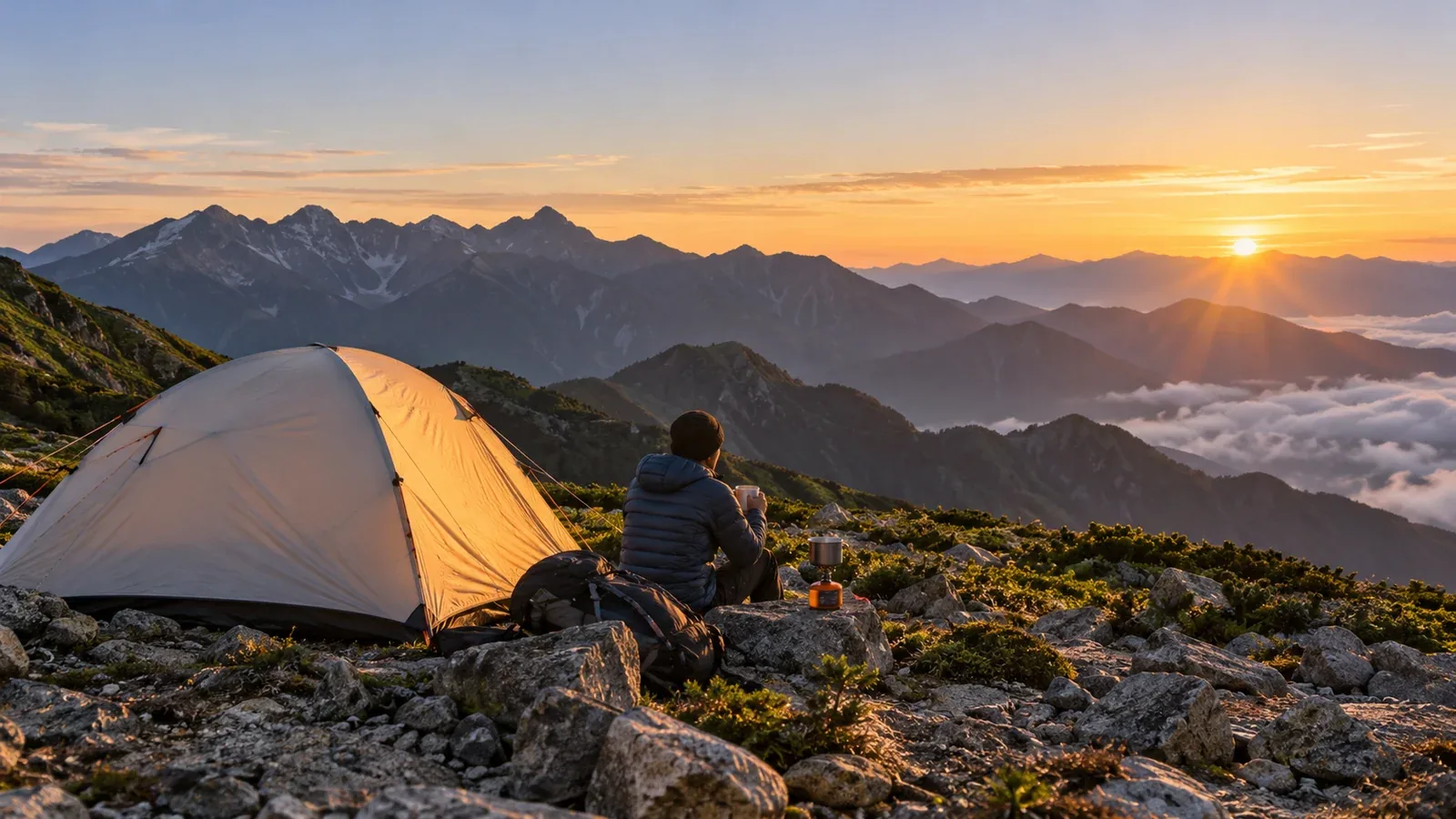
Japanese hiking reports use several words for spending a night outdoors, including bakuei, bivouac, tent overnight and yaei. They may all sound like camping, but they carry different meanings.
The distinction matters beyond vocabulary. An emergency bivouac and planned camping involve very different preparation, intent and risk. Knowing which term applies helps you fill in a hiking plan, talk to hut staff and make decisions in an emergency.
What is bakuei, or planned camping?
Bakuei means pitching a tent to spend a planned night. It comes from military vocabulary, and the first character is an old word for a tent. In hiking it means much the same as staying in a tent, but is more likely to appear in formal contexts such as a hiking plan, area rules or a hut notice.
Planned camping generally has three elements. You set out with a tent, sleeping bag and mat, you use a designated or permitted site, and the overnight stay fits into a plan that includes the next morning. You choose a place for the night in advance and set up there.
The Japanese terms tento-haku, a night in a tent, and yaei, camping outdoors, can describe much the same activity. Yaei has an older military and expedition flavour. In conversation, tento-haku is the usual word.
What is a bivouac?
Bivouac entered mountaineering vocabulary through French and German. In Japanese hiking, it often means an unplanned emergency overnight stay. A sudden change in weather, injury, darkness or getting lost can make it impossible to descend or reach a hut. Spending the night where you are then becomes a bivouac.
The essential feature of an emergency bivouac is that it was unplanned. You may have no tent and need to get through the wind and rain with a light emergency shelter called a zelt, rainwear, a pack cover or an emergency blanket. A night without suitable equipment can be life-threatening. When choosing emergency gear, ask whether you could survive an unplanned night out with it.
Some mountaineers also talk about a planned bivouac, an intentional night out with light equipment. Even then, gear choices and risk management differ from ordinary camping. Here the focus is emergency bivouacs, which are the first meaning beginners need to understand.
What the terms say about preparation
The main difference is what you planned and prepared to do. Compare these points.
- Plan: camping is scheduled. An emergency bivouac is unplanned.
- Tent: you take one for planned camping. In an emergency bivouac, you often do not have one.
- Site: camping uses a designated or permitted area. An emergency bivouac depends on the terrain and situation.
- Permission: check permission in advance for camping. An emergency bivouac is an immediate safety measure.
- Risk: camping risks can be managed by preparation. An emergency bivouac carries higher risks, including hypothermia and the need for rescue.
If your hiking plan lists planned camping, specify where and for how many nights. An emergency bivouac is not an itinerary stop, but you can list bivouac equipment in your preparations.
Where camping is allowed
You cannot pitch a tent anywhere in the mountains. Japan’s Ministry of the Environment asks national park visitors to camp only in designated places. Specific rules depend on the area and its manager. Before leaving, check the local authority, park office or hut’s official information.
Designated campsites often charge a fee. Prices and reservation rules vary, so check directly with the manager.
Camping without permission can cause legal problems. Arriving late or tired due to a tight plan is different from needing emergency shelter. Leave time in your schedule and aim to get to your campsite before sunset.
Avoiding a bivouac and being ready if it happens
An unplanned overnight stay is something to avoid and also something to prepare for.
To avoid an emergency bivouac, take the following precautions.
- Allow a margin in your walking times. Decide before leaving to turn back if you have not reached a specified point by a specified time.
- Use official or specialist mountain forecasts and reconsider setting out if a sudden change is likely.
- Keep track of your location with a map and compass or a GPS device.
To prepare for an emergency bivouac, carry the following even on a day hike.
- A zelt or other lightweight one-person emergency shelter.
- A reflective emergency blanket to help retain heat.
- Waterproof, windproof jacket and trousers.
- Spare trail food and water.
- A headlamp and spare batteries.
Practise setting up your emergency shelter in advance. Try it at home or in a sheltered place such as a nearby park where that is allowed.
If you suspect hypothermia, get out of the wind and rain, replace wet clothing with dry clothing and insulate the person to limit heat loss. Offer a warm drink only if the person is fully alert and can swallow safely. Call for rescue as soon as possible if symptoms are severe or worsen, for example if the person becomes confused or drowsy. Follow guidance from medical or mountain rescue professionals.
What to do next
When planning your first camping trip, look on the local authority or park manager’s website for designated sites, rules and reservations. For bivouac gear, ask at a hiking shop how to use a lightweight shelter and emergency blanket. On Nordwand you can also ask a certified guide or join a community of people who have camped in the mountains.
References
- Ministry of the Environment, Japan: Natural Parks Act
- National Police Agency: overview of mountain incidents
- Japan Meteorological Agency: mountain-weather information