
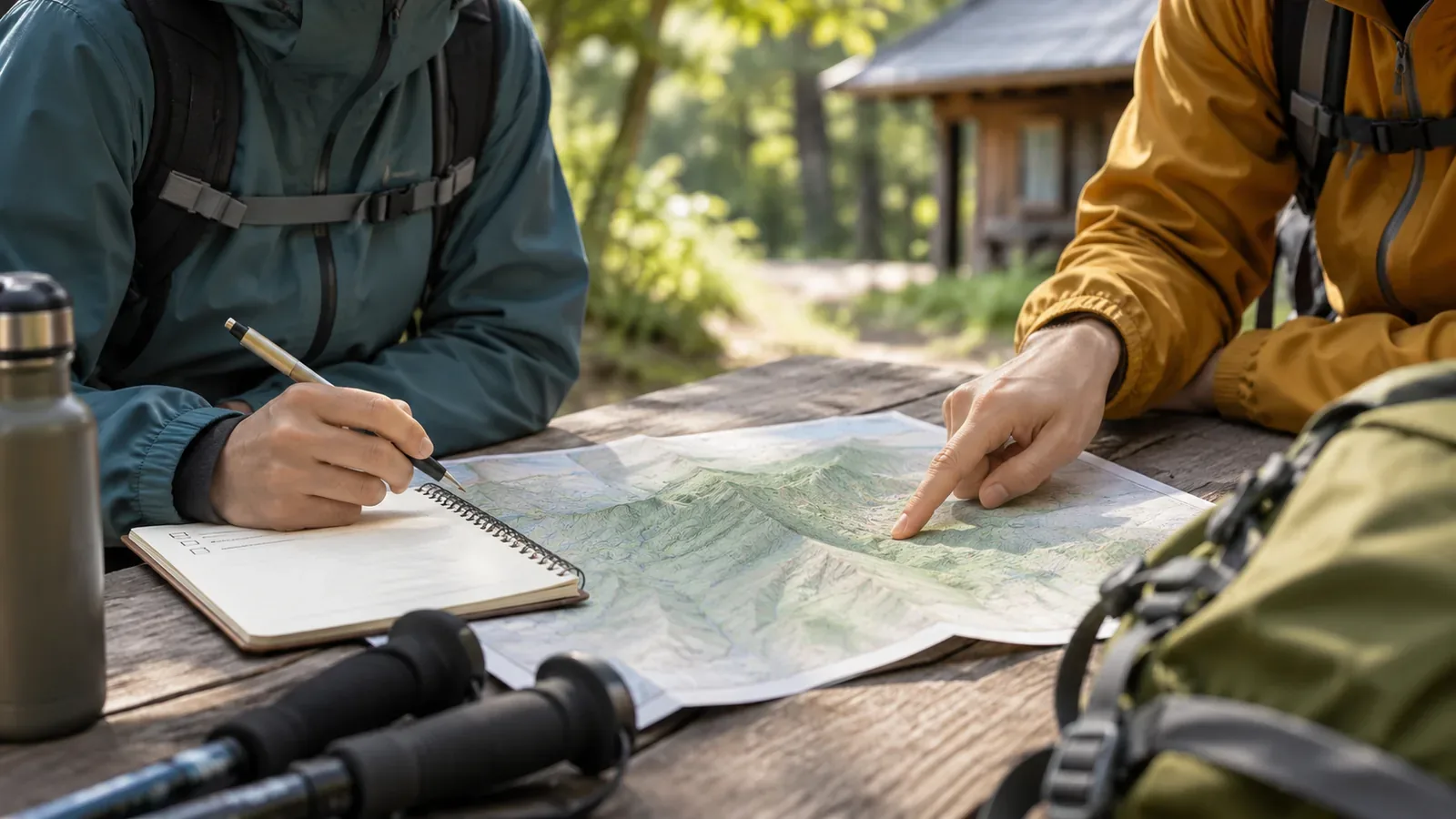
You can decline an invitation or ask to change the plan if you feel unsure, are unwell, or have a scheduling conflict, even when the person inviting you is experienced. If the route would take you beyond your usual difficulty or distance, say so before you leave. Prefectural route grades can help you choose within your abilities and allow enough time. Here is how to use them in that conversation.
What an experienced companion can do when a grade is new to you
Gunma and Gifu advise hikers to bring an experienced companion the first time they try any grade. This is a condition for taking on a new grade. The same guidance recommends that beginners build up gradually from easier routes. Yamanashi and Gifu show this as moving from the lower left of the chart toward the upper right. The route still has to suit you.
Yamanashi calculates the physical grade from estimated hiking time, total distance, cumulative ascent, and cumulative descent. These are features of the route. The editorial team's conclusion is that an experienced companion can help you make decisions, while the physical demands of the route stay the same. Assess whether those demands are within your own abilities.
Yamanashi and Gifu advise middle-aged and older hikers to use the grades of past hikes for reference and to account for changes in their fitness and abilities over time. The editorial team would apply the same thinking to a route an experienced companion remembers. That route may feel different to you now. The prefectural guidance addresses the hiker's own experience.
Say what concerns you and use the numbers if they help
Feeling unsure is reason enough to decline. If you want to suggest a change, comparing estimated hiking time, ascent and descent, and technical grade can help you decide which part to shorten or what to practice before trying the route.
Yamanashi grades 123 routes, Gunma 99, and Gifu 75. They use a physical grade from 1 to 10 and five technical grades from A to E. Here is how the technical grades work.
A routes are generally maintained and easy to follow. B requires hiking experience. C can involve ladders and chains and requires map-reading skills. D can involve rocky ridges, scree, and pushing through brush, and requires route-finding skills. E requires advanced judgment. Gifu notes that some sections may be unsafe without a rope for some people. If the proposed route is above the highest grade you have already hiked, that grade is new to you.
Gunma suggests spreading a physically demanding route over several days. Before choosing that option, check whether accommodation is open and available, whether you need reservations, and what gear you will need. Start by suggesting a shorter or familiar route. Consider an overnight plan if the arrangements work. If you cannot find a route that suits you, you can sit this one out.
All three prefectures grade routes for good weather and snow-free conditions. Account separately for bad weather, lingering snow, and how you feel. Yamanashi excludes winter mountaineering and notes that trails may have changed since its grading was compiled in 2016. Check current access and safety separately. When comparing the tables, make sure you are looking at the same section, whether the route is one-way or out-and-back, and the same grading conditions. For a route that is not listed, ask a hut, municipal office, or police station about current conditions. You can also decide to wait until you know the grade before making plans.
Make a one-page note for discussing whether to go or change the plan
The editorial team suggests a simple note based on the principles in the sources. Write down the six items below and share them with your companions a few days before you leave.
1) The proposed route's physical and technical grades, the source, and its update date. 2) The same grades for routes you have hiked, taking your current fitness into account. 3) Whether this grade is new to you, which skills you have yet to use, and what support your companion can offer. 4) Alternatives: a shorter or familiar route, an overnight option with arrangements checked, or skipping this trip. 5) Hazards and escape routes. The National Police Agency recommends a schedule with plenty of time, identifying hazards and escape routes in advance, and preparing, sharing, and submitting a hiking plan. 6) What time, physical condition, or weather would lead you to call off the hike or turn back.
You could say, “This route is longer than the ones I have hiked recently, and I'm concerned about the descent. I'd like to choose a shorter route this time.” Add the physical grade if you know it. You can also say, “If we can't change the route, I'll sit this one out.” Be open about whether you want to go and how you feel, even with a more experienced companion.
Keep the option of turning back on the day
Yamanashi Prefectural Police warn that people get lost even on low mountains, for example when darkness falls and they have no light or when they lose the route without a map. Bring your own light and map and make sure you understand the plan. The U.S. National Park Service also recommends choosing activities based on what you can comfortably do. Check whether a route your companion handles easily is within your range.
If you get tired or worried on the trail, say so and discuss the plan where you can stop on stable ground. The National Police Agency cautions that phone reception and battery life can be limited. Plan to make decisions together while you are still in contact. Reassess based on how people feel and conditions on the ground, even before a prearranged stopping point. If you are unsure of the route, get to a safe spot and confirm your position. Retrace your steps only if you can confirm the way and do so safely. If you cannot move on your own, call for help early.
Summary: Say whether you want to go and what would make the route work for you
You can decline a route beyond your abilities even with an experienced companion. Say how you feel. If you want to suggest a change, discuss the estimated hiking time and physical and technical grades. If a shorter or familiar route is impractical, you can skip this trip. On the day, check how everyone is doing and what conditions are like, and revisit the plan early if they change.
References and sources
- Yamanashi Prefecture: Mountain Route Grading in Yamanashi
- Gunma Prefecture: Mountain Route Grading, Revised April 2025
- Gifu Prefecture: Mountain Route Grading
- Yamanashi Prefectural Police: Mountain Emergency Statistics
- National Police Agency: Overview of Mountain Emergencies in 2024
- National Park Service: Trip Planning Guide