
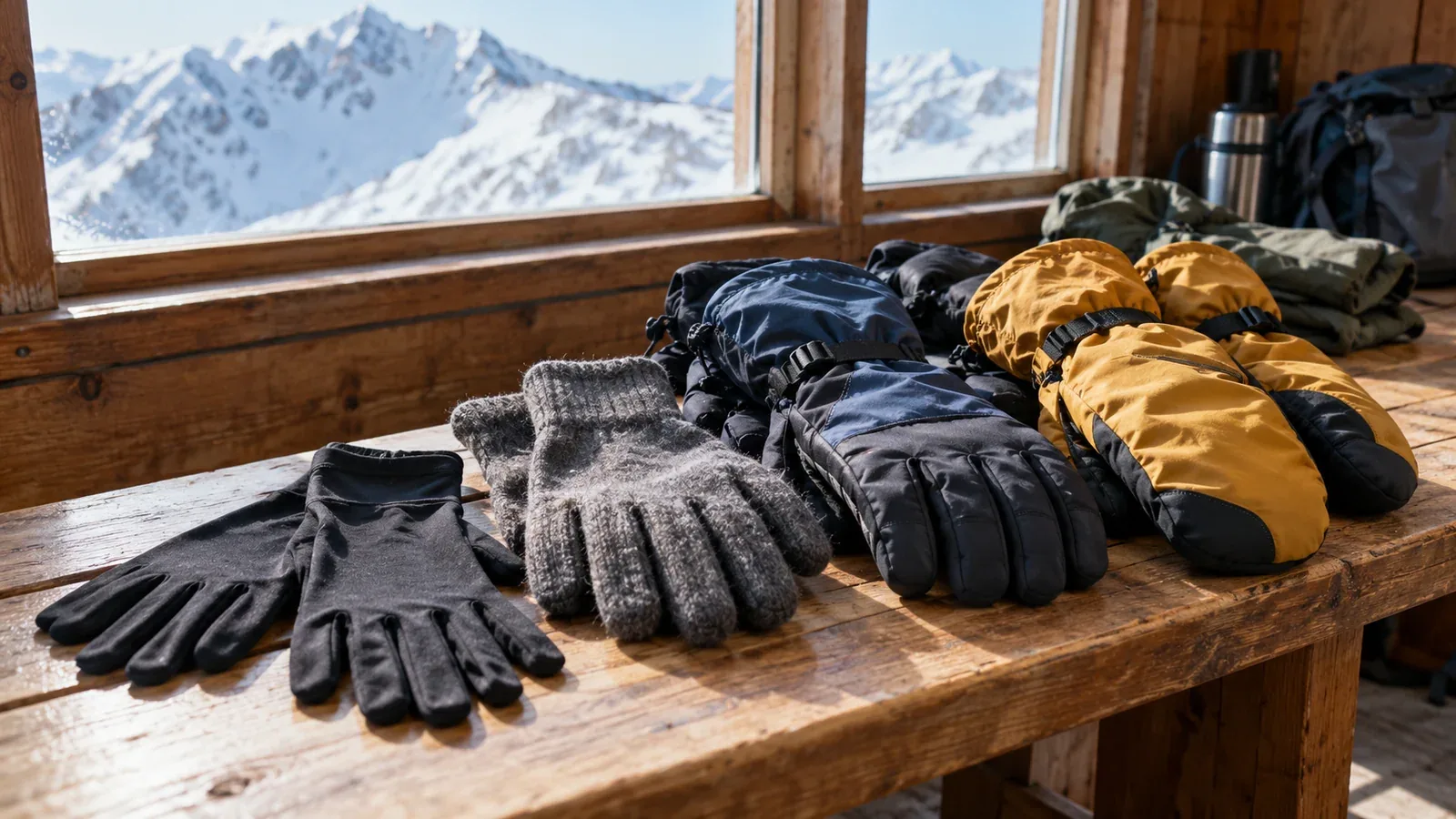
Losing a glove or soaking your only pair can quickly leave your hands exposed in winter. Plan how you will protect your hands while walking, handling gear and stopping. A dry spare lets you keep that protection if your first pair gets wet or goes missing.
This guide explains the roles of liners, insulation and outer protection, how to combine them, and how to carry spares. Choose the system for the weather, terrain and tasks you expect.
Why use layers for your hands?
Opening a buckle, reading a map or taking out food can expose your hands to cold and wind. Thick mitts can make some tasks difficult. Practise doing those tasks with liners or gloves you can keep on.
Sweat and external moisture can reduce warmth and make gloves hard to use. Separate or removable layers give you the option of replacing a damp liner or using dry insulation while keeping the rest of the system.
Three roles in a winter glove system
Think in terms of a liner, insulation and protection from wind and wet snow. Some gloves combine two or three of these roles. Choose a combination that fits without squeezing your fingers.
Thin liners for dexterity
Light wool or synthetic liners can help when you need finger control. Wool and synthetics vary in how they handle moisture. Choose a liner that dries readily and works with your outer glove.
Practise using your map and compass, doing up buckles and adjusting crampons while wearing the gloves you will take. Keeping a liner on can reduce the time your skin is exposed.
Thin liners offer limited protection in wind and snow. Replace the outer layer promptly and use a sheltered spot when you need to work with less protection.
Insulating gloves or mitts
Fleece and synthetic insulation are common options. A separate insulated layer can help when you stop, wait or reach an exposed ridge. If a combined glove already provides enough warmth and protection for your route, a separate middle layer may be unnecessary.
For long or exposed outings, plan for rest stops and delays. Bring an insulated option that fits under or inside the protection you will use and keep it dry for when you need it.
Outer gloves or mitts for wind and moisture
Choose an outer layer that protects against wind and wet snow as needed. Check how its cuff fits with your sleeve, how the closures work and whether it can accommodate the layers you intend to wear.
Mittens often keep fingers warmer by keeping them together. They can make it harder to handle small buckles, carabiners or other equipment. Try the tasks you need to do before the trip.
Fingered gloves generally offer more dexterity. Warmth varies with insulation, fit and weather protection. You may use one system for exposed stops and another for moving or handling gear.
Some models have a wrist leash that can help prevent drops. Use it as the manufacturer directs and check whether it could catch on other equipment during the task you are doing. Change layers in shelter when possible.
Managing moisture and freezing
Keep track of both sweat inside the gloves and snow or water entering from outside.
Use a liner that handles moisture, and adjust your effort or layers when conditions allow. A breathable outer glove can still feel damp during sustained effort. Change a wet layer before your hands get too cold.
Check the seams, cuff and overlap with your sleeves. Follow the maker's guidance on which surfaces and seams are waterproof. Keep snow out when opening the cuff and dry the glove as recommended.
A wet glove can stiffen or freeze in cold conditions and become difficult to put on again. Switch to dry protection in a sheltered spot while you still have dexterity. If your fingers become numb or unusually pale, stop exposure to the cold, protect your hands and seek medical help if you suspect frostbite.
Choosing and carrying dry spares
Take at least one dry backup that can protect your hands in the conditions you expect. How much extra you carry depends on duration, exposure, moisture and your chances of drying gear.
For a short winter day trip, carry a dry spare pair that gives enough insulation and protection if your main pair gets wet or lost. Spare liners can help if you often sweat while climbing.
For overnight, exposed or stormy trips, plan extra dry liners and a backup insulated glove or mitt appropriate to the conditions. Consider how you will keep a complete dry option until the next day even if nothing dries overnight.
Keep a spare accessible without unpacking the whole bag. Use a pocket that closes or a secured dry bag near the top. Tell companions where to find a spare if someone needs help.
Pack spares in a waterproof bag so they remain dry if the pack gets wet. Keep damp gloves separate from dry layers.
What to check before leaving
Try the full system at home with the jacket and equipment you will use.
- Practise changing layers. Put on and remove the outer layer over the liner. Check that your fingers have room and practise working with your gear without removing all protection.
- Check where the spares are. Reach them with gloves on, close the pocket or bag securely and tell a companion where to find them.
- Inspect the outer glove. Check wear, seams, closures and water repellency. Clean, dry or restore repellency only as the manufacturer recommends for that glove.
Check the latest weather warnings and a forecast for your route and elevation before leaving. Think through what you will wear in the trees, on an exposed ridge and when stopped. If you cannot keep your hands warm and functional, turn back before the problem gets worse.
Your next step
Check the forecast and group your existing gloves by what each pair does. Practise using your gear in them and pack a dry backup that works for the route. If you need help choosing, take your gloves and equipment to a specialist shop or ask a qualified winter guide.
Official and technical resources
- Japan Meteorological Agency weather warnings
- National Police Agency statistics and national winter equipment guidance
- Mountaineering course kit lists, glove care and frostbite prevention
References and sources
- Japan Meteorological Agency — Weather warnings and advisories
- National Police Agency — Mountain accidents and statistics
- Central Council for Mountain Accident Prevention — Winter advisory and equipment checklist
- Mountaineering Scotland — Winter clothing and equipment
- Mountaineering Scotland — Winter course equipment list
- U.S. Centers for Disease Control and Prevention — Preventing frostbite
- NIOSH — Cold stress and protective clothing
- GORE-TEX — Manufacturer's glove care guidance