
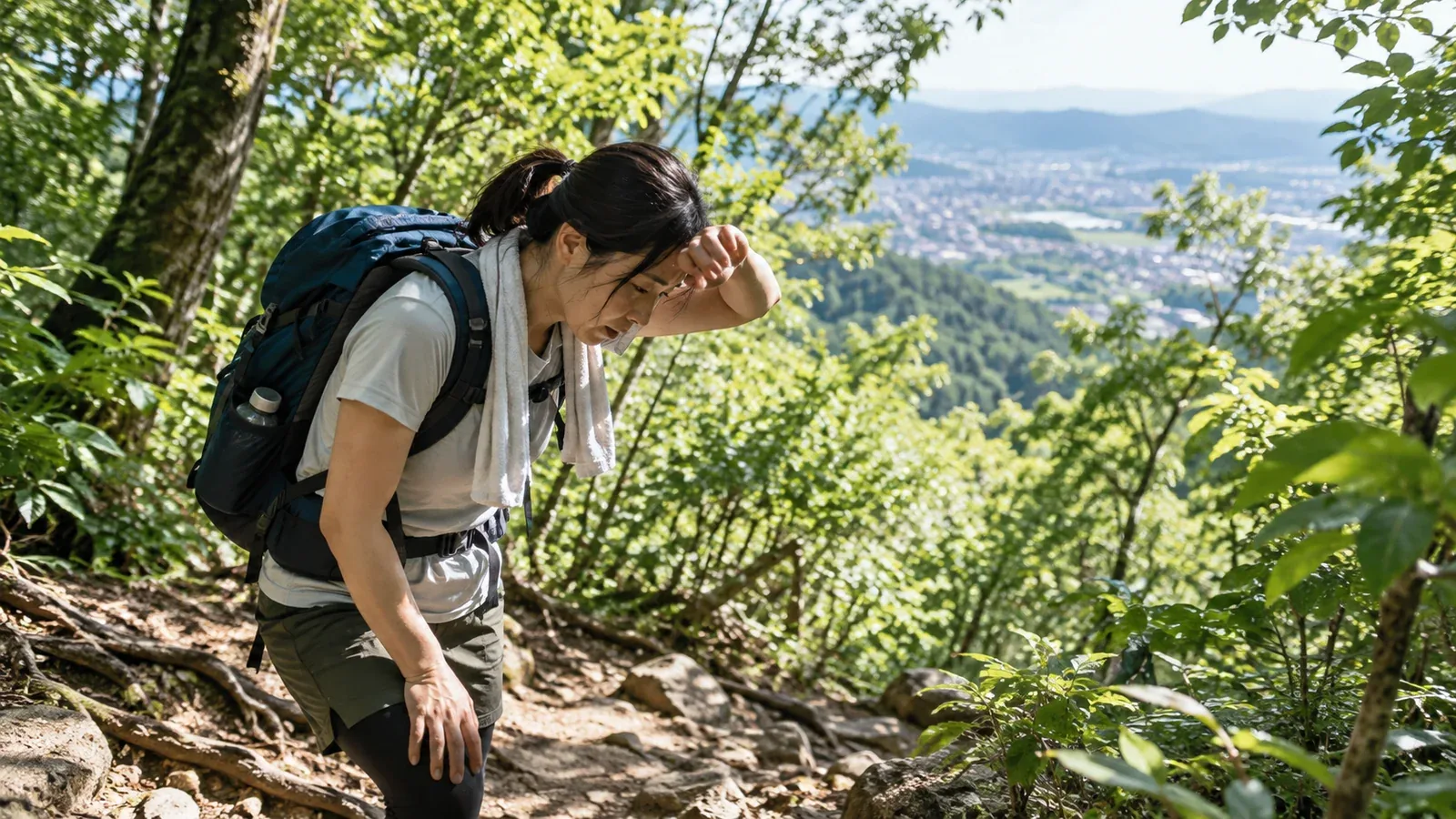
A low mountain can look like an easy outing in midsummer, until the heat stops you on the first climb. When there is little elevation gain from the trailhead, even the summit can be hot.
Here is how temperature, humidity and sunlight make it harder to stay cool on a low-elevation trail, how to assess the heat before you leave, and what these mountains offer from autumn through spring.
Why low mountains can feel so hot in summer
Air generally cools with elevation. A short climb from the valley may bring little relief on a low mountain. Terrain and the weather that day also matter, so check the forecast for your starting point and the hours you expect to be walking.
Trees offer shade, but wind can drop in parts of the forest. In humid, still air, sweat evaporates more slowly, making it harder for your body to shed the heat you build up while walking.
On a sunny slope or rocky stretch, you absorb heat from the sun and from the warmed ground and rocks. If you are about to leave the shade for an exposed stretch, look ahead for somewhere shady to rest.
Three factors that increase the risk of heat illness
The WBGT heat index accounts for air temperature, humidity and heat from the sun and your surroundings. Check it alongside the temperature forecast on hot days.
High temperatures. When temperatures rise in the valley, the trail and summit can heat up as well.
High humidity. Sweat evaporates more slowly in humid air, making it harder for the body to cool itself.
Direct sun. Even a mostly shaded route may include exposed ridges, summits and open south-facing slopes.
If you develop a headache, dizziness or nausea, stop walking and get to a cool spot or well-ventilated shade. Loosen clothing and cool the body. If the person is alert and can drink on their own, give fluids and salts. If they do not respond or cannot drink unaided, call 119 in Japan immediately. Keep cooling them and do not force them to drink. If symptoms persist after resting, get medical care promptly.
Does an early start help?
Early mornings can be cooler than the middle of the day. Check the hourly temperature and WBGT forecast, and choose a short route you can finish before the heat builds.
Even an early start takes some planning.
- Dew and wet trails. Watch for slippery footing after overnight rain or where dew still covers the trail.
- After a hot night. If temperatures barely fell overnight, it can already be hard to stay cool in the early morning.
- A late descent. Time spent checking the route or stopping to rest can push an early hike into the hotter part of the day. Leave a margin in your schedule.
Check the forecast, local WBGT and heat illness alerts the evening before and again before leaving. If an alert covers the area, postpone or choose a different destination.
Low mountains from autumn through spring
From autumn through spring, you can find cooler walking conditions by choosing your area and checking the forecast. Account for sunset, trail conditions and equipment as the seasons change.
Autumn (late September to November). Cooler weather makes walking easier. Allow for crowds during autumn foliage season and set a descent time that accounts for earlier sunsets.
Winter (December to February). On low mountains with little snow, leafless woods can open up views of ridges and valleys. Bring warm layers and gloves. Where snow or ice is present, make sure you have the right equipment and know how to use it. Choose an ice-free route if conditions are beyond your skills or equipment.
Spring (March to early May). Flowers appear and good walking days become more frequent. Temperatures and weather can change quickly in early spring, so pack a windproof, waterproof shell.
Check seasonal weather information from the Japan Meteorological Agency and the latest trail notices from local authorities, trail managers or mountain huts.
What to check before a summer hike
Before choosing where and when to go, check the following five points.
- Check the WBGT. The exercise guidelines published by Japan’s Ministry of the Environment advise avoiding strenuous exercise from WBGT 28 and generally cancelling exercise at 31 or above. Even without an alert, factor in the effort of the climb and how hot the trail will be when deciding whether to postpone or change routes.
- Keep the walk short. Choose a route with a short standard walking time, shady places to rest and easy opportunities to turn back.
- Bring fluids and salts. Take enough for the conditions, time on the trail and available water sources. Replenish both regularly before you feel thirsty.
- Agree when to stop. Before setting off, talk with your companions about what you will do if the heat exceeds the forecast or someone feels unwell.
- Walk with someone. On unfamiliar routes, walking with an experienced companion makes it easier to spot changes in how people are feeling. File your hiking plan and tell a friend or relative where you are going and when you expect to be down.
Plan your next walk
Check the forecast, WBGT and any heat alerts for the hours you plan to be on the trail. If conditions are too hot, wait for a cooler day or go in autumn. You can find hiking partners in the Nordwand community.