
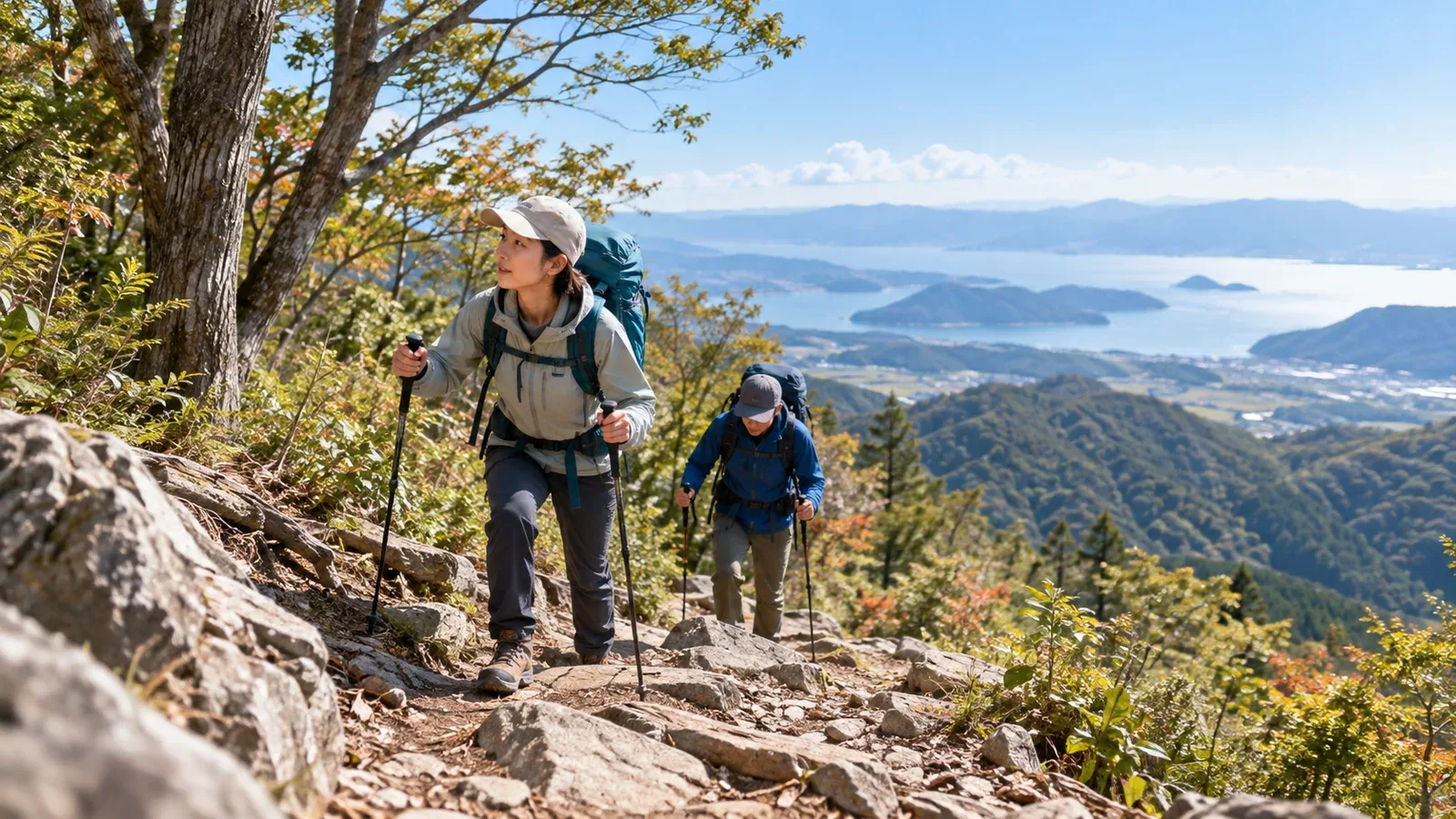
Even if you walk for 30 minutes every day, a long descent on your first hike can leave your thighs tired and your footing less steady. On mountain trails, you adjust your stride to slopes and steps and control your speed downhill while carrying a pack.
Here is how to gauge your readiness and build up to hiking if you already walk regularly.
How hiking differs from walking on flat ground
It is easy to keep an even stride and pace on flat ground, which gives you a base for longer walks. On a trail, you push yourself uphill and brace yourself to control your speed downhill. Rocks and tree roots also change where you place each foot.
On a descent, the muscles at the front of your thighs lengthen under tension to support your weight. This is called an eccentric contraction. If you are unaccustomed to sustained descents, your thighs may feel sore later.
Stiffer shoes and the weight of a pack can change how you stride and balance. Testing both in familiar surroundings helps you spot where shoes rub or the pack shifts as you move.
Three things to check before you start
Before choosing your first route, check these three things on your usual walks or on stairs.
How long you can walk comfortably
Notice how long you can walk on a normal outing without getting too tired. On your first hike, allow for the descent, breaks and travel to and from the trailhead. Build up gradually on local flat routes if you want to walk for longer.
How your knees feel on stairs
Notice any knee pain or instability when you go down a short flight of stairs. If it keeps happening, talk to a medical professional before increasing the load.
How it feels to walk with a pack
Put water and rain gear in the pack you plan to take and go for a short walk. Adjust the fit after checking how heavy it feels, how much it moves and where it presses on your shoulders and hips.
Work up to your first hike
Get used to slopes and stairs, test your equipment close to home, then try a short route on a low mountain.
Step 1. Walk short hills or stairs
Choose somewhere with steady footing, such as a slope in a park or a nearby staircase. Add a short climb and descent to your usual walk. See how tired or sore you feel the next day or later before extending it.
On descents, take shorter steps, look where you place your feet and walk at a speed that lets you stop easily.
Step 2. Test your shoes and pack close to home
Walk around your neighbourhood in new shoes to check whether your heels slip, anything rubs or your toes hit the front on a descent. If you notice discomfort, adjust the lacing or try different socks and test them again.
Pack what you will take on the day, including water, snacks, rain gear, a map, first aid supplies and a headlamp. Adjust the shoulder straps and hip belt. Check that the load stays steady and that you can reach your water and map easily.
Step 3. Start on a low mountain with little elevation gain
Choose a short, maintained route with easy places to turn back. Check the elevation gain, estimated walking time, trail access and return transport with the local authority or trail manager. Keep enough time for breaks and the descent.
Save enough energy to stay steady on the way down. Once you have recovered, increase one thing at a time, such as distance or elevation gain. Repeat a shorter, easier route if you felt unsure on the descent.
Common mistakes when getting started
Rushing into the next hike. After a descent you are not used to, soreness can appear the next day or later. Wait until you are walking normally and feel rested before planning your next outing.
Walking through knee pain. If a knee hurts or feels unstable, stop somewhere safe. Work out a manageable way back with your companions. Call for rescue if you cannot move safely on your own.
Leaving the weather check until later. Rain and strong winds can affect your footing even on a low mountain. Check the forecast and trail conditions both the day before and the day you go. Change the plan if the conditions are unfamiliar.
Try this on your next walk
Add a short hill to a regular walk this week. See how your legs and knees feel the following day or later. If you feel ready, look up a nearby low-mountain route. You can also find someone to join your first hike in the Nordwand community.