
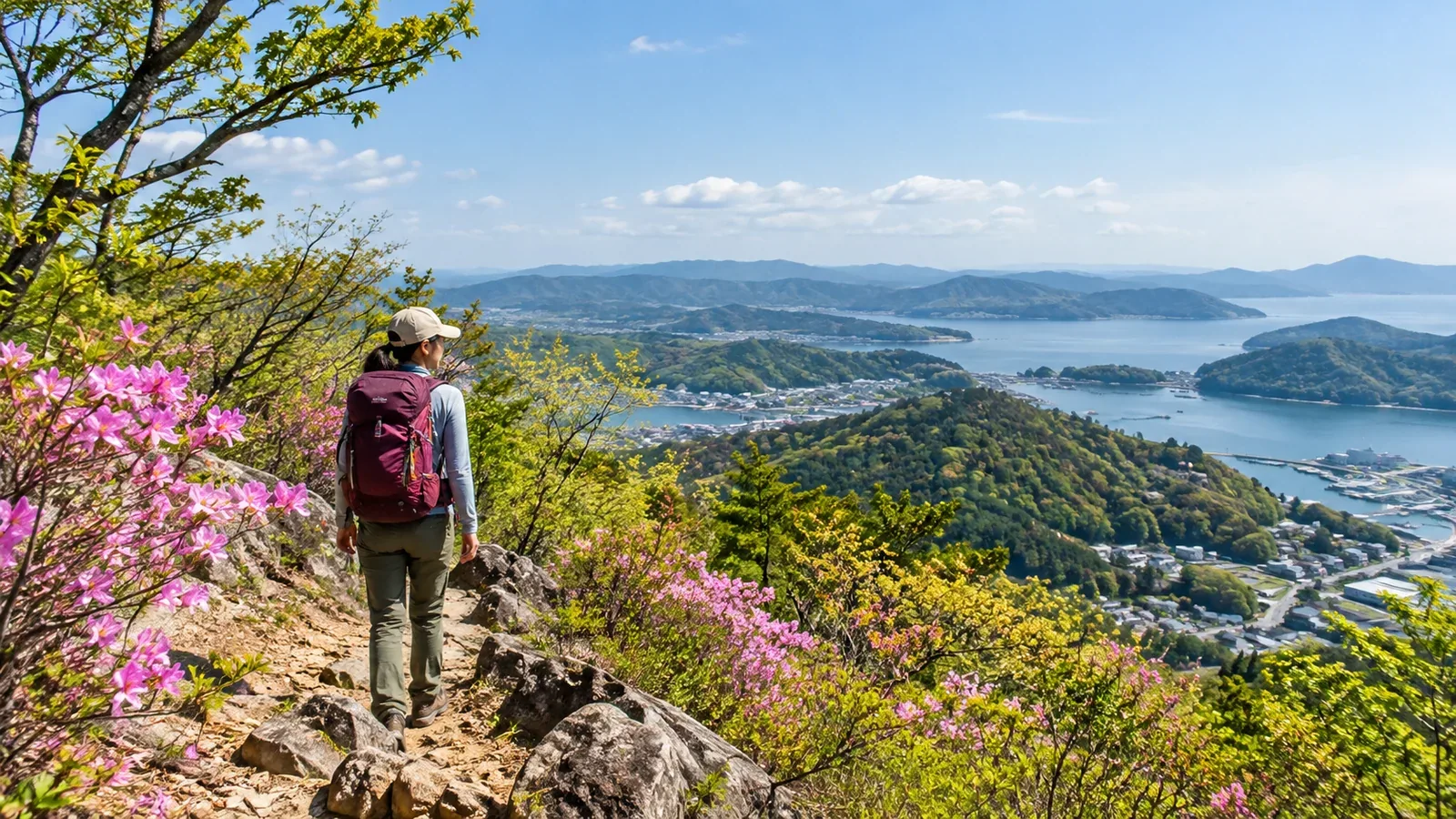
On a mountain near a town, you can pass from a settlement into woods and come out on a ridge in a single outing. Focusing on nearby peaks of around 500 metres or less, here is what to look for as seasons and routes change.
Before a first visit, choose something to watch for along the way, such as a change in the trees, an old road or a glimpse of the town from the ridge.
From settlement to ridge, the scenery changes over a short distance
Mount Hiwada in Hidaka, Saitama Prefecture, is 305 metres high. The city’s guide also describes nearby Kinchakuda, the traditional houses of the Koma area and trails continuing to Mount Takasasu and Mount Monomi. You can walk one peak or make time to see more of the local landscape and its history.
You might go from mixed woodland by the fields to a shady slope and then a sunny ridge. The trees and light vary from place to place. In autumn, some woods let you compare the colours of konara and sawtooth oaks and Japanese zelkovas.
Some mountains still have shrines, small roadside sanctuaries, remains of charcoal kilns, stonework or old roads over a ridge. Thinking about why a path follows its course can show how the terrain and local history fit together.
Ways to enjoy low mountains in each season
Even on a low mountain, the ease of walking changes with the season and the weather that day. Return to the same trail at different times to see how the leaves and light change.
In spring, some woods have early flowers such as Japanese dogtooth violets. Some plants flower before the deciduous trees leaf out, and the timing varies by place and year. Watch from the trail.
In summer, the woods turn deep green, and some trails offer shade and the sound of streams. Check the heat index and forecasts. Shorten or skip the hike if severe heat is expected. Near streams, watch for higher water after rain.
In autumn, the changing colours of the mixed woods are a highlight. Timing varies by area and year, so check local updates before leaving. When the leaves begin to fall, look out for steps or drops hidden underneath.
In winter, the bare branches can reveal towns and mountains hidden by leaves in warmer months. Snow and ice are possible even at low elevation. Before leaving, check the Japan Meteorological Agency forecast and local notices about trail access and surfaces.
Ways to walk without aiming for a summit
You can make an outing of reaching a ridge, walking to a viewpoint or visiting a historic site even on a day when you skip the summit.
On a ridge linking neighbouring peaks, look at where the path runs in relation to ridges and valleys. Compare the contours on a topographic map, such as GSI Maps, with the slopes you see on the ground.
A loop that descends by a different path lets you see other woods and views. Before leaving, check junctions and closures on the descent and how you will get home from the finish.
Pick one thing to observe, such as birdsong, fungi, lichens or insects, and even a familiar trail can turn up something new. Lichens are associations between fungi and partners such as algae. Look for them on rocks or bark without leaving the trail.
Risks to check on low mountains
Check the difficulty of the trail and the time to descend separately from the summit elevation.
Getting lost can happen at low elevations, too. Forest scenery may look alike from one stretch to the next, and some paths do not appear on the map. Take an offline map and a paper map, and confirm where you are at junctions.
Watch for brush, insects and plants that irritate the skin. In grass and brush where ticks may be present, cover your skin with long sleeves and trousers and use repellent as directed. Avoid eating plants or fungi you do not recognise.
Work backward from sunset to set your departure and turnaround times, and bring a headlamp. Check how the area accepts hiking plans and tell family or friends the route and expected time down.
Sightings of wildlife such as bears and wild boar vary by place and season. Check the latest information from local authorities or site managers and follow instructions on the ground.
What you gain by walking the same mountain again
On a trail you walked in spring, autumn brings different leaves, sunlight and traces of use. You may also notice how much less or more out of breath you feel on a slope only after walking it more than once.
Find a mountain that is easy to reach and you can take a short hike when you have time, then return in another season. After a few walks, you will notice things the map could not show you.
Your next step
Choose a mountain you can reach easily and use a topographic map to check junctions and the end of the descent. Check the forecast, access notices and transport home, and share the plan. You can also use the Nordwand community to find people who hike in the area.
Sources
- City of Hidaka: Mount Hiwada
- Geospatial Information Authority of Japan: GSI Maps
- Japan Meteorological Agency: Weather forecasts
- Ministry of the Environment: Heat illness prevention information
- Ministry of the Environment: Miyajima park volunteer training on tick prevention
- National Police Agency of Japan: Mountain incident report for 2025