
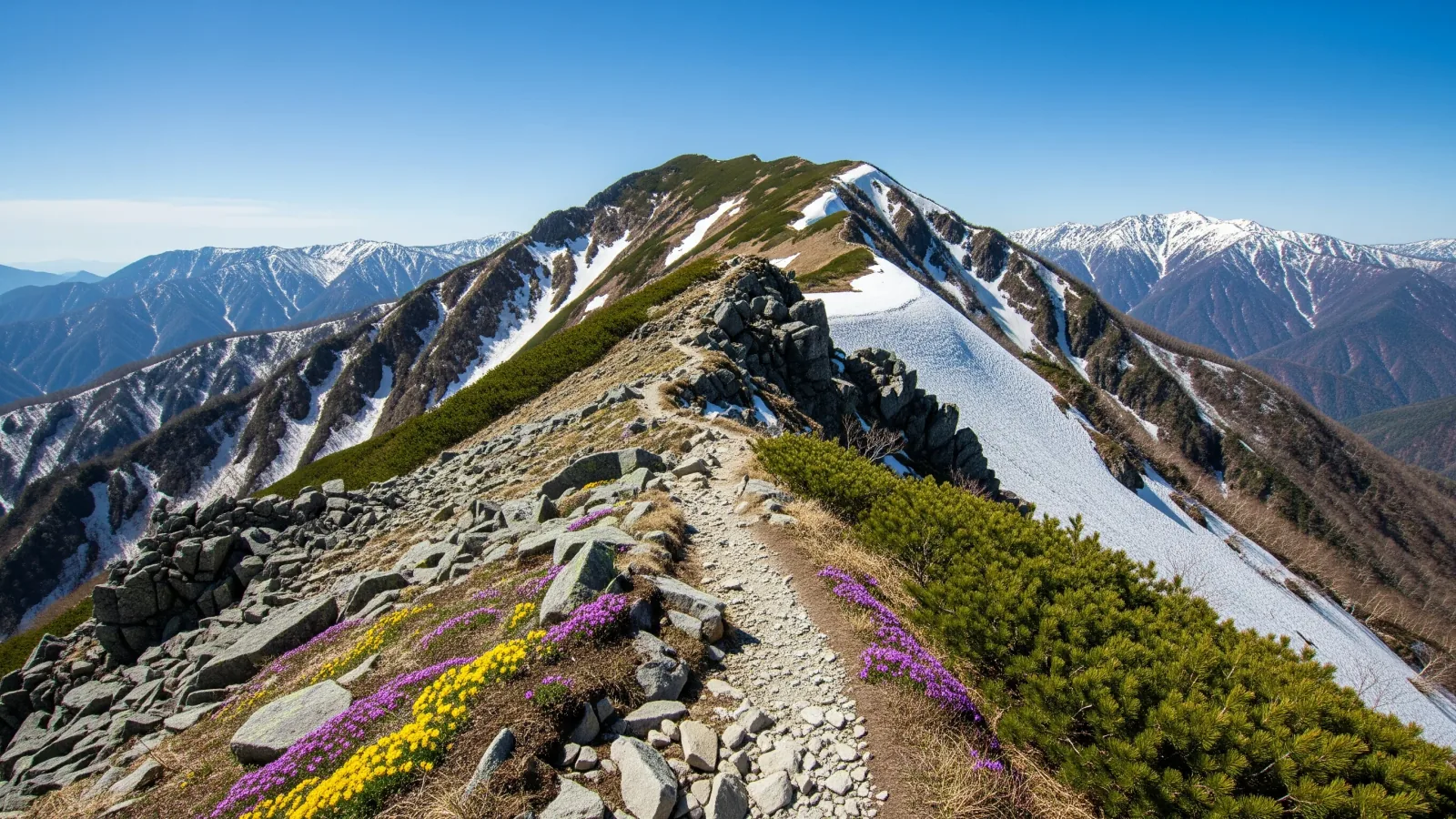
A meadow just free of snow, an exposed ridge, a slope of shifting stones. Conditions can change within a few metres in the mountains, and different flowers grow in each spot. From snowmelt to autumn, look for the shape of the flowers and the places where they grow.
Where alpine plants grow
This guide mainly covers plants found in the alpine zone above the tree line. In Chūbu-Sangaku National Park, the alpine zone generally begins around 2,500 metres. The tree line varies by region. At Daisetsuzan in Hokkaido, for example, alpine plants can be found lower down.
Plants cope with strong winds, cold and a short growing season in different ways.
- Some spread their leaves and branches close to the ground.
- Some have small, thick or hairy leaves.
- Some flower and produce seeds in the brief period after snowmelt.
- Some rely on insects that visit flowers to carry pollen.
Even on a single slope, a hollow that holds snow and a windswept ridge offer different conditions. Look at soil moisture and exposure as well as elevation.
Flowers from snowmelt into early summer
In central Honshu, some flowers begin appearing where the snow clears between late June and July. Timing depends on snow depth and which way a slope faces, so it can vary on the same mountain.
Four flowers to look for around snowmelt
- Hakusan-ichige, a white anemone. It blooms in groups across grassy areas.
- Shinano-kinbai, a globeflower. Look for bright yellow flowers in damp grassland.
- Miyama-kinbai, an alpine cinquefoil. This low plant has small yellow flowers and can grow on stony ground.
- Hakusan-kozakura (Primula cuneifolia). Look for pink flowers in damp grass and at the edges of snow patches.
Around Murodō on Hakusan and Tatamidaira on Mount Norikura, you can see flowers from paths or boardwalks. The park guide suggests early July to mid-August for hakusan-ichige and other flowers at Tatamidaira. Check recent flowering reports and trail access before you leave.
Summer flowers in grassland and scree
From mid-July through August, many mountains in central Honshu are good places to look for flowers. Compare the plants that grow in grassland with those on stony slopes.
Komakusa on scree
Komakusa (Dicentra peregrina) has pink flowers and finely divided leaves. It grows in scree where few other plants take hold. Look for it at Mount Norikura or Mount Tsubakuro in the Northern Alps. Flowering times vary from mountain to mountain.
Flowers of ridges and meadows
- Kuruma-yuri (Lilium medeoloides). The orange flowers hang down and the petals curl back.
- Nikkō-kisuge, a daylily. The large yellow flowers can grow in groups in meadows and wetlands.
- Chinguruma (Geum pentapetalum). A low, spreading shrub with white flowers.
- Iwakagami, a fringed pink flower. Look for glossy leaves and petals with finely cut edges.
- Hakusan-fūro, a geranium. The flowers have five pink to purplish petals and grow in meadows.
Around mid-July, groups of nikkō-kisuge often bloom in Ozegahara. In some places you can see white and yellow flowers in the grass at the same time. Watch from the boardwalk or trail without stepping into the meadow.
Late summer and autumn flowers and fruit
From late August through September, late flowers share the slopes with ripening fruit and changing leaves.
Flowers of late summer
- Tōyaku-rindō (Gentiana algida). It has pale yellowish-white tubular flowers, sometimes with darker spots.
- Umebachisō, grass of Parnassus. It opens five white petals in damp grassland.
- Aconites. Some species have blue-purple, helmet-shaped flowers. They are poisonous, so leave them in place, never put them in your mouth and observe from the path.
Feathery fruits, red berries and turning leaves
Once chinguruma has finished flowering, long, feather-like hairs remain on its fruits. Some rowans bear red berries in autumn, and the leaves of urashimatsutsuji, an alpine bearberry, turn red. Look for shapes and colours beyond the flowers.
These months are approximate. Check the observation date and location when reading reports from visitor centres and mountain huts.
How to look after the plants you come to see
Footsteps can damage alpine plants. Where soil is worn away, recovery can take a long time.
Three ways to observe flowers with care
- Stay on the trail or boardwalk. Keep outside fences and ropes, including when taking photos.
- Leave plants where they grow. Take no plants home and follow posted rules in protected areas.
- Clean mud off your soles. Remove mud and seeds before setting out and use any seed-removal mats provided.
If you stop to look or take pictures, choose a place where others can pass. Zooming in lets you see the shape of a flower without stepping closer to the plants.
Check names with a field guide or an app
A pocket guide or offline plant ID app makes it easier to look up a flower later. Photograph the leaves and the whole plant as well as the flower, and compare several features when species look alike.
On your next flower walk
Around snowmelt, look for hakusan-ichige and hakusan-kozakura. In summer, look for komakusa and other flowers. In late summer and autumn, look for tōyaku-rindō and feathery chinguruma. Putting the season and habitat together makes looking for flowers more rewarding.
Once you know a name, record the date and mountain area with the photo. The flowers you can find from open paths can help you decide where and when to go on your next hike.
References and sources
- Ministry of the Environment: Chūbu-Sangaku National Park
- Ministry of the Environment: Daisetsuzan National Park
- Japan Tourism Agency: Alpine plants of Hakusan
- Ministry of the Environment: Norikura’s alpine flower meadows and komakusa
- Ministry of the Environment: Ozegahara day nature tour
- Kanto Regional Forest Office: Chinguruma
- Ministry of the Environment: National park etiquette
- Ministry of the Environment: Guidance for visitors to special protection zones