
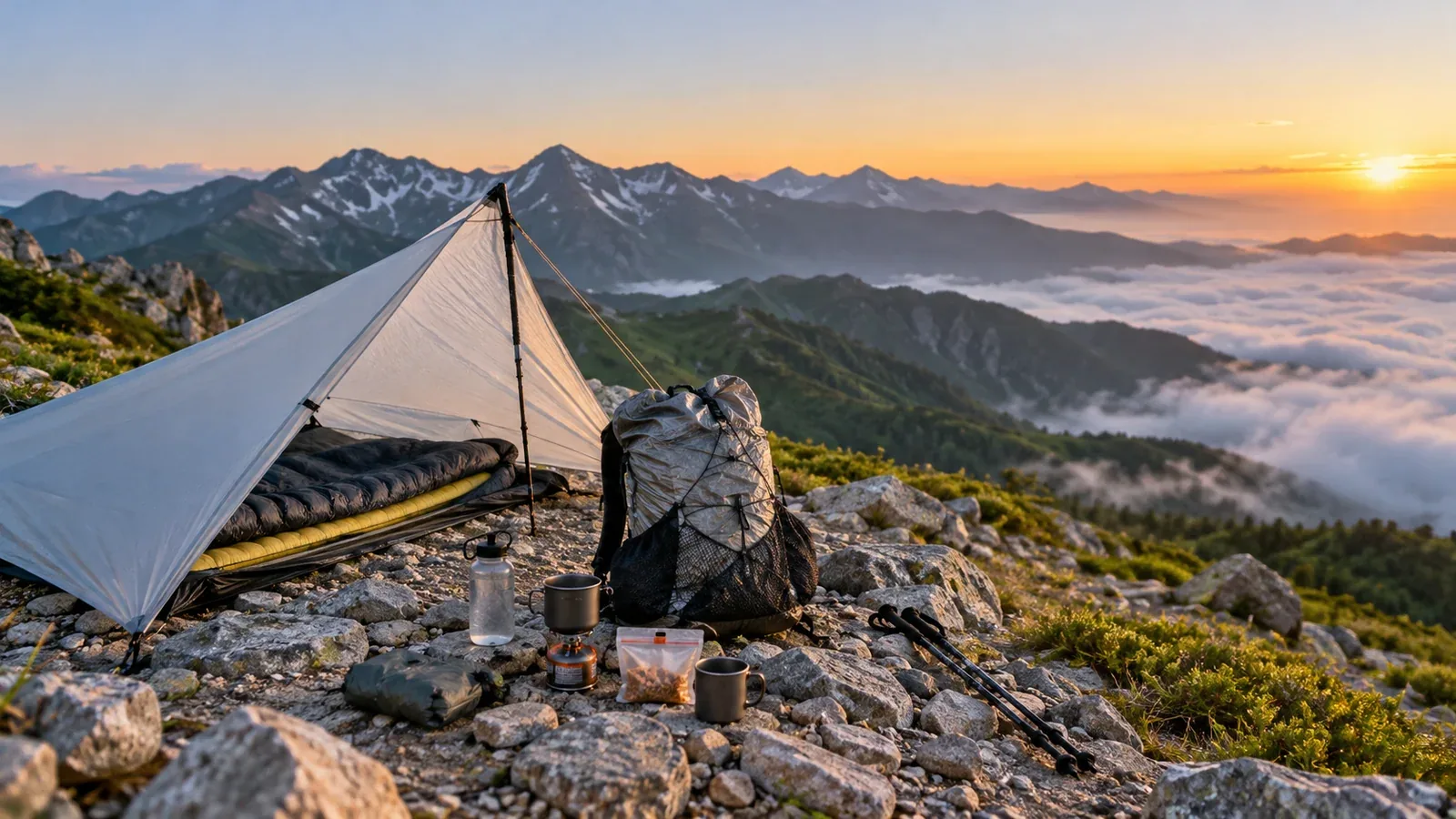
When looking up hiking gear, you will often see “UL gear” or “UL hiker”. UL stands for ultralight, an approach that aims to carry as little weight as practicable in the mountains. It rests on repeatedly asking what you actually need to bring.
This matters to beginners because it changes the way you choose equipment. Sturdy, heavy gear may feel reassuring, but a lighter pack can reduce fatigue, help lower the chance of falling and give you more flexibility. UL turns that insight into a way of planning. Knowing the approach before buying gear helps you understand why people choose what they do.
Where ultralight hiking came from
The approach spread among US long-distance hikers in the 1990s. On routes of several thousand kilometres such as the Appalachian Trail and the Pacific Crest Trail, a heavy pack can get in the way. Walking for weeks or months, hikers noticed what they never used and gradually pared down their equipment.
That practice gave rise to base weight, the weight of what you carry excluding water, food and fuel. It is the usual starting figure in ultralight hiking. In Japan, the approach spread as long trails and multiday traverses became more popular. It is now used on day hikes as well.
The big three: the first places to look
Ultralight hikers often look first at three categories known as the big three.
- Backpack: a heavy pack takes up some of the weight you can comfortably carry before you put anything in it.
- Shelter: a tent or a lightweight emergency shelter that keeps wind and rain off while you sleep.
- Sleep system: your sleeping bag and mat.
These three items often account for much of the load, so changes here can make a large difference. In ultralight planning, decide what you can leave behind before deciding what to carry. The big three are a practical place to start.
How UL goes beyond buying lighter gear
It is easy to confuse buying lightweight equipment with putting the ultralight approach into practice.
Reducing weight means making individual items lighter. UL starts by asking whether the item needs to come at all. Instead of packing two light rain garments, for example, make full use of a single suitable one. Think of it as designing your kit by subtraction.
Beginners can cut their safety margin too far. Leaving out warm clothing can raise the risk of hypothermia, and rainwear that is too light for the conditions can fail you in a storm. Ultralight hikers generally give safety gear lower priority when looking for weight to cut. Beginners have less experience responding to weather changes or to feeling unwell, so it makes sense to allow more margin in what you carry.
What beginners can learn from UL
There are useful ideas here even if you never build a fully ultralight kit.
Sort equipment by its job
Lay everything out and divide it into three groups: essential for safety, for comfort, and just in case. Reconsider the last group against the route’s difficulty, weather and schedule.
Know what each item weighs
Weigh items on a scale and record the results. Knowing how many grams each item weighs and how much it contributes to the total helps you choose what to change first.
Look for items that do more than one job
An item with several uses can reduce how much you carry. Trekking poles can replace tent poles with a compatible shelter, for example. Check the setup and practise before the trip so you know you can use it when needed.
How to keep a light pack and stay safe
What you can leave behind depends on the range, season, experience and whether you have companions. A day hike on a low mountain needs different equipment from an overnight traverse along a ridge.
Keep equipment for warmth, rain, first aid, fuelling and navigation with map and compass. These needs apply whatever your weight, fitness or experience. Start with a mountain forecast, such as the Japan Meteorological Agency’s, and check the difficulty with the local authority or at the trailhead.
UL is a way to make choices. The purpose of carrying less weight is to save energy for moving safely and comfortably.
What to do next
Before your next hike, lay everything out and identify the purpose of each item. If you cannot say why you are carrying it, consider whether you can leave it behind. Nordwand trip logs and communities show what experienced hikers take on the same mountain. If you are unsure how to choose your equipment, you can also consult a certified Nordwand guide.
References
- Japan Mountaineering and Sport Climbing Association (JMSCA): mountain skills resources
- Japan Meteorological Agency: mountain-weather information