
Guides and experienced hikers often talk about a crowded tenba, making way for a bokka or asking the koyaban. These words are commonplace around Japan’s mountain huts, but can be hard to guess when you hear them for the first time.
The terms come from the history of hiking and mountain-hut culture. Knowing them helps you decide when to give way, book a bed or tent pitch, and speak to staff. This guide explains what the words mean, where they come from and how they are used.
Tenba: a place to pitch a tent, with rules that vary by site
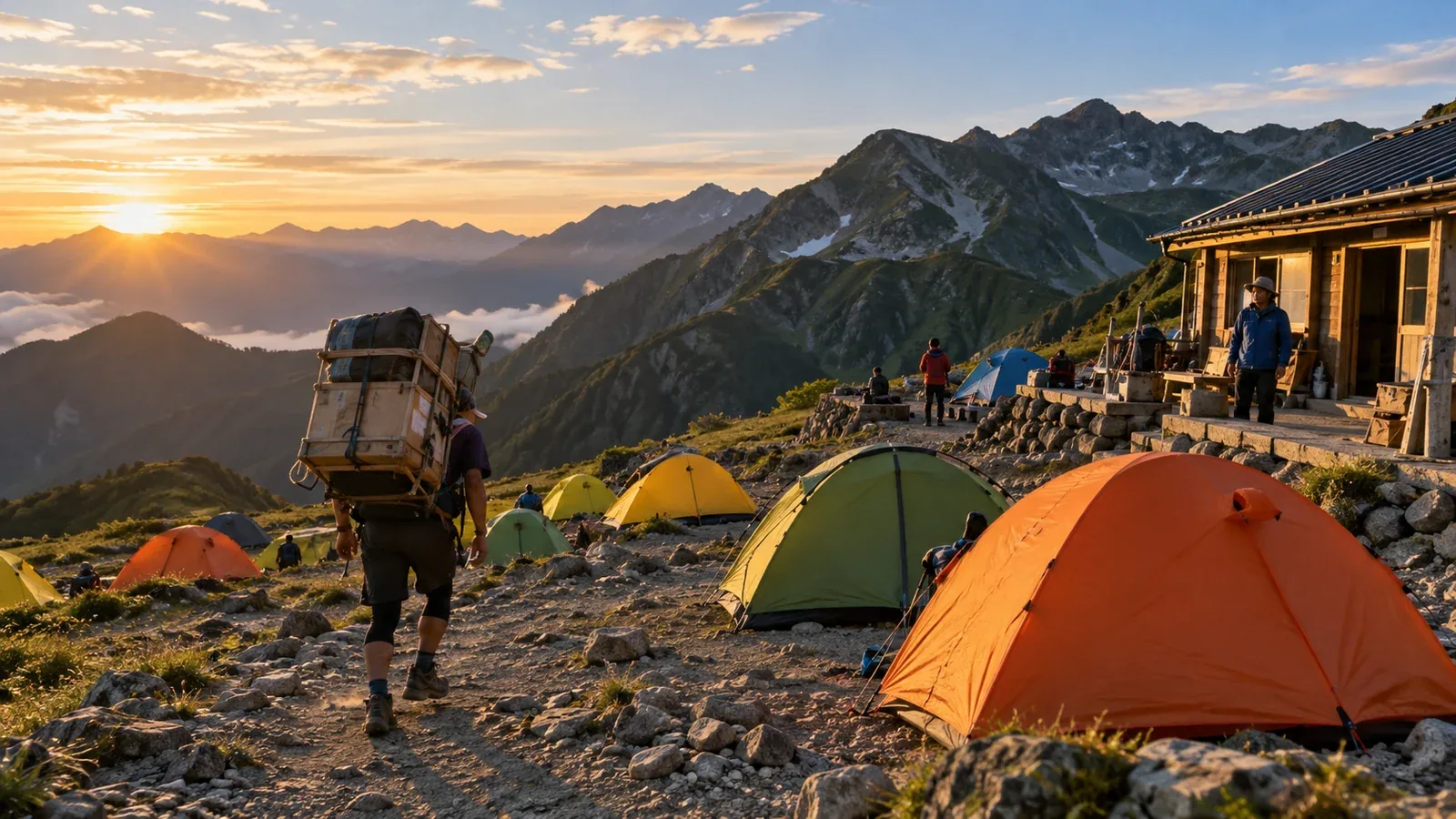
Tenba is a place to pitch a tent, or campsite. The term is a shortened form of tento-ba and is widely used among Japanese hikers.
Some campsites are managed by a hut, which charges for designated pitches. Others are natural clearings or meadows with no manager. Camping in many such spots is prohibited by national park or nature reserve rules. A place that hikers used years ago may now be restricted. Check official information from the local authority or hut before using it.
You may hear hikers talk about securing a tenba. Sites in popular ranges can fill on weekends and holiday periods, and some huts take bookings. Tenba is a natural term to use when asking a hut if there is a pitch available.
Koyaban: the people who run a mountain hut
Koyaban refers to hut staff, especially those who stay at the hut to run it. The word means someone who looks after a place. The job includes welcoming guests, preparing meals, maintaining the facilities and responding in emergencies.
Hut staff are among the most useful local sources. They can tell you how the weather is changing, what the ridge is like, where there is water and what condition the descent route is in. Getting into the habit of asking is especially valuable when you are new to hiking.
Start with a polite “Excuse me, may I ask you something?” before posing your question. Staff are busy at meal preparation and during the evening rush, so choose your moment. If the matter is urgent, speak up right away.
The term can refer to a hut owner or seasonal staff. There is no strict distinction in everyday use.
Bokka: people who carry supplies up the mountain
Bokka is the work of carrying food, fuel or materials by hand to a hut or summit facility, or the person who does it. Porters help keep huts operating when bad weather, the season or the location rules out helicopter deliveries.
Porters climb with heavy loads on large packs or carrying frames, known as shoiko. When you meet them, it is customary to give way. Breaking stride with a heavy load is difficult and can matter for safety on steep or narrow paths. A friendly “Otsukaresama desu” to acknowledge their work as you step aside is natural.
You may also see the phrase bokka training. It means hiking with a heavy pack to build fitness or get used to carrying a load.
Bakuei, bakueichi and bakueiryō: formal terms for camping
Tenba is the informal word among hikers. Bakueichi means campsite and bakuei means camping in documents, regulations and signs. You may see bakueichi in national park information, hut booking forms and local hiking notifications.
Bakueiryō means the campsite fee. Hut-run sites often charge by person or tent, and payment may be in advance or at reception. Check the hut’s current official prices and payment methods.
Follow signs that say “no camping”. In special protection zones in national parks and areas set aside for vegetation, tents may be restricted to designated sites. Old reports saying camping was allowed may be out of date. Check current rules from Japan’s Ministry of the Environment or the relevant prefecture.
Emergency shelters and unstaffed huts
Besides staffed huts that take guests, you may see emergency shelters and unstaffed huts.
Emergency shelters are intended primarily as places to take shelter in an emergency. Most have no resident staff and sell neither food nor bedding, so you need your own gear. Some ask that you leave them for emergencies, while others allow ordinary overnight stays. Some request a contribution to upkeep. If you plan to use a shelter, check the rules with the local authority or mountain organisation that runs it.
The presence of a shelter does not guarantee space or usable facilities. Condition, capacity, toilets and water vary. Treat it as an emergency option, and plan to stay in a staffed hut or your own tent for an ordinary overnight trip.
Why hut vocabulary helps
Tenba, koyaban, bokka, bakuei and emergency shelter are useful words from the first stage of planning through to the trail itself.
When contacting a hut, ask whether you need to book a tenba or how much the bakueiryō costs. On the trail, you can recognise a bokka and give way promptly. You will also know that the koyaban can tell you about the weather and trail.
These words reflect a culture developed over many years, through the way huts operate and the ways hikers, staff and porters support one another. Knowing how the terms are used is a first step towards taking part in that culture.
What to do next
Before staying in a hut or camping, check the booking requirements, fees and facilities on the hut’s official website or by phone. For camping rules in national parks, consult the Ministry of the Environment and prefectural hiking information. On Nordwand, you can also look up partner huts in the area you plan to visit.