
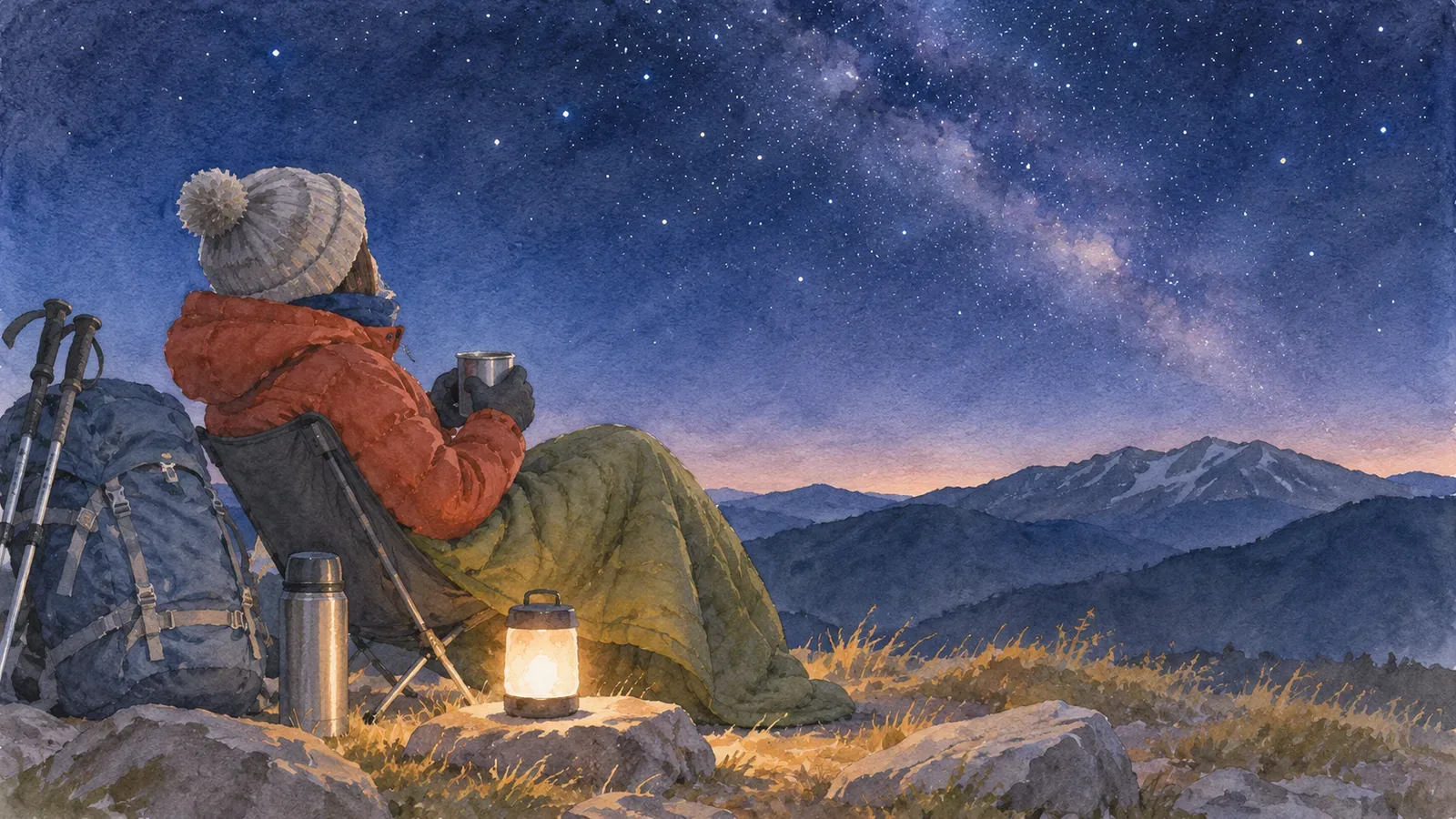
When the first stars appear, it’s tempting to stay a little longer. Stargazing in the mountains often means standing still for a long time. Build in ways to stay warm and give yourself permission to pack up early.
Walking and standing still feel different
You might feel hot on the climb and still get cold standing in the wind after sunset. Joshua Tree National Park recommends bringing extra layers because temperatures can drop quickly in the evening. Shenandoah National Park also recommends layers for its often cool ridges, even on summer nights. Both are local guides and offer practical examples of how to prepare for standing still.
Check the forecast for your destination, particularly the wind and temperature during the hours you plan to observe. Conditions at the trailhead in daylight may differ from what you’ll find higher up or after sunset. Keep an early finish in the plan in case conditions change.
Choose layers for walking and for breaks, and keep them within reach so you can put them on as soon as you stop. Think about how you’ll keep your hands, head and feet warm and change out of anything that gets wet. Pick clothing that suits the conditions and each person in your group.
Set a finish time and agree when to leave early
Decide when to start packing up and leave enough time for the return. Keep that margin even if you want to see the Moon set or watch for a break in the clouds. Check facility closing times and the last public transport departure separately.
Cut the session short if it gets too cold, the wind picks up or someone seems unwell. Agree before setting out that anyone who is cold can propose a change of plan for the whole group. Make a plan to keep everyone together on the way back.
The UK’s NHS lists shivering, slurred speech, slow breathing, tiredness and confusion among the signs of hypothermia. If you suspect hypothermia, stop observing and call for help immediately. In Japan, call 110 or 119 and follow the dispatcher’s instructions. As far as you can do so safely, get the person out of the wind and rain, remove wet clothes and cover them with dry clothing or blankets. Stay with them.
Check where you can warm up and how to get back
If you plan to stop at a facility or stay somewhere overnight, ask the operator when you can get in. A visible building may be closed. If you’re using a car, confirm where you can park and whether you can stay there after dark. Keep noise and light low around others.
Include the trip to shelter in your plan. If it means walking in the dark, make sure you have suitable lighting and experience. Zion National Park keeps outdoor lighting low and advises evening visitors to carry a light. Bring your own light to see the ground ahead and turn back if the way feels unsafe.
Share the meeting point and return plan with the group. Before leaving, count people and check your gear. Allow time to pack equipment before the scheduled finish and agree on the order so nobody has to rush while cold.
Change your plan if skies stay covered
Decide in advance how long you’ll wait for the clouds to part. If skies stay covered at your finish time, you can come back another day. You can also choose an easier-to-reach site that permits nighttime visits. Verify its own hours and parking rules.
Looking at a star chart at home or finding the right patch of sky for next time can also be part of the fun. Even a short outing can tell you something if you note the cloud cover and moonlight. Check the forecast and how everyone is feeling again before the next trip.
The takeaway: head back before the cold takes over
Plan for the time you’ll spend standing still and the route home. Bring warm layers and share the finish time and reasons to leave early with the group. Change the plan if the cold or someone’s condition worries you and save the rest for another night.