
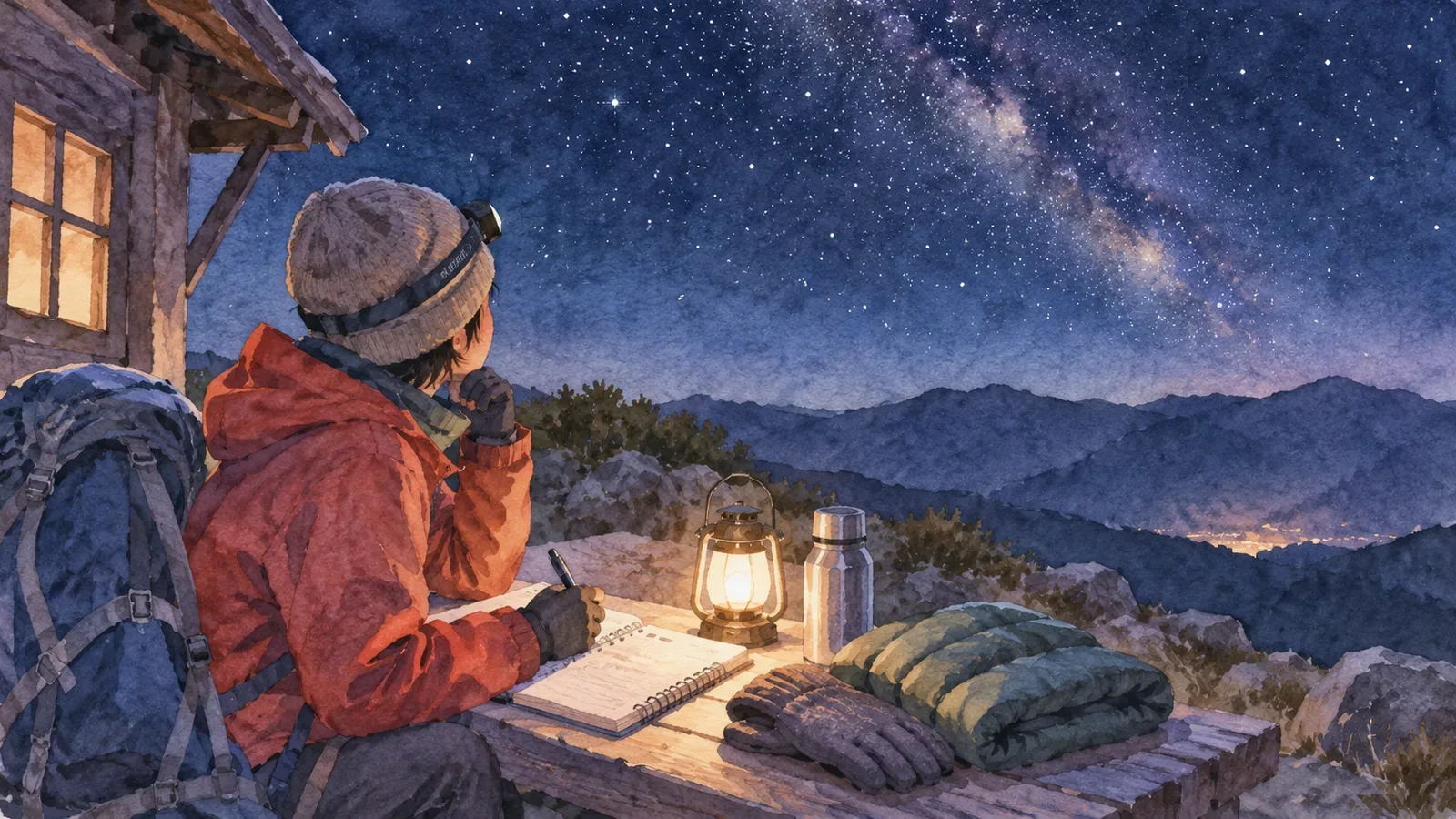
Before watching the stars in the mountains, check how much time you need to finish observing, pack up, descend and travel home. Set aside time for the return first and plan observation within what remains.
Work out how much time you have for stargazing
Check after-dark access and closing hours, then work back from your transport and descent to set a time to leave the spot. Subtract time for packing up and gathering the group to set an end time for observation.
Joshua Tree National Park in the United States explains that bright moonlight makes fewer stars visible and recommends checking moon phase and rise and set times. See whether the best time fits the site’s hours and the return trip.
The National Astronomical Observatory of Japan’s Tokyo table for October 2026 gives daily moonrise, meridian transit and moonset. For your own trip, look up your date and a location near your destination. If waiting for moonset would make you late, choose another day or place.
Estimate descent time and prepare equipment
Use the map’s walking time as a starting point. Allow for darkness, fatigue, group pace and breaks. Check junctions and access on the way back, and make sure the group has suitable experience and equipment for night walking.
Find entrances and junctions in daylight. Bring a map and light you can use on the return. Keep stray light low while observing, and use enough light to see your footing and route while walking.
Shenandoah National Park advises bringing a red light for the walk from your car to the viewing site. For a mountain trail, bring a light bright enough to see the ground. If the route is unclear, stop in a safe spot to check it.
Agree when to finish early
Before observing, set a time to start packing and tell everyone. Discuss how clouds, wind, cold or how people feel might lead you to finish early. Let anyone suggest stopping.
Standing still can make you cold. Shenandoah recommends layers because its ridge can be cool even on summer nights. Check the temperature and wind at your destination, pack warm layers and finish if you cannot get warm.
Review the forecast and facility guidance just before leaving. If you wait for a gap in the clouds, keep the time you need for your return and start packing as planned.
Consider options that avoid a long night descent
If observation and descent do not fit the available time, look into verified overnight accommodation or a site with a shorter approach. Nasu Takahara Auto Campground prohibits moving vehicles or driving in or out from 21:00, and gatherings, conversations and lit lanterns after lights-out at 22:00. Check the times and places you may use at your own site.
If clouds spread, reschedule. Looking up the stars or the Moon you hoped to see on a chart can help you find them next time.
Record when you finished and where the return took longer. Reassess your timing next time for the season, weather, group pace and breaks.
Write down each step from packing up to getting home
Record the time for starting observation, starting to pack, leaving the viewing spot, reaching the trailhead and catching transport.
Make sure everyone knows when to pack, where to meet and which way to return, and has a light that can illuminate the ground.
Consider the length and surface of the return route when choosing a viewing site. A spot near a parking area with confirmed night access can avoid a long descent.
If returning by bus or train, check the last service, the walk to the stop and the facility’s closing time. Use the operator’s latest schedule and leave a margin.
If driving, plan to leave before the driver is too tired.
Set your departure time first and watch only as long as night access, the descent and transport home allow. End earlier if cold or weather conditions change.
References and sources
- U.S. National Park Service: Stargazing in Joshua Tree National Park
- U.S. National Park Service: Night sky in Shenandoah National Park
- National Astronomical Observatory of Japan: Moonrise and moonset in Tokyo, October 2026
- Nasu Takahara Auto Campground: Visitor guide
- National Astronomical Observatory of Japan: Local calendar