
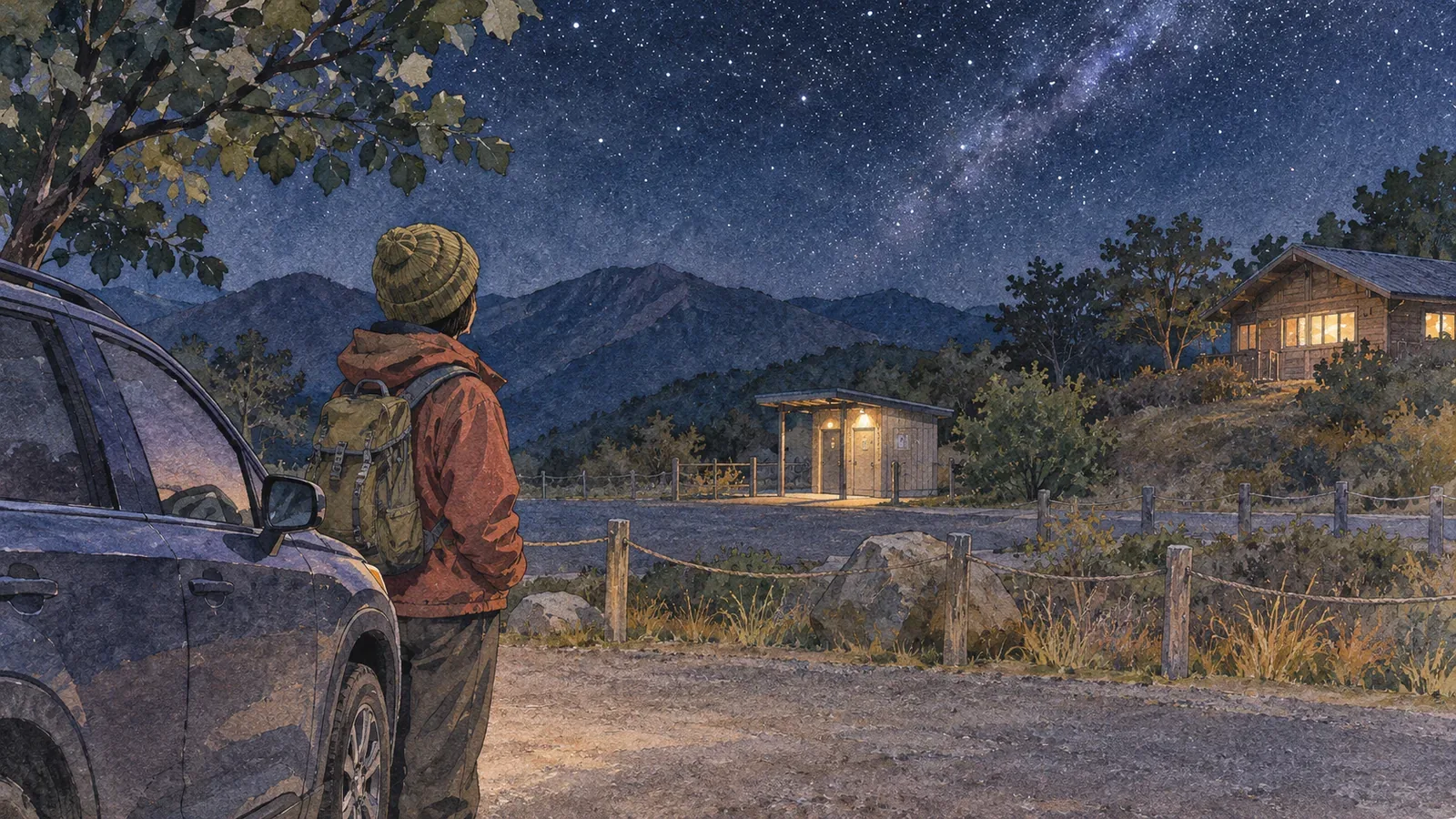
If you drive to see the stars, find out where you can park after dark and think about where the lights will point as you arrive, get out and leave.
Check where you will park and what the lights will illuminate
Japan’s environment ministry explains that light spilling beyond its target can enter homes or interfere with the view of drivers and pedestrians. Upward spill also makes stars harder to see.
Consider where your car will face and whether the lights will reach observers, pedestrians or buildings. Follow marked bays and staff directions, and keep entrances and lanes clear.
Door and trunk lights can also spill outside. In daylight, check the manual and try the controls to see what switches each light on.
Use the light you need for driving and walking
While driving, follow traffic rules and site instructions and use the required lights. People and objects can be harder to spot in a dark car park, so look around before entering or leaving.
Before stepping out, check your footing and where vehicles pass. Zion National Park advises visitors to carry a light after sunset because outdoor lighting is limited. Bring a light bright enough for walking.
Joshua Tree National Park asks observers to avoid bright white light and use red light. While driving, use the lights required for the vehicle. Follow local lighting rules at the viewing site.
Plan what to do when you arrive
If you can arrive in daylight, check the parking bay and walk to the viewing spot. If arriving after dark, look around for people who may already be observing.
Pack warm layers, lights and other equipment in the order you will need them and put them within reach. That reduces repeated door openings and time with the trunk lit.
Leave time to pack and get into the vehicle. Before moving, make sure gear and people are clear of the car and everyone who needs a ride is inside.
Check the facility’s night rules
Check night access, vehicle access, longer stays and overnight rules separately. Nasu Takahara Auto Campground prohibits moving vehicles or driving in or out from 21:00 and prohibits leaving engines idling. Check the latest conditions for your destination.
Light attracts some animals and drives others away. If you see wildlife, avoid approaching it or keeping it lit, and follow local conservation guidance.
If a venue or event has its own lighting rules, read them before you attend. Ask the organizer or manager if you are unsure how to use your vehicle there.
Look around before turning on a light
If you are taking several cars, agree on arrival times and a meeting spot. That reduces the need to reposition cars or flash lights to find each other.
If you stay in the parked car, consider how screens and interior lights appear outside. Follow idling and night access rules if you use the car to warm up.
If you plan to reposition a car for photos, check vehicle movements and foot traffic. Look for a composition from a designated bay and check that the way is clear before moving.
If the site is crowded or your beams shine into homes, adjust the plan. If relocating, verify night access and parking rules for the next place too.
After the trip, think about moments when light was a problem and how you handled gear. You might arrive in daylight or have equipment ready next time.
Check permitted parking and beam direction and pack equipment so it is easy to reach. Use the light you need to drive and walk, and keep it off other people and surroundings once parked.
References and sources
- Japan Ministry of the Environment: Light pollution and stargazing
- U.S. National Park Service: Stargazing in Joshua Tree National Park
- Nasu Takahara Auto Campground: Visitor guide
- U.S. National Park Service: Night sky-friendly lighting in Zion National Park
- Japan National Police Agency: Using headlights at night