
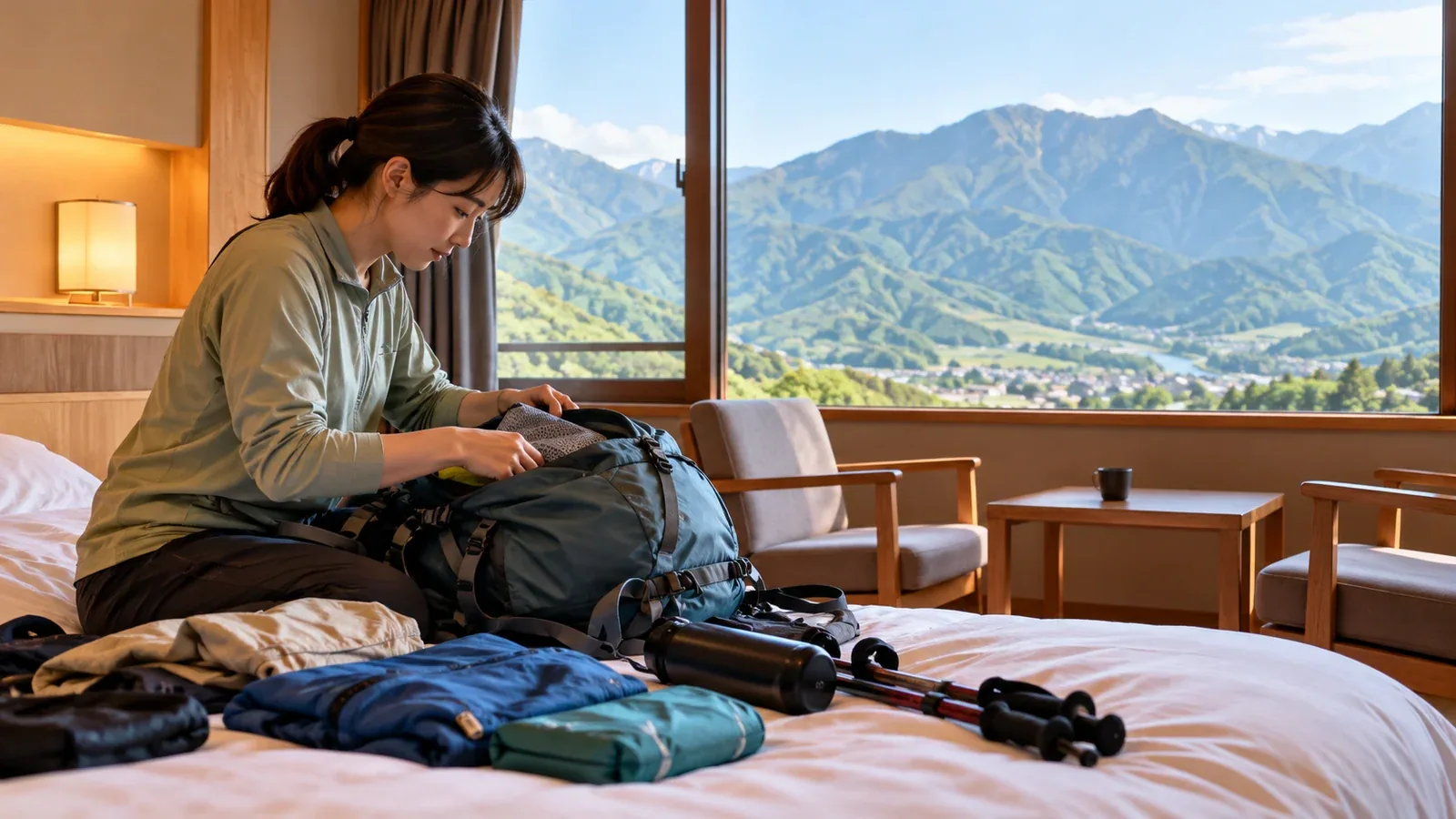
You’ve made it to the trailhead early, but you still feel tired. Where you stayed can be part of the reason. Even a room close to the trailhead may leave you short on rest if the room, meals or facilities don’t work for you.
The night before a hike helps you rest and get ready for the next day. The night afterward gives you time to recover and reduces the risks of traveling while tired. Think about what you need from each stay before you book.
Here’s what to look for before and after the hike. Rates, opening dates and availability can change, so confirm directly with the property before booking.
Stay the night before to rest and get the journey out of the way
Sleeping near the trailhead cuts out most or all of your travel on hiking day. In some areas even the first train gets you to the trailhead after 9 a.m. On a summer day hike or a traverse with a long first day, staying nearby can give you a start one or two hours earlier.
Location matters, along with the facilities and schedule. Look for the following.
What to check before the hike
- Check-in and dinner. If your journey will get you there late, check when reception and dinner service close. Make a plan for an evening meal.
- Early departures. If you need to leave around 4 or 5 a.m., ask about checkout and an early or packed breakfast when you book. Mountain huts and some lodgings near trailheads are used to early starts. Hotels and inns vary.
- Lights-out and noise. Look for somewhere you can get to sleep early. Rooms near banquet halls and busy weekend properties can be noisy. Ask about nonsmoking rooms too.
- Space for hiking gear. Ask where you can put wet rain gear, muddy boots and your pack. A boot area near the entrance and a locker for your pack make things easier.
Stay the night after the hike to rest before traveling
It’s easy to assume you’re ready to go home once you’ve come down. Long journeys when you’re exhausted, especially if you’re driving, carry risks. Fatigue can impair judgment or make you doze off. Staying overnight gives you time to rest before the return journey.
Look for different things in a place to stay after your hike.
What to check after the hike
- A hot spring or bathing facilities. A bath can feel good after a tiring or cold hike. Consider somewhere with its own baths or a shuttle to a nearby day-use hot spring. How much better you feel will vary.
- Flexible checkout. If you want to sleep in after the hike, check for a later checkout time or an option to extend it.
- Meals and portions. Check whether you can get a substantial dinner and breakfast. Hut portions may feel small to some people. Ask what’s served if the meal is important to you.
- Space to dry and sort gear. A drying room helps if your equipment is wet from rain or sweat and saves you carrying it home still wet. Properties that cater to hikers are more likely to have one.
Choose between huts, inns and city hotels
Each type of lodging offers something different.
Mountain huts at trailheads or on ridges are common places to stay before or during a hike. Many are set up for early departures, packed meals and hikers’ gear. Private rooms, capacity and ease of booking vary. At high elevations it’s colder, and you should watch for altitude sickness symptoms such as headache, nausea or difficulty sleeping.
Ryokan and guesthouses at the foot of the mountains can work both before and after a hike. In areas popular with hikers, some offer early departures, packed meals or drying rooms. Look for places that say they welcome hikers.
Business and city hotels are often farther from the trailhead and work well as a base the night before. Early checkout may take more planning, but they usually offer private rooms and predictable facilities. If the hotel has only a small private bath, you can combine a stay after the hike with a visit to a nearby hot spring.
What to ask when you book
When you contact the property, explain the following.
- When you expect to arrive and whether a late arrival affects check-in or dinner.
- When you expect to leave and whether you can check out early or get breakfast or a packed meal.
- Where to keep your gear, including a large pack and boots, and whether there is a drying room.
- When the baths are open, including just after check-in and early in the morning.
Confirm these details when booking to avoid surprises. During busy periods, contact the property early to improve your chances of finding a place that meets your needs.
For your next hike
Look at your itinerary and decide whether you need a night before the hike, after it, or both. Compare the travel time to the trailhead with your planned start. For the return, consider the distance and whether you’ll be driving. When you find a likely place, ask by phone or email about early departures and drying facilities before booking. Nordwand’s partner search can help you find huts and lodging that cater to hikers.