
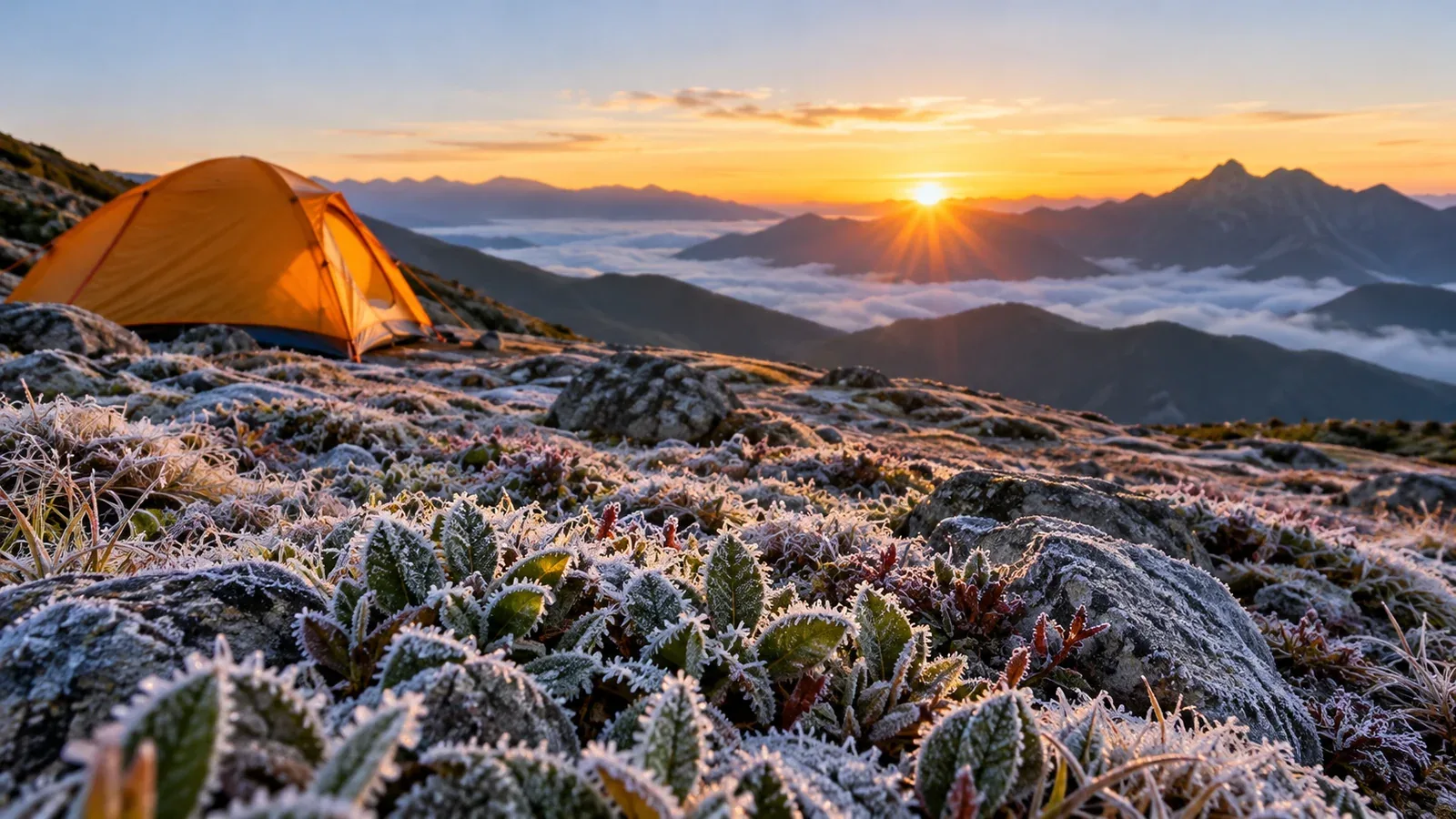
A sunny afternoon can give way to a cold night at camp. When skies stay clear and winds are light, the ground can lose heat for hours, cooling the air next to it. That process helps explain why you may pack up in frost after a pleasant day on the trail.
Radiative cooling occurs in lowlands as well as in mountains. At a mountain camp, terrain, altitude, wind and the change in weather overnight can all affect how cold you get. Use the forecast and the shape of the site to plan for the night and the first hour of the next day.
How radiative cooling works
The ground emits infrared radiation day and night. After sunset it no longer gains heat from sunlight. If it loses more infrared energy than it receives from the atmosphere, its surface cools and can cool the air directly above it.
Clouds and water vapour emit infrared radiation back toward the ground. On a clear night, especially with dry air, the surface may receive less of it. Light winds allow colder air near the ground to remain there with less mixing.
How mountain terrain affects overnight temperatures
Temperature can vary between a campsite in a hollow and one on a slope even if they are close together.
Cold air can flow downhill and pool in valleys and hollows. Under some conditions the lower ground becomes colder than the slope above it, a temperature inversion. The difference varies with the shape of the valley, the wind and the weather.
A ridge may be warmer in air temperature than a nearby hollow on an inversion night and still feel colder in strong wind. If you are camping, use a permitted site that offers appropriate shelter and check both the overnight temperature and exposure to wind.
Conditions that favour colder nights near the ground
Look for these clues together when checking the campsite forecast.
- Little cloud from evening through dawn.
- Dry air, which can reduce incoming infrared radiation.
- Light wind, which allows less mixing between the cold air near the ground and the air above.
- A valley floor, basin or hollow where cold air can collect.
- A long night that gives the surface more time to cool if the weather remains similar.
When is it coldest?
On clear, quiet nights the lowest air temperature often occurs around sunrise or shortly afterward. Changes in cloud, wind or the arrival of a different air mass can shift that timing.
A mild trip outside at midnight does not tell you how cold it will be when you take down the tent. Check the forecast hours around dawn and keep warm layers within reach for the time you plan to start.
Sunlit ground generally begins to warm after sunrise. A camp behind a ridge or in the shade can stay cold longer. Watch for lingering frost or ice where the trail remains shaded.
How to turn the forecast into a gear plan
Before leaving, check the campsite and the route for the night and early morning.
1. Temperature, cloud and wind for the site. Check the forecast for the campsite elevation and the planned hours. Clear skies and light winds favour strong surface cooling. Check precipitation and any later changes in wind or cloud as well.
2. The difference in elevation and terrain. A nearby town reading is a starting point if you know its elevation and time. Use a mountain forecast for your camp's elevation where available. Valleys, hollows and exposed slopes can differ, even at a similar altitude.
3. A sleeping system with room for colder conditions. Use a sleeping bag's comfort rating where available as a starting point and match it with an insulated mat, dry clothing and shelter. Ratings come from standard test conditions. Leave margin for the site's forecast uncertainty and how cold you tend to sleep.
4. Layers for getting up and getting moving. Before sleeping, put warm, dry layers and wind protection where you can reach them. Plan what to wear while packing, when you are still moving slowly and before the sun reaches the site.
Where the cold is easy to underestimate
- A day hike runs late. Check the late-afternoon and evening forecast, and plan for an unplanned stop.
- The afternoon was warm. Use the forecast for the night and dawn rather than the layers you wore in the sun.
- The campsite is in a hollow. Check for cold-air pooling, damp ground and exposure to high water. Use an authorised site and follow its guidance.
Why dew and frost form
Dew can form when a surface cools to the dew point and water condenses on it. Frost can form when water vapour deposits as ice on a cold enough surface. The ground and objects on it can be colder than the forecast air temperature, so frost is possible even when the forecast is slightly above 0°C.
Inside a tent, breath and damp gear add moisture. Use the tent's vents as conditions and its instructions allow. Keep spare insulation dry and handle a frosted flysheet gently. If possible, dry it before storing it.
Put it into practice
Check the forecast temperature, wind and cloud cover for the campsite from evening through your departure. Compare it with the campsite terrain and choose a bag, mat and layers with room for colder conditions. Nordwand trip notes can provide past observations from the area. Use the latest forecast for your trip, and ask a qualified guide if you need help planning for the conditions.
Sources
- Japan Meteorological Agency, Hong Kong Observatory and US FAA: radiative cooling, weather forecasts and observations
- UK Met Office: frost, ice and mountain forecasts
- ISO, Cascade Designs and US CDC: sleeping bag testing, tent ventilation and cold exposure
References and sources
- Nagano Local Meteorological Office: frost and radiative cooling
- Japan Meteorological Agency: temperature and humidity terminology
- Japan Meteorological Agency: weather forecasts
- Japan Meteorological Agency: AMeDAS observations
- Hong Kong Observatory: what is radiative cooling?
- US Federal Aviation Administration: Aviation Weather Handbook, daily temperature variation
- UK Met Office: frost and ice
- UK Met Office: guide to mountain forecasts
- International Organization for Standardization: ISO 23537-1 sleeping bag thermal testing
- Cascade Designs: reducing tent condensation
- US Centers for Disease Control and Prevention: preventing hypothermia