
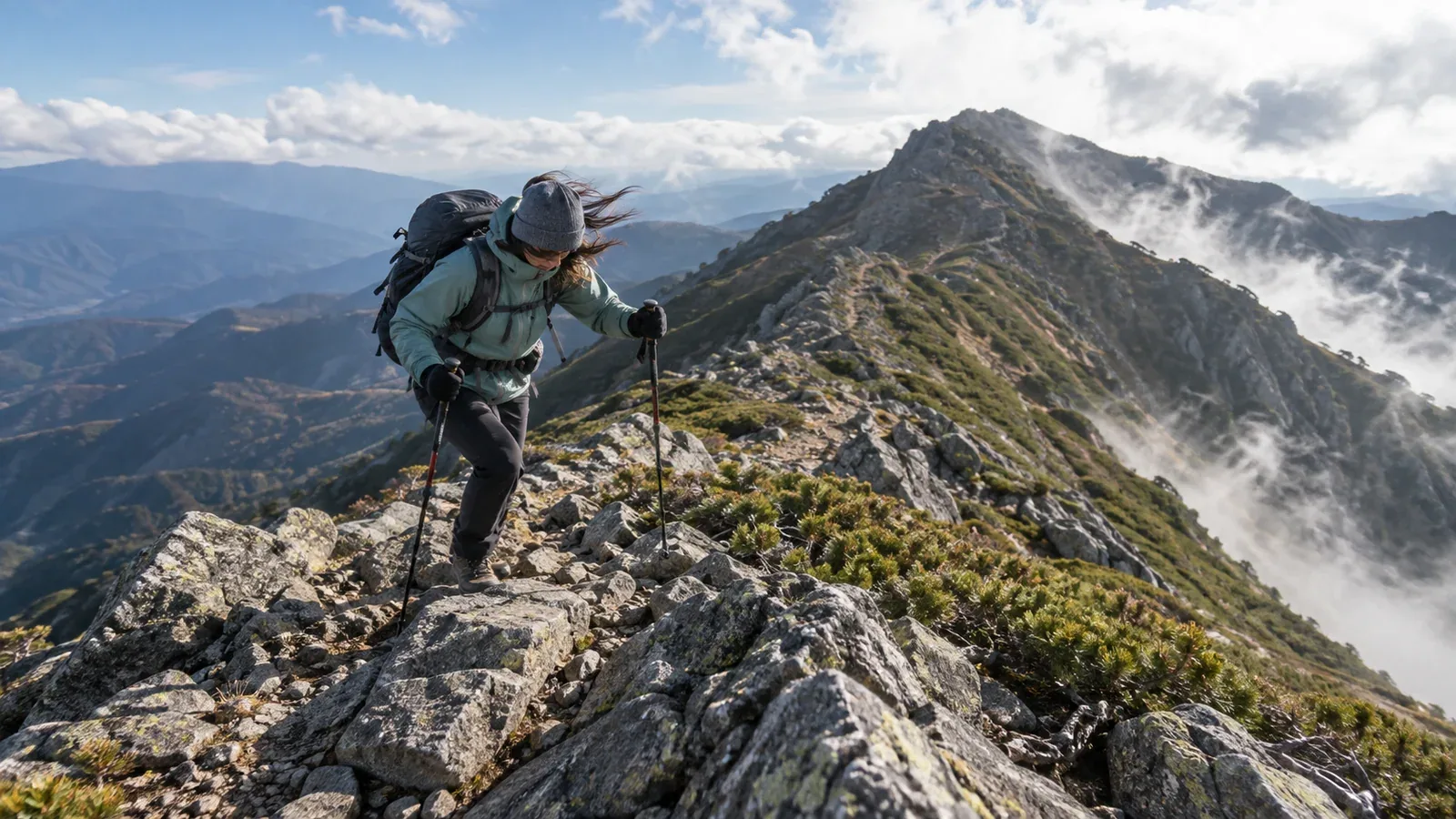
The wind can change abruptly between a sheltered forest and an open ridge. A gust that causes a stumble on a broad path can have much more serious consequences on narrow or steep terrain.
This guide explains how to decide from shelter, how to recognise when you should stop and how to move to safety if the wind strengthens while you are already exposed.
How wind speed affects walking
Japan Meteorological Agency (JMA) descriptions use average wind speed and illustrate general outdoor effects. Footing, exposure, fatigue and pack fit can affect your balance even when the average is lower.
- 10 to less than 15 m/s: Walking into the wind becomes difficult.
- 15 to less than 20 m/s: Some people cannot walk into the wind steadily and may fall.
- 20 m/s and above: At 20 to below 25 m/s, it can be difficult to stand without holding on, and windblown objects can injure people. From 25 m/s, the JMA describes outdoor activity as extremely dangerous.
The wind speeds above describe typical effects. Check gusts where forecast, as their strength relative to the average varies. Compare a mountain forecast with regional warnings and local information before setting out.
Deciding whether to turn back
Before entering the ridge, ask whether the group can cross it and return safely if the wind gets stronger or the direction changes.
Make three checks from the last stable and sheltered place.
1. A usable retreat. Identify a known, safe way back and the last junction or sheltered point where you can use it. A long, narrow ridge or a section with access restrictions can make turning back difficult.
2. The terrain ahead. Check the map for the length of the exposed section, slopes, changes of direction and places you can reach shelter. Include any return over the same ground.
3. The whole group. Check balance, footing, warmth and fatigue. Secure loose equipment before you move. If anyone has difficulty walking steadily even in the sheltered approach, skip the exposed section.
If you cannot confirm that the next section and the way back are manageable, use the planned alternative or turn back. If you are already exposed and moving would put you at greater risk, protect the group from wind and cold at the safest available point and seek help if needed.
Moving to safety if the wind strengthens
Use these measures to move on terrain you can still cross with control, for example when returning to shelter. If gusts prevent you from standing or moving steadily, stop at the safest place you can reach.
Keep your stance stable
On firm ground, soften your knees and keep your weight over your feet. Stop before a narrow or steep section if you cannot hold a steady stance. Keep clear of exposed edges.
Use poles only where they help
If you already use trekking poles confidently, they can help balance on terrain where the tips grip. Plant them on solid ground. Wet rock can be slippery, and poles can get in the way on a scramble that requires your hands.
Take deliberate steps
Where you can move safely, slow down and place each foot on a secure spot before shifting your weight. Allow time to retreat. Rushing makes it harder to recover if a gust affects your balance.
Stop in a secure position when gusts rise
Pause at a stable spot away from drops if the wind disrupts your footing. Use any nearby shelter you can reach safely. A brief lull can help you move toward shelter, but it offers no assurance for crossing an exposed stretch.
Anticipate wind changes along the ridge
A crosswind can push you sideways and a tailwind can push you forward on descent. Wind can accelerate over a crest or through a saddle, and turbulence can occur on the sheltered side. Check the forecast direction against the map and confirm conditions from a secure position.
How clothing and equipment affect balance
A bulky load or loose items can catch the wind. Keep the load close to your back and fasten straps and equipment before leaving shelter.
Put on windproof or waterproof layers before the exposed section if needed. Adjust the hood so you can still see and hear your group, and deal with wet clothing before you get cold.
Secure hats and eyewear before the wind strengthens. If something blows away toward steep ground, stay on your safe footing.
Situations that deserve extra care
A sheltered approach can make it hard to judge what comes next. Pick these points on the map before your first ridge hike in uncertain weather.
Leaving the trees. Stop at the last protected point before stepping onto the ridge. If gusts already make it hard to stand or walk steadily, use the alternative.
A narrow crest or fixed chains. A stumble can become a fall where the terrain leaves little room to recover. Stay out of the section if wind compromises balance. A chain does not make a route passable in strong gusts.
Descending an exposed ridge. Check the footing and the effect of a tailwind before starting down. Return to shelter by a known, manageable route if the descent is already difficult.
Passing another group. Wait at a wide, stable spot away from the edge and let one group pass at a time. Keep the group together if visibility or communication is poor.
Put it into practice
Before a ridge hike, check forecast wind direction, average speed and gusts, and mark the last sheltered turnaround point. Agree on a lower, sheltered option and how you will decide at that point. A qualified guide can help you choose a route, and you can compare local observations with other hikers in Nordwand.
Sources
- Japan Meteorological Agency: wind terminology, effects and warnings
- UK Met Office and Mountaineering Scotland: mountain forecasts, terrain and strong-wind guidance
- US CDC and Japan National Police Agency: cold exposure and mountain incident statistics
References and sources
- Japan Meteorological Agency: wind terminology
- Japan Meteorological Agency: wind strength and its effects
- Japan Meteorological Agency: weather warnings and advisories
- UK Met Office: guide to mountain forecasts
- UK Met Office: mountain safety
- Mountaineering Scotland: wind speeds and their effects on hikers
- Mountaineering Scotland: planning for changes in mountain weather
- US Centers for Disease Control and Prevention: preventing hypothermia
- Japan National Police Agency: mountain incident statistics