
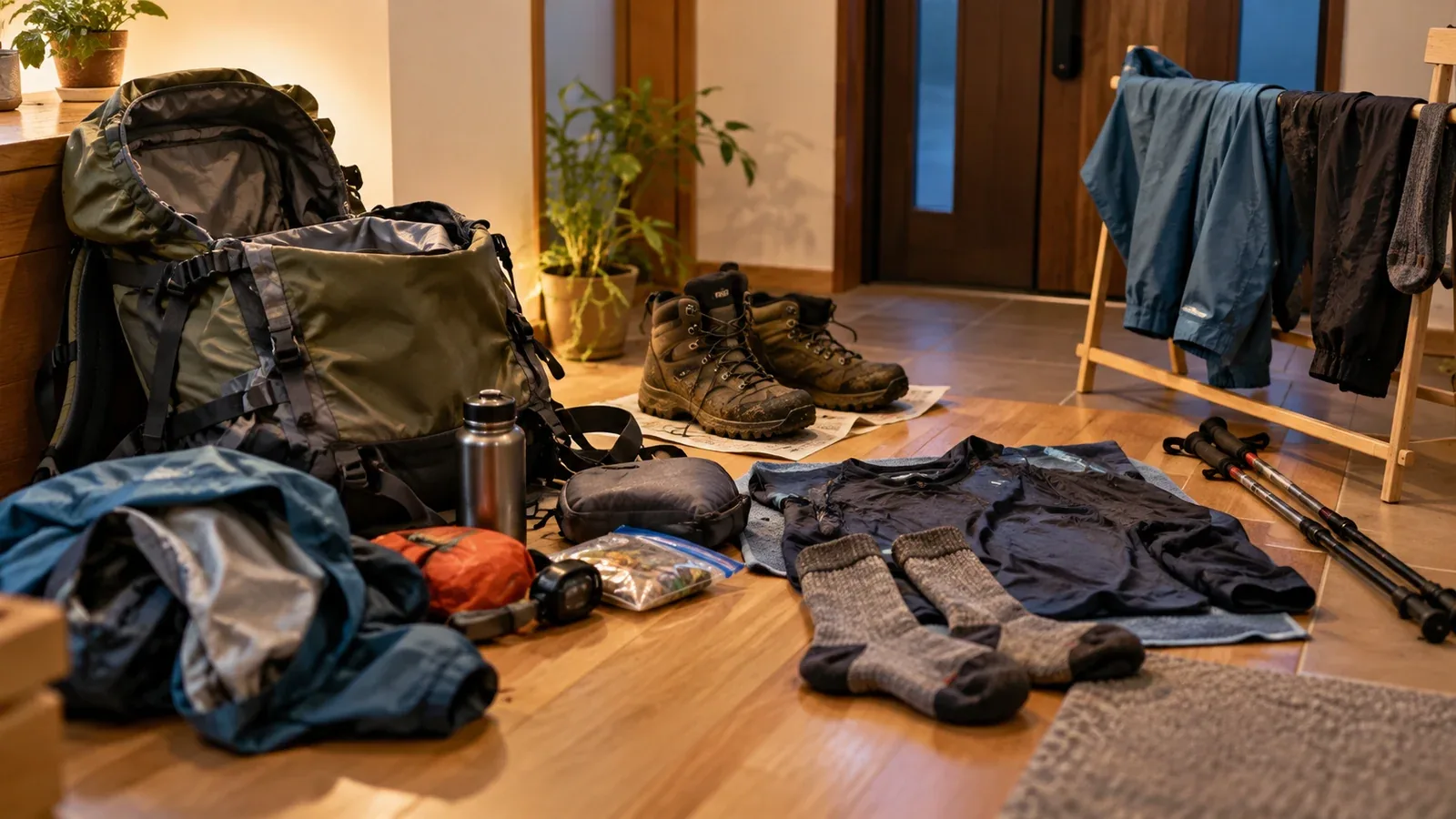
When you get home from a hike, it’s tempting to leave the pack by the door. If wet gear or dirty clothes stay packed away, the materials can deteriorate, mold can grow and odors can linger. There are only a few jobs to do that evening. Knowing which ones can wait makes it easier to start when you’re tired.
This article covers what to do that evening about moisture, dirt and storage. Detailed washing instructions depend on the material, and long-term storage can wait. Here we’ll focus on what benefits from being done before morning.
Open and empty your pack first
When you get home, open your pack. Leftover food, trash and damp gear can encourage mold growth inside a closed pack.
Take everything out, turn the pack upside down and shake out sand, leaves and other debris. If the inside is damp, open it as wide as it goes and hang it indoors where air can circulate. A full wash can wait. The aim that evening is to dry it.
Check the pockets too, including the hip belt pockets and the lid. Sweat or rain can soak into them. Feel inside and leave them open if they’re damp.
Hang wet clothes and socks that evening
Rain gear, midlayers, base layers and socks can pick up a persistent smell if they sit wet in a bag overnight. Synthetic fabrics tend to dry faster. Pay particular attention to cotton and wool blends.
Here are the basic steps for that evening.
- Hang all wet clothes on hangers or an indoor rack. Leave them unfolded.
- Open out the hood and sleeves of rain gear and turn it inside out so the lining can dry.
- Hang socks separately so they aren’t layered on top of each other.
- Spread the fingers of any gloves and expose the lining so it can dry.
The laundry can wait until the next day. That evening, focus on hanging up what’s wet. If clothes are heavily coated with mud, a quick rinse before it dries can make washing easier the next day. Dried mud can lodge in the fibers.
Start caring for your boots as soon as you get home
Boot care has two stages: the day you get home and once the boots are fully dry. The first evening, let them dry and remove loose dirt. Apply waterproofing or leather conditioner later, following the product and boot manufacturer’s directions.
Here’s what you can do that evening.
- Remove the insoles and dry them separately.
- Remove the laces and pull the tongue forward to open the boot.
- Brush away dry mud with a brush or an old toothbrush and rinse the remaining dirt with water. Skip detergent at this stage and follow the boot maker’s care instructions.
- Dry the boots with newspaper or a shoe tree suitable for drying to help keep their shape.
- Keep boots away from direct sunlight, heaters and clothes dryers. High heat can damage leather and rubber soles.
Check the seam where the sole meets the upper. If dirt has collected there, brush it out under running water to keep the area clean.
Deal with poles and small gear that evening
Dirt and sand can work into trekking pole joints and interfere with the locks. Wipe the joints with a damp cloth, then let the poles dry extended or with the sections loosened. Packing them away wet can trap moisture and corrode metal parts such as internal springs.
Remove the batteries from a battery-powered headlamp once it is dry, especially before storing it. A leaking battery can damage the headlamp. For a rechargeable model, dry the charging port before connecting it.
Wipe down wet maps, compasses and whistles and let them dry. Smooth out paper maps and leave them to dry. For laminated maps, wipe off the water.
What to do now and what can wait
Use these two lists when you’re deciding what to do first.
Do these jobs the day you get home
- Open, empty and dry your pack.
- Hang up wet clothes.
- Remove the boot insoles and open the boots to dry.
- Wipe dirt off trekking poles.
- Remove batteries from a dry headlamp if it uses removable batteries.
Leave these jobs for another day
- Wash your clothes.
- Treat your boots with waterproofing or leather conditioner.
- Wash the pack thoroughly.
- Restock trail food and supplies.
- Replace consumables such as tape and adhesive bandages.
It’s easy to take on too much when you’re tired. Remember three things: dry what’s wet, open what’s closed and take out what needs to come out.
Before the next hike
Start with drying, opening and removing parts when you get home. Wash and maintain gear the next day, and waterproof the boots when they are fully dry. Check supplies and the condition of your gear before the next hike so it’s easier to get out the door. You can keep gear notes in Nordwand’s hiking log to track what needs attention over several outings.