
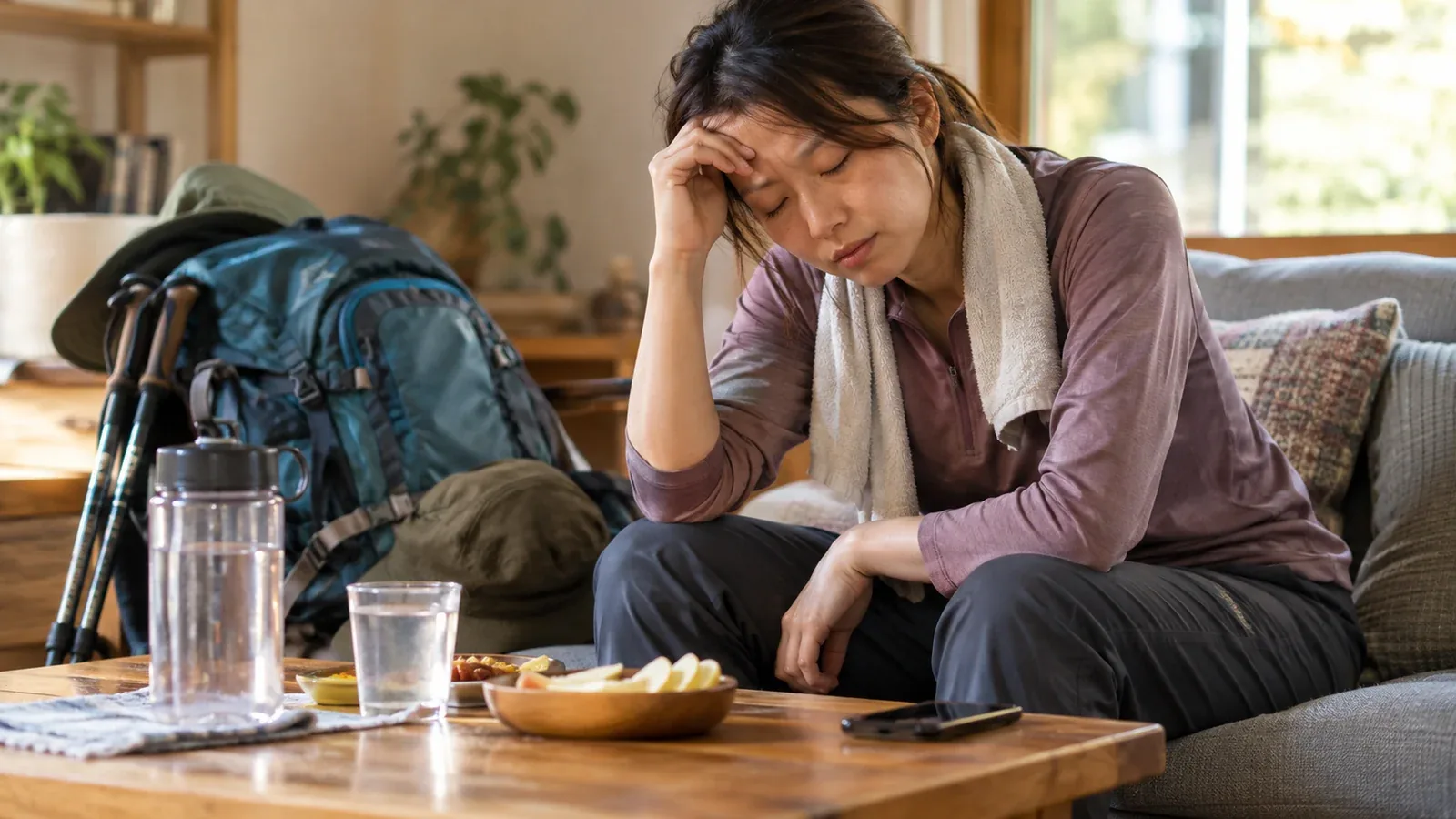
You may feel fine at the end of a hike and notice sore muscles or fatigue only once you are home or the next morning. After a long hike, pay attention to what symptoms you have and how they change over time.
Mild fatigue can improve with rest. Other symptoms call for prompt medical care or an ambulance. Knowing the warning signs in advance can help you decide what to do on the way home or once you get there.
Why symptoms can appear later
The timing depends on the cause. Muscle soreness can start well after exertion. After sitting for a long time on the way home, you may notice swelling or pain in one leg. Take changes in how you feel seriously, even after a tiring hike.
Exercising in the heat makes you lose fluid through sweat. Headache, nausea and dizziness can occur for several reasons, so symptoms alone cannot establish dehydration or heat illness. If you suspect heat illness, move to a cool place and start cooling down.
On a descent, muscles such as those in your thighs work as they lengthen. After unfamiliar exertion, delayed-onset muscle soreness can start around 12–24 hours later and become most painful around 24–72 hours later.
When to rest and monitor symptoms and when to get medical help
Mild symptoms that improve with rest
If symptoms are mild and improve as you rest, take it easy and watch how they change. If they get worse or keep you from moving or doing things normally, contact a healthcare provider.
- Mild muscle soreness. The muscles you used may hurt when you move and feel better over a few days.
- Mild headache or fatigue. Rest and drinking fluids can ease these symptoms. Improvement alone does not tell you what caused them.
- Sleepiness or difficulty concentrating. Lack of sleep or fatigue can contribute. If you are sleepy, avoid driving and rest or switch drivers.
When to call an ambulance or seek care promptly
Act on the following symptoms as soon as they appear. In Japan, call 119 for sudden chest pain, trouble breathing or changes in alertness.
- Sudden severe headache or repeated vomiting. Call an ambulance for a sudden severe headache, altered alertness or repeated vomiting after a head injury. If vomiting continues, seek medical help promptly.
- Swelling, warmth or pain in one leg. Sitting for a long time while traveling can increase the risk of a blood clot. Get medical care promptly for symptoms in one leg. If you also have trouble breathing or chest pain, call 119 immediately.
- Tea- or cola-colored urine. This can be a sign of rhabdomyolysis, especially if muscle pain or weakness is much greater than you would expect after the hike. Get medical care right away rather than waiting to see if drinking fluids helps.
- Sudden chest pain or trouble breathing. Call 119 immediately if chest pain or shortness of breath starts suddenly at rest, or if someone loses consciousness.
- Altered alertness or inability to drink after heat exposure. These are signs of possible severe heat illness. Call 119 immediately, move the person to a cool place and cool them down. Avoid giving fluids by mouth to someone who is not fully alert.
What to do for mild symptoms
If symptoms are mild and there are no signs that require urgent medical care or an ambulance, you can take these steps.
- Drink a little at a time. If you are alert and can drink on your own, take small amounts as tolerated. Follow your doctor’s directions if you have restrictions on fluids or salt.
- Eat what you can tolerate. When your appetite returns, have a meal with a carbohydrate source and protein.
- Wait until you feel better before bathing. Put off the bath while you have a headache, nausea or dizziness. If you suspect heat illness, move to a cool place and cool yourself.
- Rest in a cool place if you are overheated. If the heat may have made you ill, go somewhere cool and loosen your clothing. If you are chilled, change out of wet clothes and keep warm.
- Keep a note of your symptoms. Record when they started, what you are feeling, how severe it is and how it changes. This can help you explain the situation when you seek care.
If symptoms continue the next day or longer
Contact a healthcare provider if symptoms fail to improve with rest, worsen again after easing, or interfere with daily activities. For chest pain, trouble breathing, changes in alertness, dark brown urine or swelling in one leg, follow the guidance above promptly.
If you have a condition such as heart disease, kidney disease or diabetes, talk to your regular doctor about changes in how you feel after hiking. If you use nonprescription medicine, follow the label for doses and frequency. Ask a pharmacist or doctor if you have questions about a medical condition or other medicines.
What you can do before and after the descent
Planning ahead makes it easier to notice changes in how you feel.
- Keep drinking fluids on the descent. Even when the end of the trail is close, drink fluids and take breaks according to the heat and how hard you are working.
- Move your legs on a long trip home. Flex your ankles while seated and take a walk during breaks when it is safe to do so.
- Keep the next day flexible. After a hike with a large elevation change, for example, leave room to adjust your plans if you are tired or sore.
What to do next
If you feel unwell after a hike, first check for signs that require an ambulance or prompt medical care. For mild symptoms, rest and monitor them. If they get worse, cut your plans short and get the help you need. Tell your hiking companions how you feel. Recording the date, route and duration in Nordwand’s hike log can also help you describe the trip when you seek medical care.
Further reading
- Japan Ministry of Health, Labour and Welfare guidance on heat illness first aid and calling 119
- US CDC information on rhabdomyolysis and blood clots during long-distance travel
- American College of Sports Medicine guidance on delayed-onset muscle soreness
- UK NHS guidance on deep vein thrombosis
References and sources
- Japan Ministry of Health, Labour and Welfare | First aid for heat illness
- Japan Ministry of Health, Labour and Welfare | When to call 119
- US Centers for Disease Control and Prevention | Signs of rhabdomyolysis
- US Centers for Disease Control and Prevention | Long-distance travel and blood clots
- American College of Sports Medicine | Delayed-onset muscle soreness
- UK National Health Service | Deep vein thrombosis