
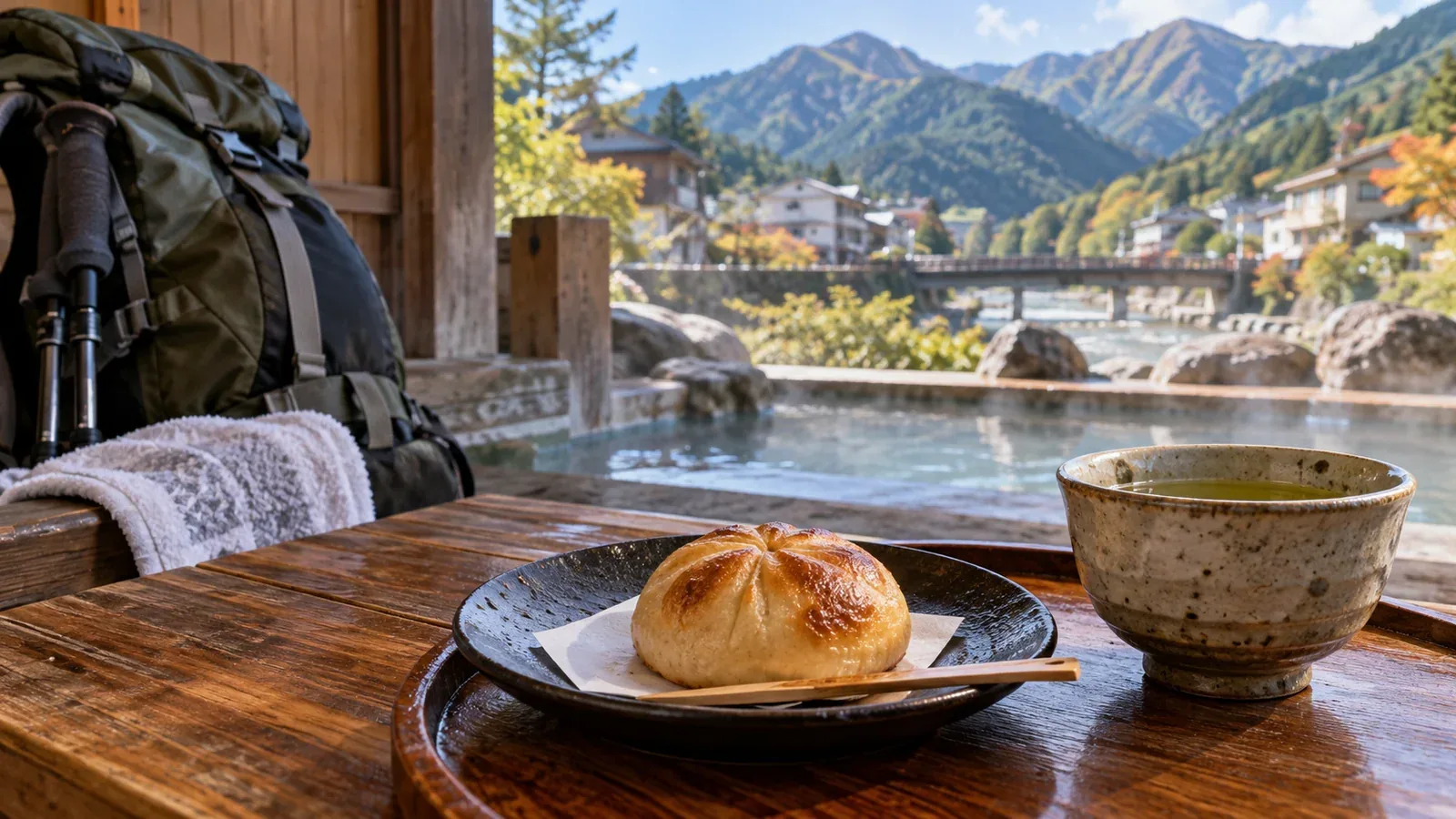
After the hike, once you have changed clothes or had a bath, you may find yourself wanting something sweet. Trying a local treat on the way home is one of the pleasures of a mountain trip.
Sweets in mountain towns reflect local crops, climate and the history of travel routes. Making time for one after the hike can change how you plan the day. Here is how to find, choose and enjoy those sweets.
Why a sweet stop fits a hiking day
Candy and yōkan, a firm sweet bean jelly, are easy trail snacks to carry and eat. Once the walk is over, you can slow down and try something made locally. Make time for water and a meal as well, and choose what works for how you feel and when you need to head home.
Mountain-town sweets often use familiar regional ingredients, including chestnuts, rice, beans and sugar. Some were served at wayside teahouses or offered at seasonal celebrations. A shop’s notes or a local guide to traditional cooking can tell you where each sweet comes from.
Three kinds of sweets to look for
It helps to look for sweets in three broad groups.
Regional sweets and traditional wagashi
These sweets draw on local ingredients and climate. Many are tied to shrines, temples or post towns along old highways. Chestnut-growing areas offer kuri kinton, a sweet made with chestnuts, and chestnut yōkan. Mountain villages have kusa mochi or yomogi mochi, rice cakes flavored with mugwort. In buckwheat-growing areas, look for soba manjū, filled buns made with buckwheat. Availability can be seasonal, and the ingredients in the same item may differ between spring and autumn.
Sweet snacks at mountain huts and trailheads
Trailhead teahouses and mountain huts may serve oshiruko, a sweet red bean soup, amazake, a sweet rice drink, or mitarashi dango, skewered rice dumplings with a sweet soy glaze. Taking a break for something warm on a cold day can make a familiar sweet feel different from the one you have in town.
New sweets from mountain destinations
Some shops make newer treats for hikers and visitors. Look for gelato or smoothies made with local produce, craft chocolate, or sets with herbal tea made from mountain flowers. These have a shorter history and offer new ways to use local ingredients.
How to find and choose a local specialty
Tourist information offices and social media can give you ideas. A few details can help you narrow them down.
Check where the ingredients are from. The label or a sign in the shop may tell you whether the ingredients were grown locally. Chestnuts, beans, wild greens and fruit grown nearby give a sweet a closer tie to the area.
Look for sweets made near where they are sold. Local wagashi shops, teahouses and roadside stations are good places to find sweets made in the area. If you plan to carry them home, check how long they keep and whether they need refrigeration.
Look for seasonal ingredients. You may find chestnuts and persimmons in autumn, and mugwort or cherry blossoms in spring. If you are looking for chestnut or new-harvest rice sweets after an autumn hike, check when each shop starts selling them.
Decide what to eat now and what to take home. One shop may sell fresh sweets for eating there and longer-lasting ones as gifts. Choose a fresh sweet if you plan to eat it after the hike, and check the shelf life if you will give it to someone the following day or later.
How to plan a sweet stop after the hike
Allow a little time for the stop when you plan the day.
- Look around the trail exit and your accommodation beforehand. Before leaving, see what is near the end of the trail or in the shopping streets and roadside stations around your lodging. Check official websites or call about hours, closing days and items that sell out early. Small shops in mountain areas may keep irregular or seasonal hours.
- Work backward from the trip home. If the finish time is uncertain, leave a buffer. You might aim to reach the trail exit an hour before the last bus so there is time for a shop or teahouse. Skip the detour if the hike takes more out of you than expected.
- Think about where and how much to eat. If you want something sweet after a hot spring, choose a portion that suits your appetite and the time until dinner. If you are trying several places, enjoy a small serving so you still have room for your next meal.
- Make a note of what you tried. Write down what you ate, where you bought it and which mountain you had just hiked. Pairing it with your hike log will help you plan the next trip and remember what you liked.
What local sweets tell you about a place
A sweet you buy in a mountain town can tell you a little about local history and food traditions.
In the Nakatsugawa area of Gifu, kuri kinton made from chestnuts and sugar reflects local chestnut growing, the town’s past as a post town on the Nakasendō and its tea culture. In Tochigi, people gathered mugwort in spring to make kusa mochi for seasonal offerings and celebrations. In an onsen town, ask an inn or shop about the story behind its sweets.
Read the package or ask the shop staff about the ingredients, where they came from and how the sweet was made. The answer gives you something to look for as you taste it.
Plan your stop
For your next hike, look up one confectionery shop, teahouse or roadside station within an hour of the trail exit. Check the hours and closing days on the official website or by phone, and write them down to avoid a needless detour. Nordwand’s partner directory can help you find huts and outdoor shops nearby.