
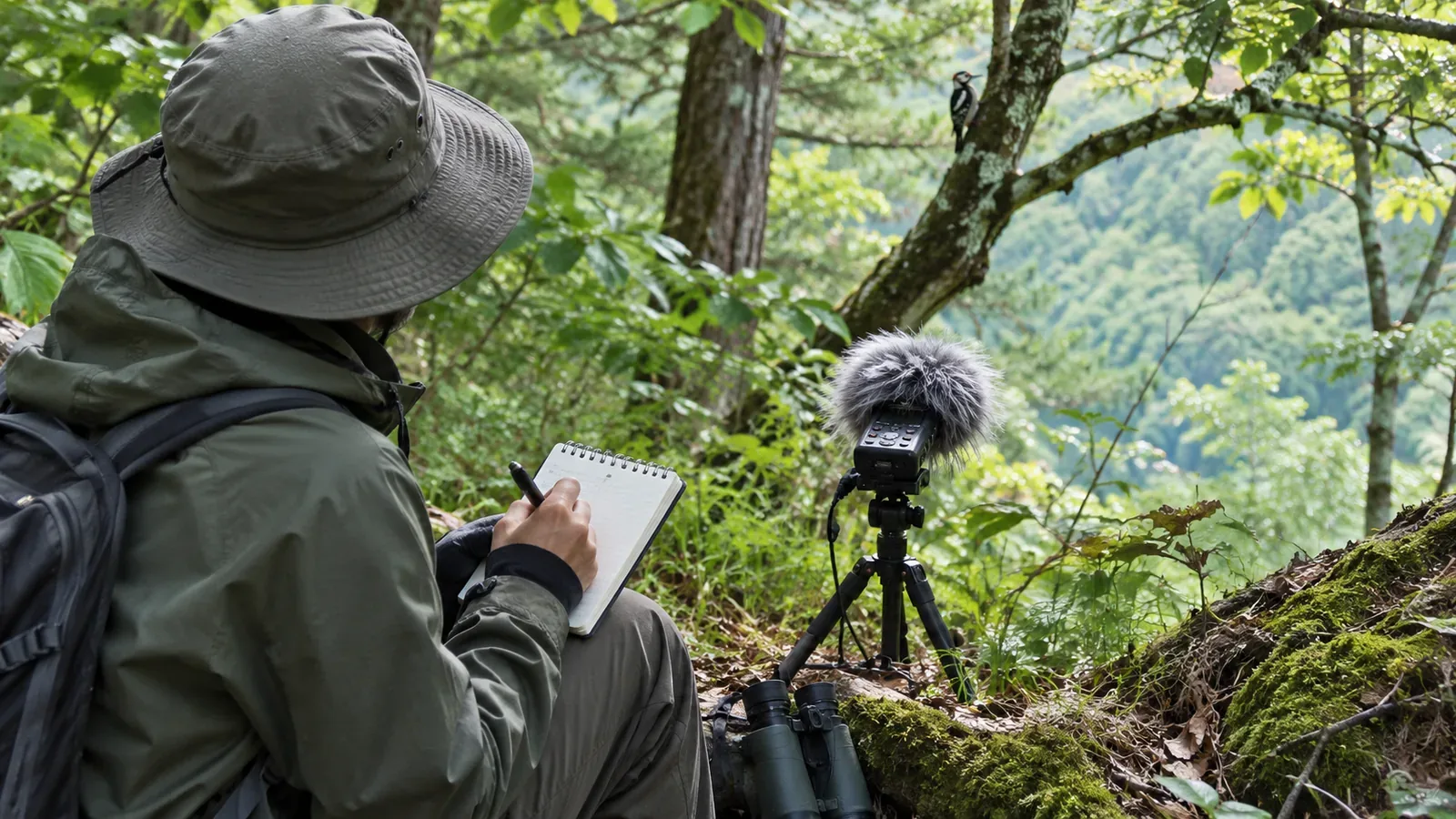
Listen to wildlife where you happen to hear it. The Wild Bird Society of Japan asks people to avoid attracting birds with recorded calls or call devices. Its guidance and Japan’s national park etiquette can help you take notes and record sounds while respecting wildlife and keeping to the trail. Be ready to end the session if the sound passes before you can record it.
Playback can draw birds in
The Wild Bird Society of Japan asks observers and photographers to avoid playing calls to attract birds. A bird may mistake the playback for a rival entering its territory and expend energy singing or flying in defense. The same applies to devices made to mimic bird calls. Leave phone playback off in the field, even for a short clip to see what happens.
The guidelines also point out that when a parent leaves the nest to defend its territory, eggs or chicks can be exposed to predators or cold. Keep the bird’s routine undisturbed when you want a response or a photo. An absent response tells you little about the effect. If you don’t know the species, avoid playing through a series of possible matches.
Leave food out of the observation too. Japan’s Ministry of the Environment asks national park visitors to refrain from feeding wildlife and to pack out their rubbish. Food and playback share one practical point: both can draw animals closer. Keep food wrappers with you, and check around your seat and equipment before leaving.
Follow local guidance and listen from the trail
The Ministry of the Environment asks visitors to leave plants and animals where they find them and to avoid feeding wildlife. Some rules have legal force depending on the location. Stay on trails or boardwalks to avoid getting lost, trampling plants and wearing away the soil. Listen from a permitted path or viewing area when a call comes from the brush.
Keep your distance if the bird comes into view. The Wild Bird Society of Japan says birds may freeze as well as flee when people get too close. Watch for changes in behavior and move away quietly if you see them. Leave promptly if you encounter a nest or fledgling. Observe from where you are without testing how it reacts to an approach.
Check access restrictions and guidance on viewing areas and equipment before visiting. Ask the site manager if you’re unsure where or how you can set up a recorder. Keep the path clear of your body and gear, and pause to give others room to pass. If signs or staff give you different instructions on site, adjust your plan.
Plan how you’ll listen without playback
When you hear a call or a rustle, look for a safe place to stop with stable footing and room for others to pass. Listen there without approaching to find what made the sound. Jot down the time, a landmark, what the sound was like and the direction it seemed to come from. “Several short, high notes” is useful even if you don’t know the species. Leave quietly once you’ve heard enough.
Before you stay for a longer session, check whether it’s appropriate to remain at that spot. If a bird goes out of view, record that in your notes and let it go. Stay on the trail and leave branches intact. Tell your companions where you’ll stop and when you’ll finish. End the session if it delays the group, and avoid waiting near nests or resting animals.
If you’re using a recorder, fit a microphone windscreen and compare settings with a short test before departure. Sony’s field recording guide describes linear PCM as an uncompressed format and explains how a low-cut filter (LCF) can reduce low-frequency noise such as wind rumble. Check how much wind remains under your conditions. Sony describes a pre-recording feature that saves the five seconds before recording starts on the PCM-D50. Check your manual for the features your recorder supports.
To check whether you captured the sound, stop where you can safely see your footing and surroundings. Listen briefly through earphones. That keeps the recording from being played back into the habitat.
Practice at home and think before sharing audio or locations
Before leaving, write down what you’d do in a few situations. If you hear an unusual call far up a slope, stop on the path, note it and stay where you are. If someone suggests playing a bird call on a phone, explain your approach and suggest listening quietly together. If you want to share the recording, decide in advance how much location information to include.
The Macaulay Library recommends keeping the date, time, location, what the animal was doing, background species and equipment settings with the audio. Note any artificial sound sources such as loudspeakers. If you aren’t sure where the call came from, leave its source open. Finding a similar recording gives you a possible match to investigate.
Review location details before sharing. The Wild Bird Society of Japan asks people to keep precise photography sites private and avoid posting images of nesting birds or fledglings on social media. Apply the same care to location descriptions that accompany audio, since they can draw a crowd to a bird. Records sent to a site manager or researcher for conservation have a different purpose from public posts. Review any background conversations before publishing audio and keep them out of the public clip.
In brief: Listen for spontaneous calls and leave playback off
Listen from permitted places and follow local guidance and Japan’s birdwatching etiquette. Skip the session when there’s no safe place to stop. Give nests and young birds space and stay on the path when a bird moves away. Note the date, time and what the sound was like, and review exact locations and background conversations before sharing. Even an encounter you couldn’t record can go in your hiking notes.