
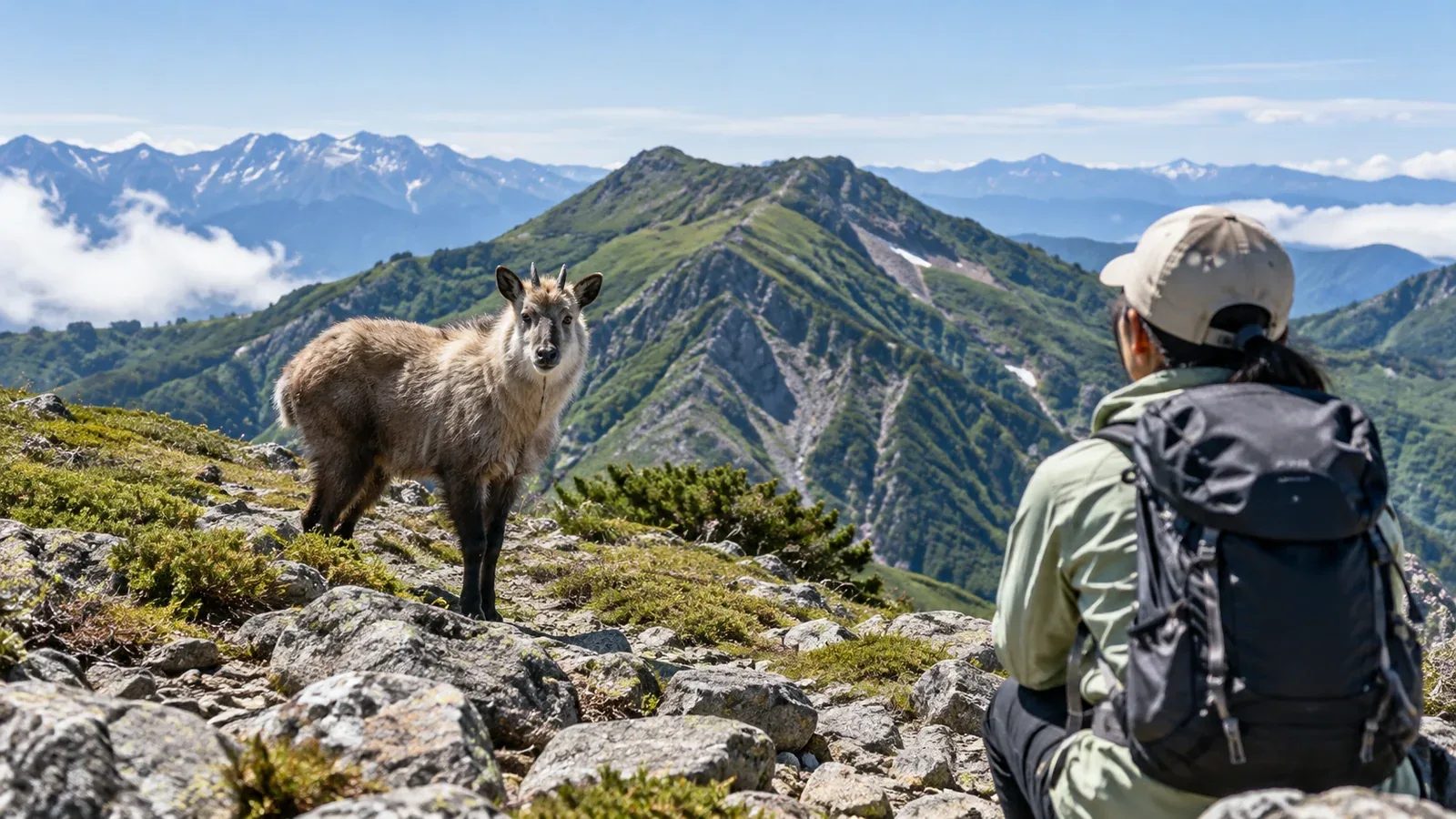
Seeing a macaque or deer on a hike can make you want to stop and watch. Keep your food in your pack and watch from a distance. Crumbs left after a break or a forgotten snack can attract animals, too.
When wild animals find food near people, they may return to that spot or look for food around people again. Over time, some may start visiting rest areas, huts or villages. More contact can lead to injuries and food being taken, and wildlife managers may have to intervene.
In some zones of national and quasi-national parks, feeding wild birds and mammals is regulated under Japan’s Natural Parks Act. Local ordinances can also apply. Check the visitor information for your destination.
How feeding affects wildlife
Foraging and habitat
Wild animals look for food suited to their habitat and the season. If they find food from people repeatedly, they can learn to look for it near people or where rubbish is left.
Japan’s Ministry of the Environment identifies feeding bears and macaques or leaving food waste as factors in conflicts near settlements. Keep food out of reach and take all scraps with you.
In Shiretoko, visitors are asked to pack out rubbish so the smell of food and empty containers does not attract brown bears. Where designated campsites require food lockers, store food and scraps as directed and keep them out of the tent.
Nutrition
Wild animals that frequently eat people’s snacks and processed food may spend less time looking for their natural food and miss out on nutrients they need.
Leaving fruit and vegetables can also teach animals to look for food where people come. Pack out everything you brought.
How to avoid feeding animals by accident
Animals can get hold of food during breaks and overnight stops without being offered any directly.
- Spilled food. Pick up crumbs and take containers with leftover drinks home with you.
- An unattended pack or food bag. Keep it with you during breaks and follow local storage rules when camping.
- Leftovers or fruit peels. Put them in your rubbish bag to take home. Keep them out of the soil.
- Food thrown to an approaching animal. Keep your distance and follow local advice. Throwing food teaches the animal to approach people.
Seal food and food waste in bags or containers and keep your gear with you. Where a wildlife-resistant locker or container is required, follow local instructions.
When wildlife is close by
If you spot a wild animal, check how far away it is and make sure of your footing before trying to take a photo. If the animal approaches you, stop watching and give it room.
Keep your distance. Give the animal room to move without following it or blocking its path. Leave young animals plenty of space, too.
Read bear guidance for the area. What to do in an encounter depends on the species and situation. Before leaving, check the park or municipality’s official guidance for sightings and recommended actions. The Ministry of the Environment has brown bear guidance specifically for Shiretoko.
Avoid touching wild animals. If you find a sick-looking animal or a carcass, stay away, note the location and let the park office know.
The Natural Parks Act and local rules
Article 37 of Japan’s Natural Parks Act and Article 6 of its Enforcement Order restrict indiscriminate feeding of wild birds and mammals, getting excessively close to them and following them when those actions could interfere with use of a national or quasi-national park. The rules apply in areas such as designated special zones. Check which zones are covered and read local guidance.
Municipalities can have their own rules. Under a supplementary provision, Nikko’s ban on feeding macaques currently applies only within the pre-merger city boundaries. Check the local authority’s official information for the ordinance and the area it covers.
Huts and trailheads may post recent sightings and temporary closures. Read these notices on the day and follow any route changes or access restrictions.
Watch from a distance
Even from a distance, you can watch deer grazing or spot a rock ptarmigan walking through alpine terrain. Stop where other hikers can pass.
Use binoculars or a telephoto lens to watch from the trail. Give animals space by keeping food and recorded calls to yourself and staying on the trail instead of following them for a photo.
If an animal notices you and stops what it is doing or moves away, increase the distance. Follow local viewing-distance guidance where available, as on Yakushima’s Seibu Forest Road.
What to check before leaving and at each break
Before your hike, check recent sightings and food storage rules for your destination. After eating, look around where you sat and pick up crumbs and wrappers. Make sure your companions know how food and rubbish will be stored.
Where to check local rules
- National park rules for wildlife viewing and feeding — regional environment offices and visitor centres
- Local ordinances and the areas they cover — prefectural and municipal authorities
- Recent sightings, closures and food storage rules — park offices, visitor centres and huts
References and sources
- Japan Ministry of the Environment — Preventing feeding of bears, macaques and other wildlife
- Japan Ministry of the Environment — Rules on feeding and approaching wildlife under the Natural Parks Act
- City of Nikko — Ordinance prohibiting the feeding of wild macaques
- Japan Ministry of the Environment — Brown bear safety for Shiretoko hikers
- Japan Ministry of the Environment — Keeping your distance from wildlife on Yakushima’s Seibu Forest Road
- U.S. National Park Service — Why feeding wildlife is harmful
- U.S. National Park Service — How to watch wildlife safely