
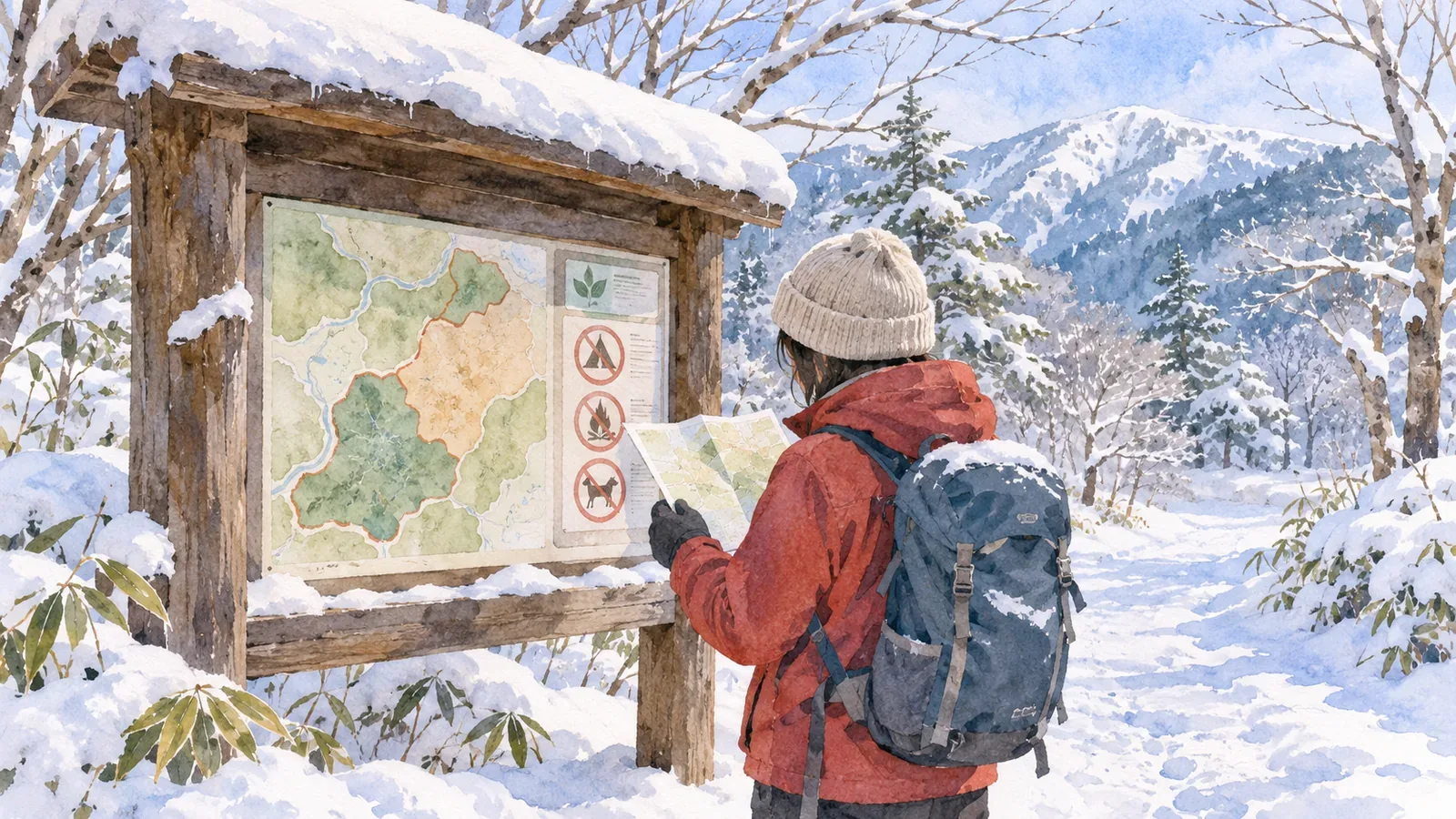
Before visiting a nature park in the snowy season, compare the zoning map with the winter guidance. When snow hides signs and vegetation, check your route, access and camping conditions and the facilities available before leaving.
Check the snow-covered trail and park zones on the map
The Ministry of the Environment lists activities that require permits or notifications under the Natural Parks Act for each national park zone. In Special Protection Zones, controlled burning, campfires and plant collecting are among the activities that require permission. Check conditions at the intended site even when it is covered with snow.
Read which area, activity and period the notice covers. Some routes and closures apply only in winter, so look for guidance for your destination and date.
Mark the trailhead, ascent, summit and descent on the map and compare the route with Special Protection Zones and other areas on the official zoning map. If the scale and legend leave the boundary unclear, tell the responsible authority the stretch and activity you have in mind.
Look up winter routes and facilities
Use official park or facility information to check winter access, operating seasons and conservation guidance. Note the area covered and the date the information was issued or updated.
The Nikko Yumoto Visitor Center asks visitors to stay on winter routes, keep snowshoes off the dedicated cross-country ski courses around Sambonmatsu and Kotoku, and stay away from the frozen lake. In Oku-Nikko, also check trail and road conditions. If you are visiting another area, look up its own winter guidance.
If you plan to rely on facilities, ask the operator about winter opening dates and hours for toilets, water points and anything else you need. Plan for closures and check which buildings and grounds you can enter.
Check each planned activity by location
A winter outing can involve walking, pitching a tent, making a campfire, taking research samples or installing filming equipment. Each activity has its own checks. Read the ministry’s list for each zone and describe the location, activity and scale when asking what procedures apply.
Snow depth and the vegetation beneath it vary and can be hard to judge. Follow routes and walking guidance designated for conservation. Even where you see footprints, look up whether that section is open for use.
The ministry asks visitors to camp and make campfires in designated places. Ask the operator whether the facilities you plan to use open in winter and check the tent pitches and equipment rules.
Share maps and contacts with your group
Save the map title, date checked, local guidance and contact details. Tell the group what you confirmed for each section and what remains open. Share the original documents so everyone can find the legends and update information.
When asking for information, include the location, dates, route, number of people and planned activity. Record the answer alongside the site and conditions it covers. If you change the route, check the new sections.
Check the weather, snow conditions and access before leaving. If a stretch remains unverified or the conditions do not fit the plan, consider changing the route or dates, or calling off the trip.
Review conditions before a snowy-season visit
Snow or weather can make signs hard to read, so save official information before leaving. If a newer sign appears to differ from what you found, check the manager’s directions or contact details.
Review the zoning map with your companions and share the route, rest and overnight stops, and conditions you have confirmed. Look up any outstanding questions before leaving.
Footprints or tent marks in the snow tell you someone was there. Check the official guidance or ask the site manager whether the activity is permitted now. Ask well in advance if it requires a permit.
If your chosen site is unavailable, pick another site or way to do the activity and make the same checks for the new plan.
Use the official zoning map and winter guidance to check the stretches you will walk and the activities you plan. Share the date and scope of your checks with the group, and adapt to the conditions.
References and sources
- Japan Ministry of the Environment: Activities requiring permits or notices in national parks and the relevant forms
- Japan Ministry of the Environment: National park notifications and permit applications
- Japan Ministry of the Environment: National park rules and etiquette
- Nikko Yumoto Visitor Center: Before you set out
- Nikko Yumoto Visitor Center: Trail and road conditions