
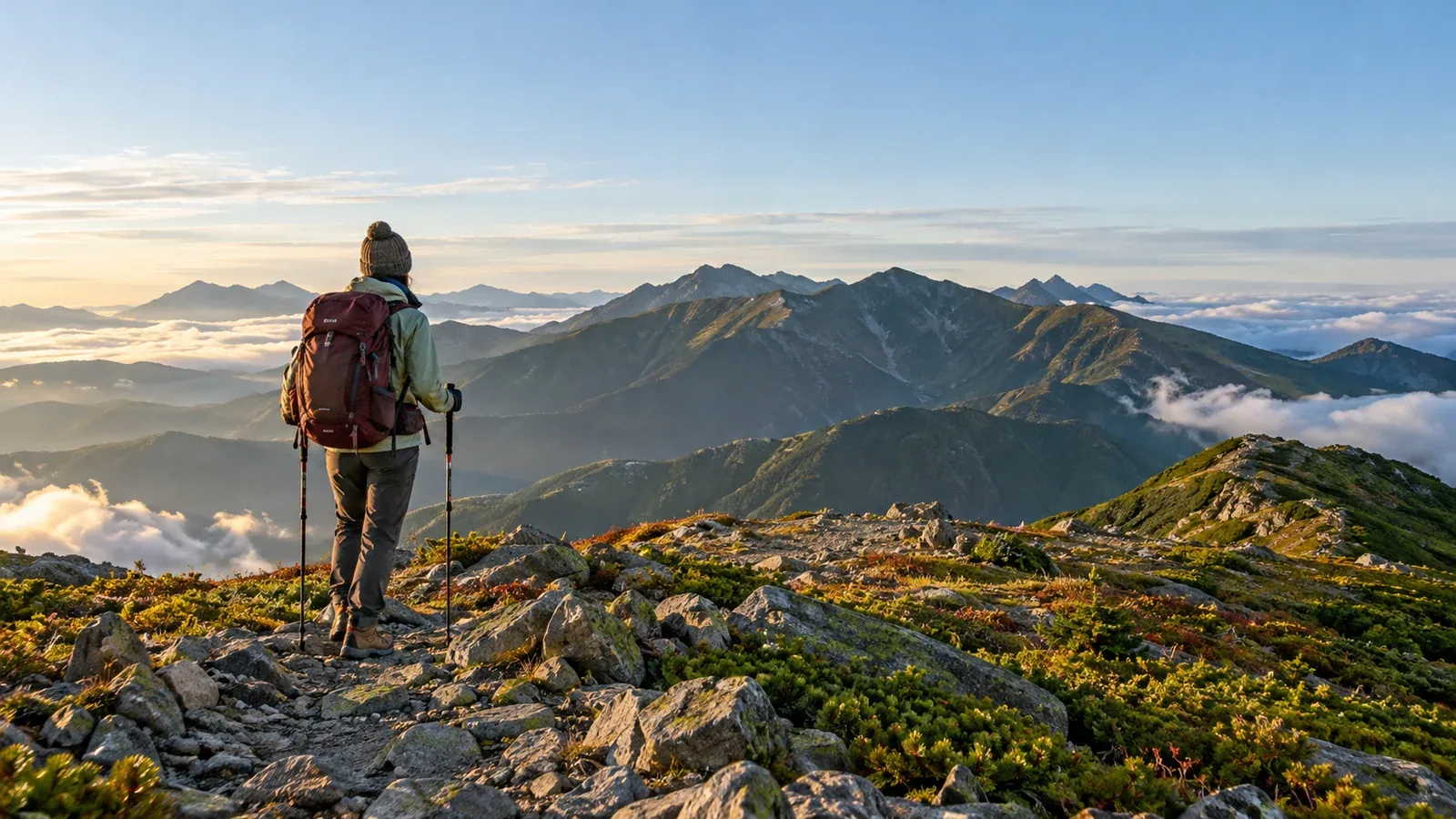
Many popular hiking destinations, including the Northern Japanese Alps, Yakushima and Daisetsuzan, contain nature parks. Rules on taking plants or stones home, lighting a fire or pitching a tent depend on the kind of park and the zone you’re in.
Checking the park map and visitor information before setting out helps you find the rules that apply. This guide covers the zones used under Japan’s Natural Parks Act and common situations hikers encounter.
Know the type of park and its zones
Japan’s Natural Parks Act protects outstanding natural landscapes and provides for their appropriate use. Japan has national parks, quasi-national parks and prefectural nature parks. The Act regulates activities in national and quasi-national parks. For prefectural nature parks, check the relevant prefectural ordinances for any procedures.
The main land zones in national and quasi-national parks are special protection zones, Class I to III special zones and ordinary zones. Rules vary by zone and activity. Some areas, including designated visitor management zones, may limit when or how many people can enter.
Check the maps published by the Ministry of the Environment or the prefecture for park boundaries and zoning. Your route may cross zones between the trailhead and summit, so trace the full route on the map.
Rules on collecting, fire, camping and filming
Collecting plants, rocks and soil
In special zones in national and quasi-national parks, a permit is required to collect or damage designated plants or extract minerals, soil or rocks. In special protection zones, restrictions also cover activities such as damaging trees or bamboo or collecting other plants. Even in ordinary zones, collecting minerals, soil or rocks may require a notification.
Leave flowers, branches and stones where they are, and take photos from a trail or boardwalk. Check the ministry’s designated plant list and the park’s guidance for covered species and other details.
Fire and campfires
Campfires in national and quasi-national parks’ special protection zones are subject to a permit under the Natural Parks Act. Check the park’s visitor information and campsite rules, and use designated places for campfires. Ask the campsite or hut operator where you may use a gas stove or other cooking equipment.
Tents and campsites
For an overnight stay in a tent, use the camping areas designated for the park or mountain range. In the Northern Alps section of Chubusangaku National Park, the Ministry of the Environment says camping is allowed only at designated sites.
Find out where the campsites are, when they open and whether you need to book. If your chosen site is full, make another plan before setting off. Consider booking a hut, changing the route or moving the trip to another date.
Drones and other unmanned aircraft
The Kanto Regional Environment Office explains that flying, taking off or landing a drone in a national park does not itself require a permit or notification under the Natural Parks Act. Other regulated activities associated with filming may require paperwork. Check the Civil Aeronautics Act flight rules and the conditions set by land or facility managers. Avoid flying near wildlife habitats and places where people gather.
Assumptions to avoid when planning
Zones and facility managers can change along a route, even within a single park. Check your map and the latest visitor guidance before repeating something you did on another mountain or route.
Plan for these situations before you leave.
- Check the zoning map if the route enters a different zone.
- Before looking at the view or free space, check whether your tent site is designated.
- Watch alpine plants from the trail and leave them in place.
- Check the conditions for the intended flight location even if few people are around.
Have an alternative in mind if a campsite is full or access to a planned filming spot is restricted.
How to check official information
Start with the kind of park, then identify the zone and what you plan to do there. That will help you find the right office.
- Identify the park and zone. For national parks, check the Ministry of the Environment or its regional offices. For quasi-national or prefectural nature parks, check the prefecture’s official site.
- Check conditions for the activity. Read the zoning and site guidance for collecting, camping, fire, drones and anything else you plan to do.
- Ask in advance if paperwork may be required. Collecting for research or setting up equipment for filming can require a permit or notification, depending on what you plan to do.
- Read the prefectural ordinances for prefectural nature parks. Zones and restrictions vary by park. Ask the responsible prefectural office.
Hut and visitor centre staff can explain site rules and direct you to the relevant office. If you are unsure whether you need a permit or to file a notification, ask the responsible authority and give the location and details of your plan.
What the rules protect
When many people step around mud, vegetation along the trail can be damaged and the worn area can spread. Camping in designated areas and viewing plants from the trail are practical ways to limit that damage.
When you see a boardwalk or a rope limiting access, read the signs to see what they protect. Understanding the reason on the ground can help you make similar decisions on another hike.
What to check before you leave
For your next hike, trace the route on the official park map and read the rules for any planned camping, fire or filming. Share campsite information and access restrictions with your companions so you can follow the same plan on the day.
Where to find park information
- National park boundaries and zoning maps — the Ministry of the Environment and regional environment offices
- Quasi-national and prefectural nature parks — the prefecture’s nature parks office
- Current campsite, fire and trail closure information — park management offices and visitor centres
- Drone flight rules — the Ministry of Land, Infrastructure, Transport and Tourism. Site conditions — the land or facility manager.
References and sources
- e-Gov — Japan’s Natural Parks Act
- Japan Ministry of the Environment — History and organisation of national parks
- Japan Ministry of the Environment — National park permits and notifications
- Japan Ministry of the Environment — Designated plants in national and quasi-national parks
- Japan Ministry of the Environment — National park rules and etiquette
- Japan Ministry of the Environment — Visitor rules for the Northern Japanese Alps in Chubusangaku National Park
- Kanto Regional Environment Office — Using drones in national parks
- Japan Ministry of Land, Infrastructure, Transport and Tourism — Unmanned aircraft flight rules