
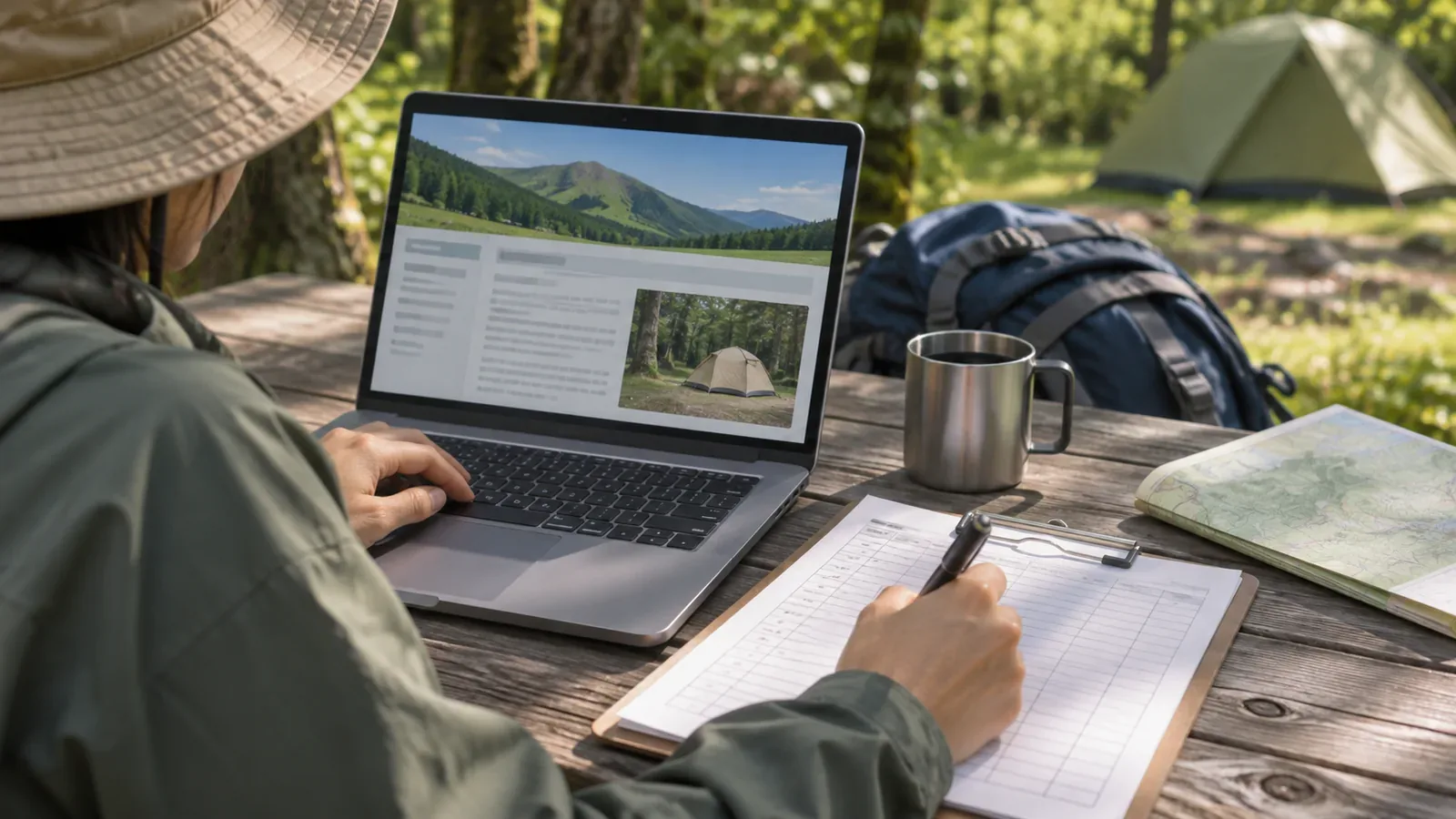
To pitch a tent in a national park, start with the places the site manager lists for camping. The ministry asks visitors to camp in designated places. Once you have a site, check when it opens, reservations, check-in and where you can pitch.
Find a place the site manager designates for camping
In a notice dated 7 July 2011 for Chichibu-Tama-Kai National Park, the ministry pointed to damage to plant growth from pitching tents outside campsites. It explained that the Natural Parks Act generally regulates pitching tents, with exceptions including certain areas and campgrounds, and asked visitors to use campgrounds or similar designated places.
The ministry’s national park guidance asks visitors to camp and light campfires in designated places to protect vegetation, avoid attracting wildlife and prevent wildfires. Find the names and boundaries of those places in the local park or facility guidance.
Look for facility names and maps of the designated areas. Once you have a candidate, check its operating season, whether you need a reservation, how check-in works and where you may pitch. A campground marked on a map still needs to be checked with the operator for the date of your visit.
Compare the zoning map with local conditions
The ministry lists activities requiring permits or notifications by zone, including Special Zones, Special Protection Zones and Marine Park Zones. Ordinary Zones also have activities requiring notification. Rules for activities exempt from permits and notices vary by zone. Check what applies to the specific site and activity.
The Oze Preservation Foundation limits camping to designated campgrounds in three areas: Yamanohana, Miharashi and the east shore of Lake Ozenuma. Its facility information lists Ozenuma Campsite as requiring a reservation. Ask the operator of each campground about bookings and openings for the dates you plan to visit.
The ministry says some activities may require procedures under other laws covering wildlife protection, species conservation, cultural property or forests, in addition to the Natural Parks Act. Ask the agencies responsible for the applicable laws which procedures are needed.
Identify the place, activity and conditions in the guidance
Read the information about tents to find where it applies, what you may do there and under what conditions. Turn any unclear points into questions for the manager.
If the guidance refers to “campgrounds,” “campgrounds and similar sites” or “certain areas,” look for facility names or boundaries on a map. If you cannot tell which locations the terms include, show the manager the site you have in mind and ask.
Describe what you plan to do, whether it is pitching a tent, staying overnight or taking a break. Check separately which cooking stoves or campfires are allowed in that place. In Oze, campfires are prohibited even at designated campsites.
Check which park, area and period the notice covers, who issued it and whom to contact.
Check the notice date and who to contact now
The Chichibu-Tama-Kai notice is dated 7 July 2011. Check current conditions in the park’s latest information or with its office, and look up opening and check-in information for the facility you intend to use.
The office that receives a permit application or notification depends on the activity. Ask the ministry’s local office or the relevant prefectural department in advance about the procedure and where to file. Ask the campground operator about bookings, check-in and where to pitch.
Record the park, location, who issued the notice and when, outstanding questions, whom to contact, and any reply and its date. If you cannot confirm a site before leaving, switch to accommodation you have verified or plan a day hike. Read signs on site after stopping on stable ground where you will not block the way.
Verify the site and conditions before leaving
Identify the designated facility or area and confirm opening dates, reservations, check-in and where to pitch. If you cannot confirm your intended site, use accommodation you have verified or switch to a day hike.
References and sources
- Japan Ministry of the Environment, Chichibu-Tama-Kai National Park: Pitching tents outside campsites, 7 July 2011
- Japan Ministry of the Environment: National park rules and etiquette
- Japan Ministry of the Environment: National park notifications and permit applications
- Japan Ministry of the Environment: Activities requiring permits or notices in national parks and the relevant forms
- Oze Preservation Foundation: Rules and etiquette in Oze
- Oze Preservation Foundation: Mountain huts and campsites
- Japan Ministry of the Environment: Latest notices and contact details for Chichibu-Tama-Kai National Park