
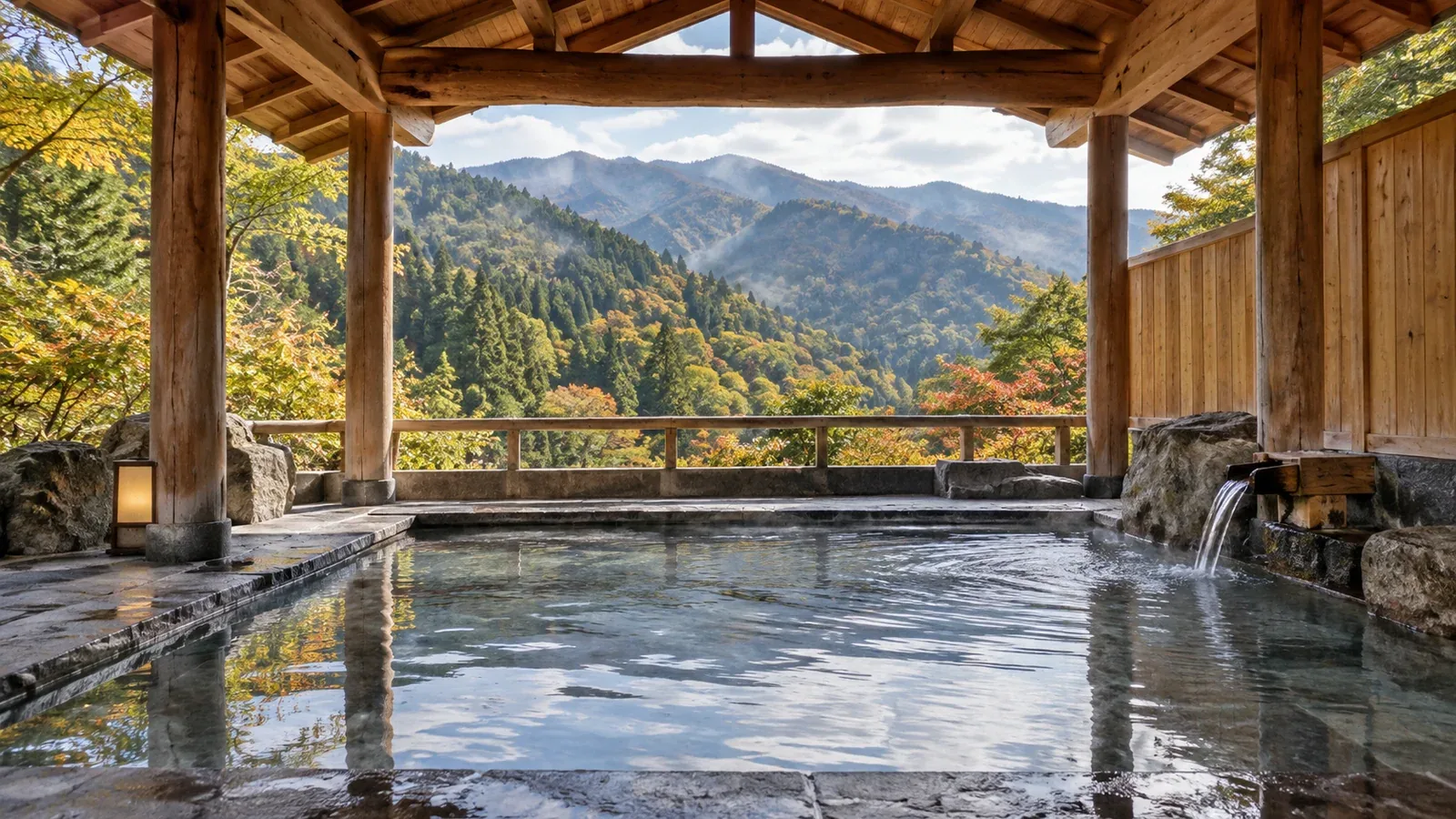
A soak after a hike is a good reason to start planning a trip. Warming up tired legs, rinsing off the trail and unwinding at an inn or day-use bathhouse can help you decide how far to walk, how demanding a route to take and whether to stay overnight.
A hot spring, or onsen, can be high on the mountain or in a town you visit after coming down. Those two trips require different plans. Opening hours, day-use access, crowds and transport can change with the season. Check official information from the operator or local authorities before visiting. Here’s how to choose a hike and hot spring that fit together.
Three ways to combine a hike and a hot spring
Start by deciding which kind of visit fits your trip.
① A spring on the mountain (at a hut or bathing lodge) A bath lies along the hiking route. Examples include Honzawa Onsen in the Yatsugatake range and Hakuba Yari Onsen Hut on the slopes of Mount Hakuba Yari. Check with the operator to see whether bathing is available, whether non-guests can use it and when it closes for the season.
② A hot spring town at the start of the hike In Oku-Nikkō, a point-to-point hike leads from Nikkō Yumoto Onsen past lakes Karikomi and Kirikomi to Kōtoku Park. If you plan to bathe in Yumoto after this hike, check how to get back from the finish.
③ A nearby hot spring you need transport to reach The mountain and spring are in the same area, but a car or public transport may be needed. If you’re visiting an onsen in Minakami after Mount Tanigawa, for instance, the need for a transfer depends on where you come down and where you want to bathe. Choose the trail, finish and transport together.
These three options help you decide whether you can fit a hike and bath into a day, need an overnight stay or have to arrange transport from the end of the trail.
Four checks when putting a trip together
1. Getting from the end of the trail to the bath
A route that starts and ends at the same trailhead is simpler. On a traverse or a bus-access hike, you may finish somewhere else. Use a map to check how to reach the hot spring from your exit point. If you’re using public transport, check that the bath’s opening hours leave you time to catch the last bus.
2. Day-use admission and hours
Mountain huts and onsen inns may limit day-use bathing when overnight guests have priority or the baths are busy. In case your descent takes longer, use the official site or call to check last admission, closure days and any reservation requirements.
3. When the trail and hot spring are open
A trail can be open when the bath is closed, and a year-round onsen may be near a trail that closes in winter. Weather, volcanic activity and snow can change access on plateaus and around volcanoes. Check the latest notices from local authorities and operators just before you hike.
4. Fitness and time on the trail
Having a hot spring in mind can make a late finish seem less of a problem. Allow plenty of time for the hike, including enough margin to stop for a bath afterward. Keep a steady pace and visit the onsen if you have time after the descent.
What to know about bathing at mountain hot springs
Acidic springs have a low pH, and both acidic and sulfur springs can irritate the skin. Check the notices at the facility for the water type and precautions. If you have sensitive skin, consult the signs or medical advice about whether to avoid that bath. If you do use strongly irritating water, rinse it off afterward with warm fresh water.
Mountain huts differ in whether they heat, dilute, recirculate or disinfect the water. Alongside labels such as gensen kakenagashi, which refers to continuously supplied spring water, look at the posted analysis and bathing instructions to see how the water is handled.
After the hike, rest and rehydrate before bathing. Japan’s Ministry of the Environment recommends resting for about 30 minutes after exercise and rinsing with bath water to get used to the temperature before getting in. Keep your first soak short. If you have a condition such as heart disease or high blood pressure, avoid very hot water and check with your doctor if you’re unsure about bathing.
Planning by type of destination
How you combine the bath and the hike depends on the kind of mountain area you visit.
- Active volcano — Springs are often found on the mountain or at its foot, and access restrictions can change. Check Japan Meteorological Agency alerts and any applicable alert level before your hike.
- Hot spring resort in a highland or mountain area — Bathhouses cluster in a town at the foot of the mountains, which can make them easier to reach. Check crowds and parking in peak season.
- Hot spring hut on a traverse — There’s a bath along the way. Check bookings, day-use access and capacity early.
- Transfer to a nearby hot spring — You have more choices and more logistics. Check when you’ll finish, when the last bus leaves and when the bath closes.
How to narrow down your options
- Choose a mountain area first. Decide what difficulty, elevation and season suit you. Then see which hot springs are nearby. Starting with the bath can steer you toward a route that doesn’t match your skills or the conditions.
- List baths near the end of your route. Use GSI Maps and local tourism or hot spring websites. Search the mountain name with “onsen.”
- Verify opening hours and day-use admission with the operator. Access can vary by season, day of the week and time, so check your planned date.
- Compare your hiking schedule with bathing hours. Allow for a late finish and check whether you would still be admitted. Have a backup, such as a service area on the way home.
- Check current weather, volcano information and restrictions just before leaving. In volcanic areas, look up current Japan Meteorological Agency notices and local access restrictions before starting.
Next steps
Once you’ve picked a mountain area, look for hot springs on official local government or facility websites. Nordwand’s partner directory can help you find nearby mountain huts. If you’re planning a trip with others, the Base Camp and community features can put you in touch with hikers interested in the same area.
References
- Japan Meteorological Agency: volcanic activity and alert levels
- Official hiking and tourism websites of prefectures and municipalities
- Ministry of the Environment: national park visitor information and onsen bathing precautions
- Geospatial Information Authority of Japan: GSI Maps
References and sources
- Honzawa Onsen: official information for the Yatsugatake hut
- Hakuba Village: Hakuba Yari Onsen Hut
- Nikkō City official tourism site: hiking routes in Oku-Nikkō
- Minakami Tourism Association: the 18 hot spring areas of Minakami
- Ministry of the Environment: the Hot Springs Act and required notices
- Ministry of the Environment: standards for onsen bathing advice and signage
- Japan Meteorological Agency: volcanic warnings and eruption notices
- Geospatial Information Authority of Japan: GSI Maps
- Ministry of the Environment: national park visitor etiquette