
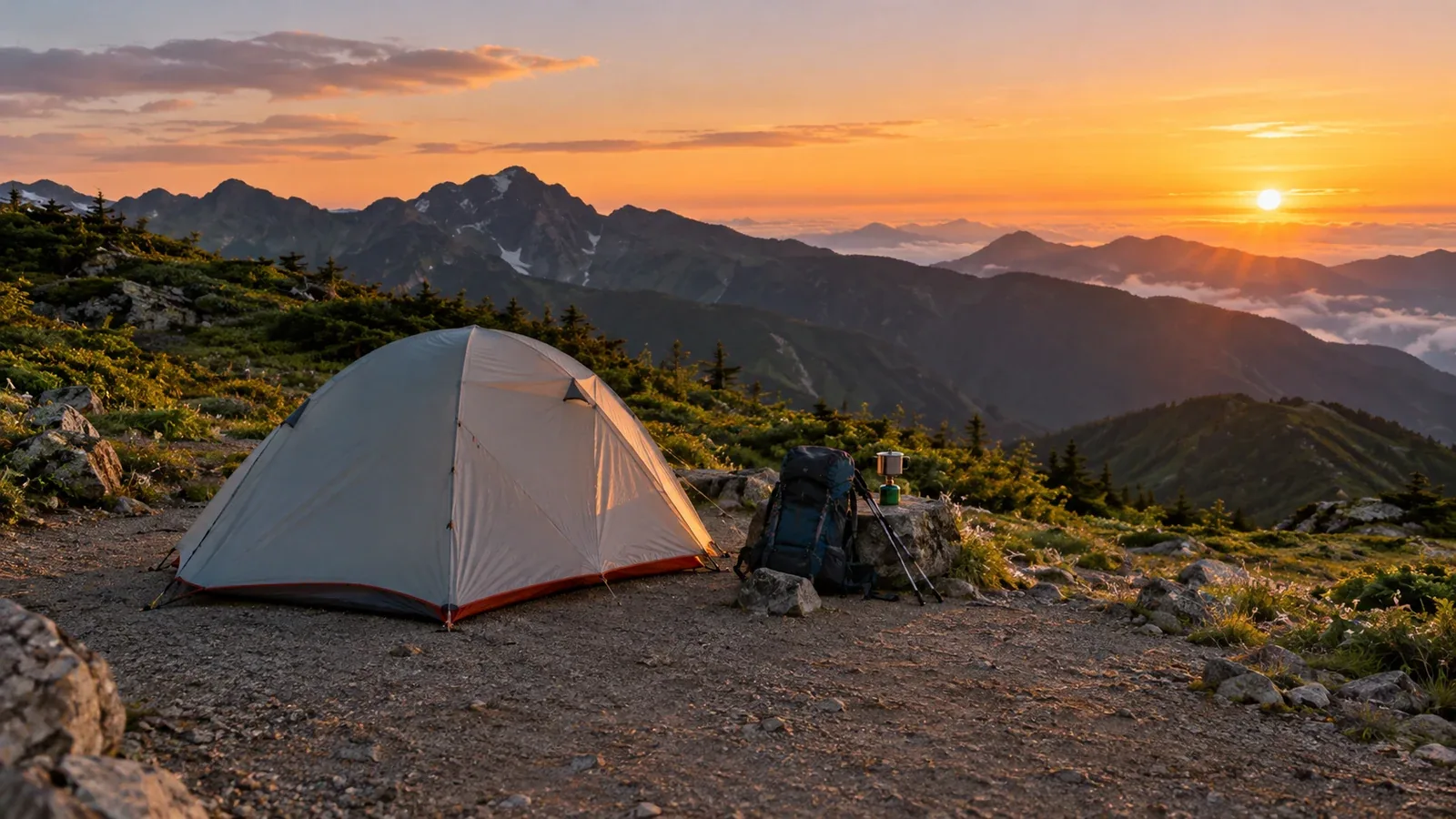
When looking for a mountain campsite, you might picture a starry sky or a view across the ridges. You might also want easy access to water and toilets. Both matter. Sites near ridges are more exposed to wind, and water availability varies. Check the facilities as well as the photos.
This guide explains how terrain and facilities differ across Japan’s mountain campsites. Use it to decide what matters to you and narrow down your options based on your experience and the kind of trip you want.
Two broad types of mountain campsite
Japan has campsites run by mountain huts and standalone designated camping areas. Views and facilities depend on the location and how the site is managed.
Hut-run campsites are often near a hut, which handles check-in and manages the site. Fees, the location of water and toilets, and opening hours vary. The campsite at Yarigatake Sansō, for example, is near the ridge with no water source nearby, so campers buy drinking water at the hut. Check opening dates and availability before departure.
Standalone designated campsites are used without relying on hut facilities. In national parks, camp in designated areas and follow the park’s and operator’s rules. Some have no water or permanent toilet. Check what’s available and bring the water, portable toilet kit and carry-out bags you’ll need.
For a first overnight trip or if you are unsure about the walking distance, look for a site you can reach comfortably, with confirmed drinking water and toilets.
How to assess the views
Three factors shape what you can see from a campsite.
How open the view is
Near a ridge or summit you may see mountain ranges or a sea of clouds. Exposed ground can be windy. Check the terrain and a forecast for the site’s elevation, and see whether there is shelter within the designated area. Choose another site or date if the forecast is beyond what your equipment and experience can handle.
Where the sun rises and sets
East-facing sites are better positioned for sunrise and west-facing ones for evening skies. Check topographic maps and photos in recent hiking logs, such as those shared on Nordwand, to see which way a site faces.
Elevation and the season
Autumn color, lingering snow and seas of cloud change with elevation and season. Check the manager’s local reports and recent hiking logs for foliage and snow. For wind, precipitation and temperature, check regional forecasts and alerts as well as a forecast for your campsite’s elevation.
How to assess facilities
Check four details before you choose.
Water availability and distance
Ask the operator how far the source is, how long it takes to walk there and back, when it is available and whether it is drinkable. If you don’t have a reliable supply, carry enough drinking water or change your route to include one. If you use stream water, boil it or filter it with an appropriate filter and then disinfect it, even if it looks clear. Use a different source if you suspect chemical contamination.
Toilet type and location
Some mountain campsites have permanent toilets, some have a booth for portable toilet kits and others have no toilet facilities. Check whether you need a kit and where to dispose of it. If there is no collection bin, pack it out and dispose of it as directed.
Ground surface
Choose stakes and anchoring methods that suit gravel, bedrock or the surface you expect. Where stakes are hard to drive, follow the site rules and your tent manufacturer’s instructions for securing guylines. Practise pitching before the trip. If you can’t secure the tent at the site, use another permitted pitch or stay somewhere else.
Pitches and capacity
Popular campsites can fill in summer and on long weekends. Book where reservations are required and arrive early where sites are first come, first served. Check the hut or operator’s official website and social accounts for current information.
How to weigh views and facilities
Decide what to prioritize based on your experience, equipment and the other people in your group.
Answer these questions to narrow down the options.
- How much experience do you have camping? For your first overnight or while you’re still learning to pitch, prioritize a campsite where you can confirm drinking water and toilet access. Start by getting comfortable pitching, packing up and cooking.
- Does everyone have similar fitness and experience? Choose somewhere that suits the least experienced or least fit member of the group.
- Can you handle changing weather? A campsite near a ridge can be exposed to wind and rain. Check the tent’s wind resistance, your escape route and available nearby shelter.
- How much does your pack weigh? A distant water source or fewer facilities can mean carrying more water and portable toilet kits. Choose a route and site that fit the weight you can carry and the time you have.
Use the answers to shortlist sites, then verify current restrictions, fees, reservations and water conditions with the hut or authority.
Common mistakes and how to avoid them
Assuming a photogenic site will be comfortable. Scenic photos show the site in good conditions. Plan for wind, rain and falling temperatures too.
Planning around outdated facility information. Toilets may be renovated, water sources may close, and operators can start requiring reservations. Check when your guidebook was published and confirm details with the operator.
Assuming there will be room at peak times. During summer holiday weekends or peak foliage, popular sites may fill before evening. Check if you need to book and plan a route that gives you time to arrive.
Assuming a site is roomy without checking the map. The listed capacity doesn’t tell you how many pitches will be level or free of rocks. Look at the surrounding contours and use recent hiking reports to see what the ground is like.
Next steps
Once you have a shortlist, check fees, reservations, water and restrictions on official municipality or hut sites. You can also look at hiking logs from others who visited the campsite on Nordwand. If you want a guide for your first camping trip, ask about their qualifications and whether they lead overnight trips.
References
- Ministry of the Environment: national park visitor rules
- Japan Meteorological Agency: regional forecasts, warnings and advisories
- National Police Agency: annual mountain incident reports
- Prefectural police: hiking plan submissions and mountain incident prevention
References and sources
- Ministry of the Environment: national park visitor etiquette
- Ministry of the Environment: Daisetsuzan National Park visitor etiquette
- Hokkaidō Regional Environment Office: designated campsites in Daisetsuzan
- Yarigatake Sansō Group: campsite information
- U.S. Centers for Disease Control and Prevention: treating water when hiking and camping
- Japan Meteorological Agency: weather forecasts
- National Police Agency: mountain incident statistics
- Geospatial Information Authority of Japan: GSI Maps