
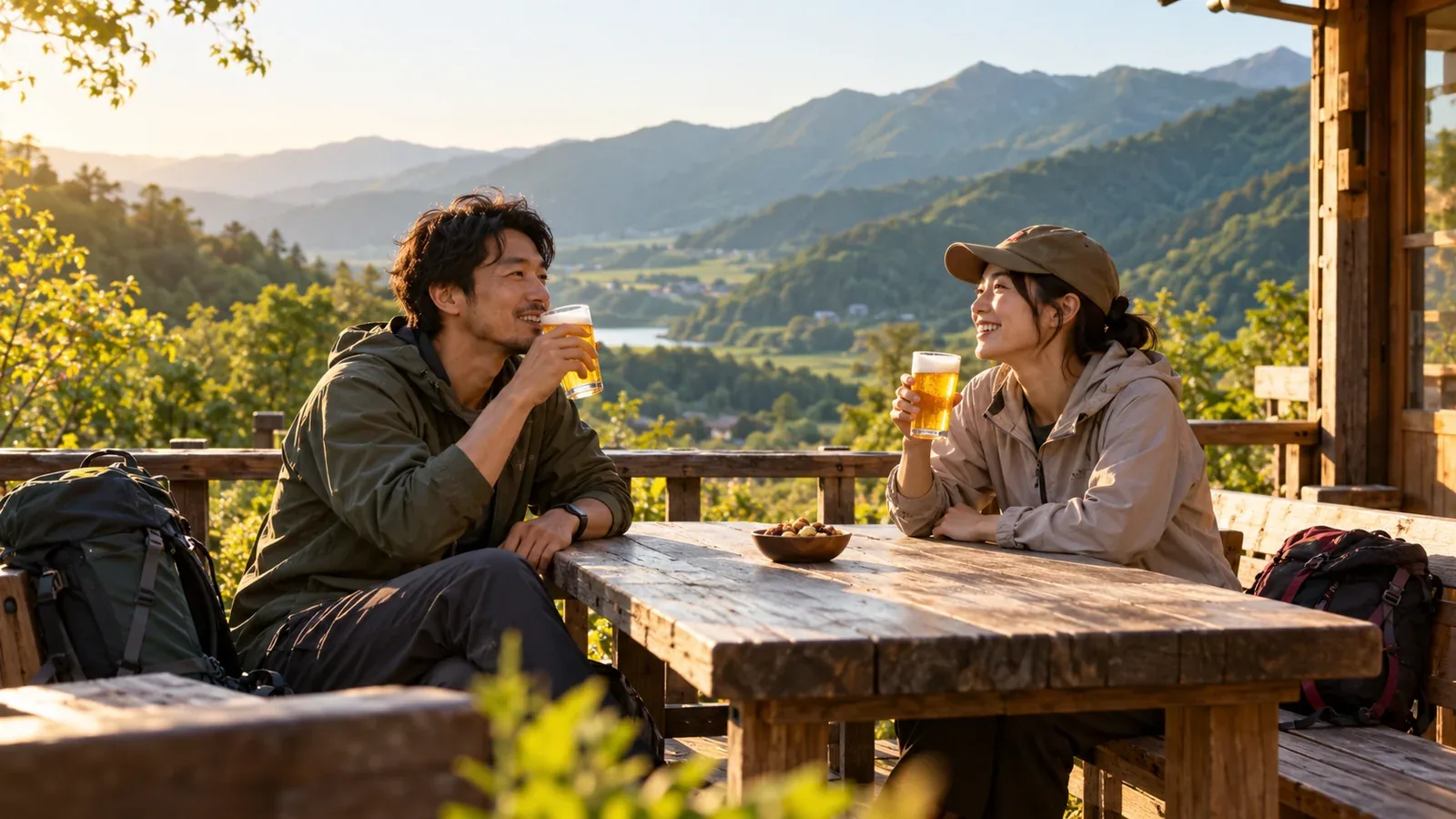
A beer after coming down or a drink at home can be part of the pleasure of a hike. It can feel especially rewarding when you’re tired and happy to have finished. After a day in the mountains, when and how much you drink can affect how you feel tomorrow and what is safe to do.
This article looks at what happens in your body and how to make choices about the evening with tomorrow in mind.
What’s happening in your body after the hike
On a long hike you lose fluid and electrolytes such as sodium and potassium through sweating, breathing and regulating body temperature. Your muscles may need time to recover. It can also take time for digestion and appetite to settle after hard exercise.
Alcohol can make recovery harder. It can increase urination when you already need to replace fluids. It can also disrupt sleep. If you’re cold after a hike, change into dry clothes and warm up without relying on alcohol.
Think about what you need to do before deciding whether to have a drink.
What to do first on the way home
1. Water and food first
Start by replacing fluids, along with carbohydrates and salt as needed. A leftover rice ball or a sports drink from the trailhead can do. If you feel ready to eat, get a light meal at a shop or roadside station.
If you stop at a restaurant or hot spring, order food before choosing a drink. That way you’re less likely to drink on an empty stomach.
2. Keep a bath brief
A hot spring or public bath can be relaxing, but a long soak can make you sweat more and affect blood pressure. Bathe before drinking and avoid the bath after drinking. If you have a condition such as heart disease or high blood pressure, ask your doctor about bathing and alcohol.
3. Drink water alongside alcohol at home
If you choose to drink at home, keep water or a nonalcoholic drink alongside it. In Japan, a glass of water with sake or whisky is sometimes called yawaragi-mizu. You might set out a glass of water when you serve yourself a beer.
How timing and quantity can affect the next day
Avoid drinking right before bed
Alcohol may help you fall asleep faster, but it can interrupt sleep and make you wake earlier. If you want to prioritize sleep, avoid drinking right before bed or choose a nonalcoholic drink.
Take extra care if you’ll hike again tomorrow
On a traverse or a multiday hike, lingering alcohol and poor sleep can affect judgment, balance and stamina. Pay attention to how you feel in huts at high elevation. If you’re walking again in the morning, consider skipping alcohol. Reconsider the plan if you wake up feeling off.
Make time to recover the next day
Muscle soreness may not peak until the following day or later. After heavy drinking, dehydration, poor sleep and muscle soreness can add to fatigue. Leave room in the next day’s schedule, move gently and eat a breakfast that includes protein.
Other ways to celebrate
A craft cola, alcohol-free beer or local juice or milk from a roadside station can mark the end of a hike. Choosing a drink with tomorrow’s plans in mind makes it easier to keep enjoying time in the mountains.
If you plan to hike again next week, choose an evening routine that fits work and daily life.
Three things to consider
If you’re deciding what to drink after coming down, consider these three points.
- Order. Start with water and food. If you want a bath, take it before drinking.
- Amount and timing. Avoid drinking right before bed. Have water between drinks. Water doesn’t make alcohol leave your body faster.
- Tomorrow’s plans. Consider skipping alcohol if you’re hiking in the morning. If you’ll be driving, choose a nonalcoholic drink. Don’t drive if there may still be alcohol in your system the next morning.
Take your condition and tomorrow’s plans into account. A nonalcoholic option can suit an early start or a drive.
After your next hike
Get water or a sports drink first. You can use Nordwand’s hiking log to note how you spent the evening and see what works for you. If you have a health condition or take medication, check with your doctor about alcohol.