
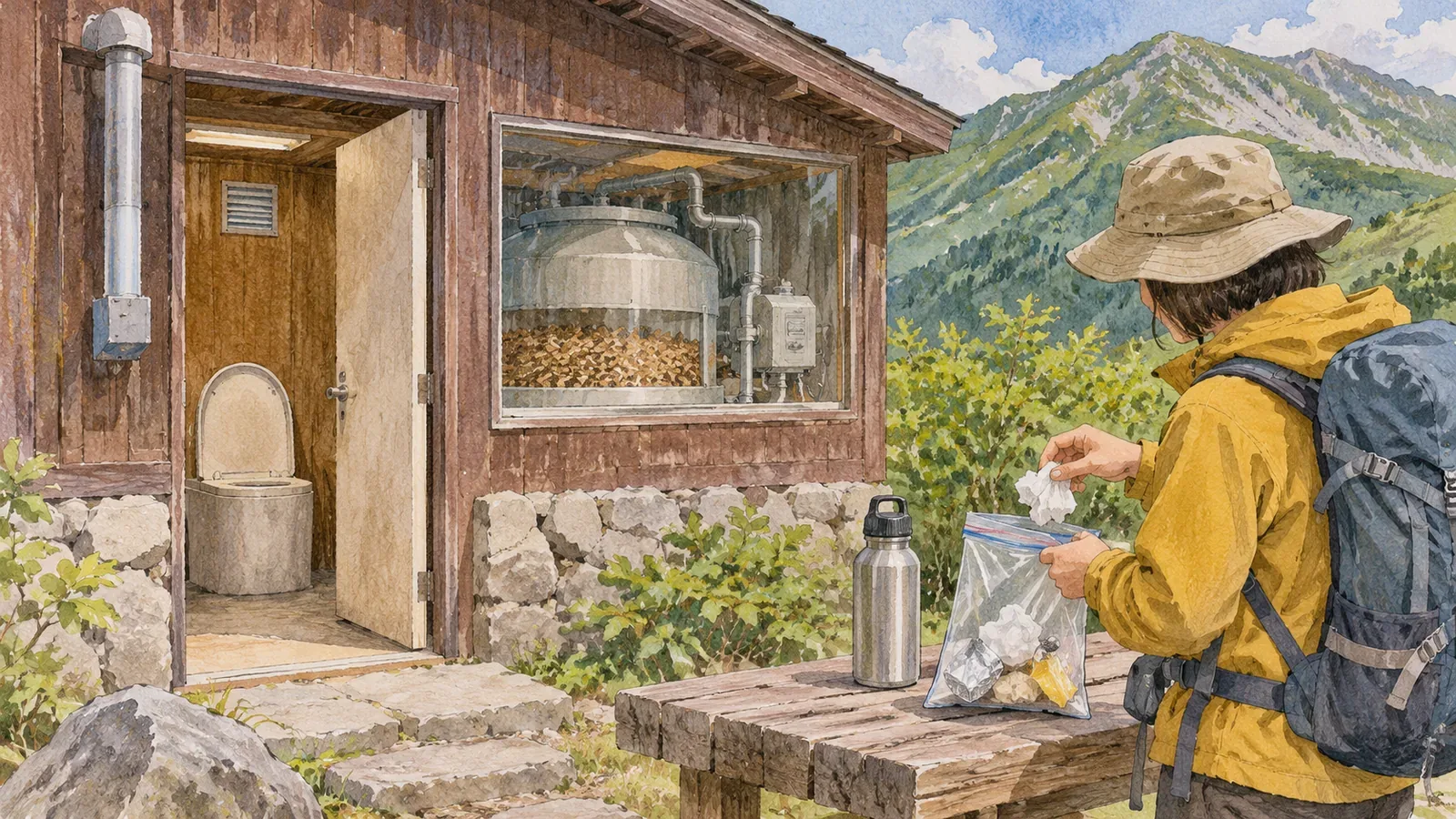
Mountain toilets treat human waste on site or collect it for removal. Rubbish can damage machinery or cause a blockage. A Mount Fuji example shows what happens below the bowl. Follow the signs whenever you use a facility.
Treatment or removal continues below the bowl
A Ministry of the Environment report explains that many mountain toilets once allowed untreated waste to seep into the ground or released it after the season. That caused odours, contaminated water sources and damaged the landscape. A 2022 Ministry ranger diary described the toilets at or above Mount Fuji’s fifth stations at the time, including incinerating and biological systems designed to reduce environmental impact.
The Ministry’s technical guide distinguishes toilets that treat human waste on site, tanks emptied for treatment elsewhere, and portable toilets. At some sites a vacuum truck removes the waste. At others a helicopter flies the cartridge tank to the foot of the mountain and the waste continues by road. Some facilities treat and reuse flushing water. The bowl’s appearance alone tells you little about the system or what it accepts.
After waste passes out of sight, the facility still has to treat it or move it. Each site also has its own rules on toilet paper, so read the signs before using the toilet.
How a bio-toilet works and what can damage it
At the seventh station on Mount Fuji’s Yoshida descent trail, a bio-toilet profiled by the Ministry in 2022 separates solids from urine. Solids go into a treatment tank and urine goes into a separate tank. The treatment tank uses buckwheat husks, a heater to control temperature and a screw to mix in air. This helps aerobic bacteria do their work. According to the report, this facility reduced the amount of waste to 10% or less of the original amount. The residue was taken down for disposal when the medium was replaced or at other scheduled times.
The report explains that foreign objects in the treatment tank can damage machinery, and that sourcing and transporting replacement parts takes work. Urinating while standing in this cubicle sends urine into the solids tank, adding moisture and slowing decomposition. The example shows how the contents and moisture level in the tank affect how well it works.
The Ministry’s 2014 Mount Fuji public toilet guidance prohibited rubbish and warned about damage from foreign objects. The official climbing site still asks hikers to take their rubbish home and use facilities with care. Check each toilet’s signs for what can go in the bowl.
Check where paper and rubbish go
The Ministry’s 2012 guide called for explaining to users why rubbish must stay out of the toilet and where to separate paper when required. Toilet paper, tissues, wrappers and disinfectant wipes may need to go to different places. Put only the designated material in a paper bin.
The 2022 guidance for the seventh station on the Yoshida descent trail directed users to put used toilet paper in a box beside the bowl. Paper can take time to break down and some items, such as certain tissues, break down poorly. Read the signs and handle only the specified paper as directed.
Prepare to pack out rubbish before you leave
Fujisan Club’s 2018 guidance asks climbers to take all their rubbish home, including cigarette butts and food scraps. It also suggests reducing packaging, carrying a rubbish bag and checking for forgotten items before leaving a rest spot. Deciding how you’ll pack out your rubbish before you leave makes it easier to know what to do on the mountain. Ask the local operator about collection and sorting.
Remove unnecessary outer packaging at home and keep what you need to store food or carry drinks. Put the rubbish bag somewhere easy to reach. Take wrappers and wipes back out of the cubicle and put them in your bag. Follow the signs for used toilet paper.
Make your notes at home. To check or update them on the trail, stop somewhere with stable footing where others can pass. If there’s no suitable place, wait until later.
In short — When in doubt, pack it out
Foreign objects in mountain toilets can cause blockages and damage. Check the signs for used toilet paper. By removing unnecessary packaging at home and carrying a bag, you can take anything with you if you’re unsure where it goes. Follow the operator’s latest instructions for collection and sorting.
References and sources
- Ministry of the Environment — Guidance for using public toilets on Mount Fuji (2014)
- Official Mount Fuji Climbing Website — Toilet at the seventh station on the Yoshida descent trail (2022)
- Fujisan Club — How to take your rubbish home from Mount Fuji (2018)
- Ministry of the Environment — Provision and maintenance of mountain hut toilets (Chapter 2)
- Ministry of the Environment — Guide to human waste treatment in toilets in natural areas
- Official Mount Fuji Climbing Website — What to know before climbing Mount Fuji