
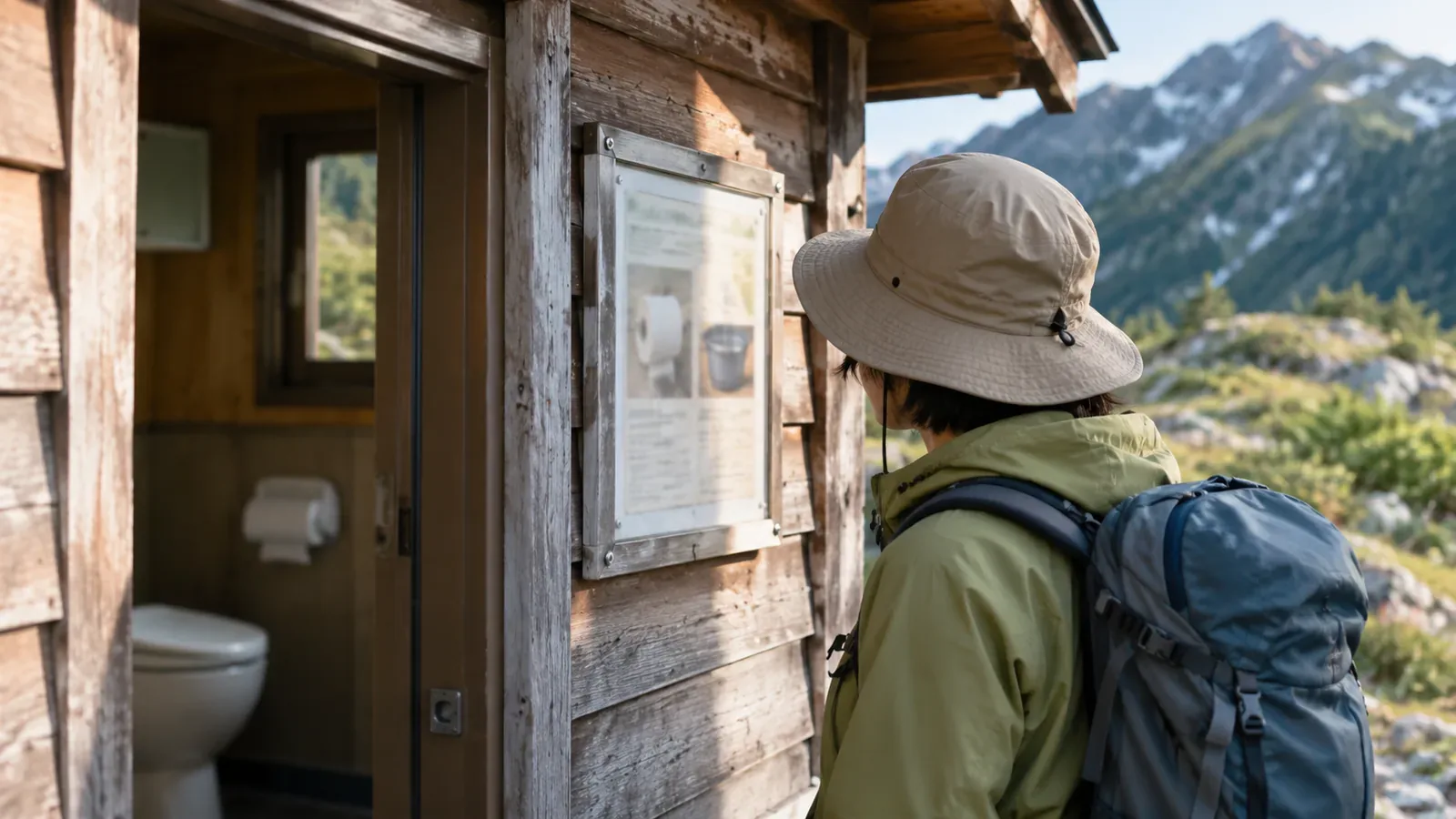
Where used toilet paper goes depends on the mountain toilet. Check the operator’s guidance before leaving and read the sign before you use the toilet. Examples from Mount Fuji and Yakushima show what to look for.
Paper rules depend on the system
Mountain toilets can look alike while treating waste differently. A ministry ranger’s 2022 account of Mount Fuji at or above the fifth stations described incinerating systems that reduce waste to ash and biological systems that break it down with microorganisms. In the ministry’s 2014 notice, two of the three public toilets used biological treatment and one treated and recirculated flush water.
The official Mount Fuji FAQ says toilet paper is generally provided and asks users to follow the instructions at each toilet because systems differ. A flushable label on paper you bring does not tell you whether that facility accepts it. Check where the paper goes, including the paper provided there.
The ministry’s 2012 technical guide says that where paper needs to be separated, operators should explain where it goes and how to keep rubbish out of the system.
The Yoshida seventh station and portable toilet kits
A 2022 ranger’s report says the biological toilet at the seventh station of the Yoshida descent had a box for used toilet paper beside the bowl. The paper was collected and incinerated. When you use a facility, check its current signs.
That toilet separated urine from solids and broke down the solid waste in a chamber with buckwheat hulls. The ranger explained that paper was collected separately at this toilet because it takes time to break down.
With a portable toilet kit, carry out the used bag. Read the product instructions to see whether paper goes in the same bag and how to seal it. Use the designated collection point or follow waste rules where you take it home. Keep the bag and its contents out of regular toilets and take it with you when you leave the stall.
Paper and other waste can disrupt the equipment
The ministry’s guide lists rubbish in holding tanks and incorrect use among the causes of problems. When a toilet clogged at Shintakatsuka Hut on Yakushima in 2019, staff found wet wipes, tissues that do not break down in water, wrappers and other waste. Local guidance called for using only the specified toilet paper and carrying out paper and other items that do not break down readily.
The Mount Fuji ranger explains that when foreign objects damage a machine, finding and transporting parts takes work. The Fujisan Club also asks you to carry out your rubbish, as general waste bins are absent from trails, huts and toilets.
Put paper where the facility tells you to put it. Leave it out of any container whose purpose is unclear.
What to check before leaving and at the facility
For each toilet you might use, note the treatment system, where used paper goes and whether there is a designated collection point for portable toilet bags. Check the guidance from the park, hut, local authority or other operator. Mark anything you cannot verify and check it on site.
Bring supplies according to the guidance for your destination. For example, the Yakushima World Heritage Conservation Center says dedicated portable toilet booths have neither paper nor bins. Bring the paper you need and a bag to carry used items out. Check where collection boxes are located before counting on one at a trailhead.
Before use, read the sign and check whether there is a box for paper. If there are no instructions, ask the operator or hut staff. If you still cannot confirm where it goes, keep the paper out of the bowl and carry it out. Read or record signs from a stable spot without blocking the passage. Wait until you have stopped before taking notes or photos. If there is no suitable spot, make your notes after the hike.
At home, choose one toilet on your route and write a line saying whether the paper goes in the bowl, in a box beside it or comes out with you. Add the source and date you checked. Any gap tells you what to look up before leaving.
Check where the paper goes before use
The Yoshida descent’s seventh-station toilet is an example of a facility that collected paper in a box, while a portable toilet bag goes back with the user. The treatment system affects what to do with the paper. Check the operator’s guidance before leaving and read the signs before use. The example from the seventh station comes from a 2022 account.
References and sources
- Mount Fuji Ranger Diary No. 110: The Toilet on the Yoshida Descent Trail
- Japan Ministry of the Environment: Guide to Toilet Waste Treatment in Natural Areas
- Japan Ministry of the Environment, Kanto Regional Office: 2014 Opening Periods for Public Toilets on Mount Fuji
- Fujisan Club: Carry Out All Your Rubbish When Climbing Mount Fuji
- Official Mount Fuji Climbing Site: Frequently Asked Questions
- Japan Ministry of the Environment, Kyushu Regional Office: Mountain Toilets and Wet Wipes in Yakushima
- Yakushima World Heritage Conservation Center: Using Toilets