
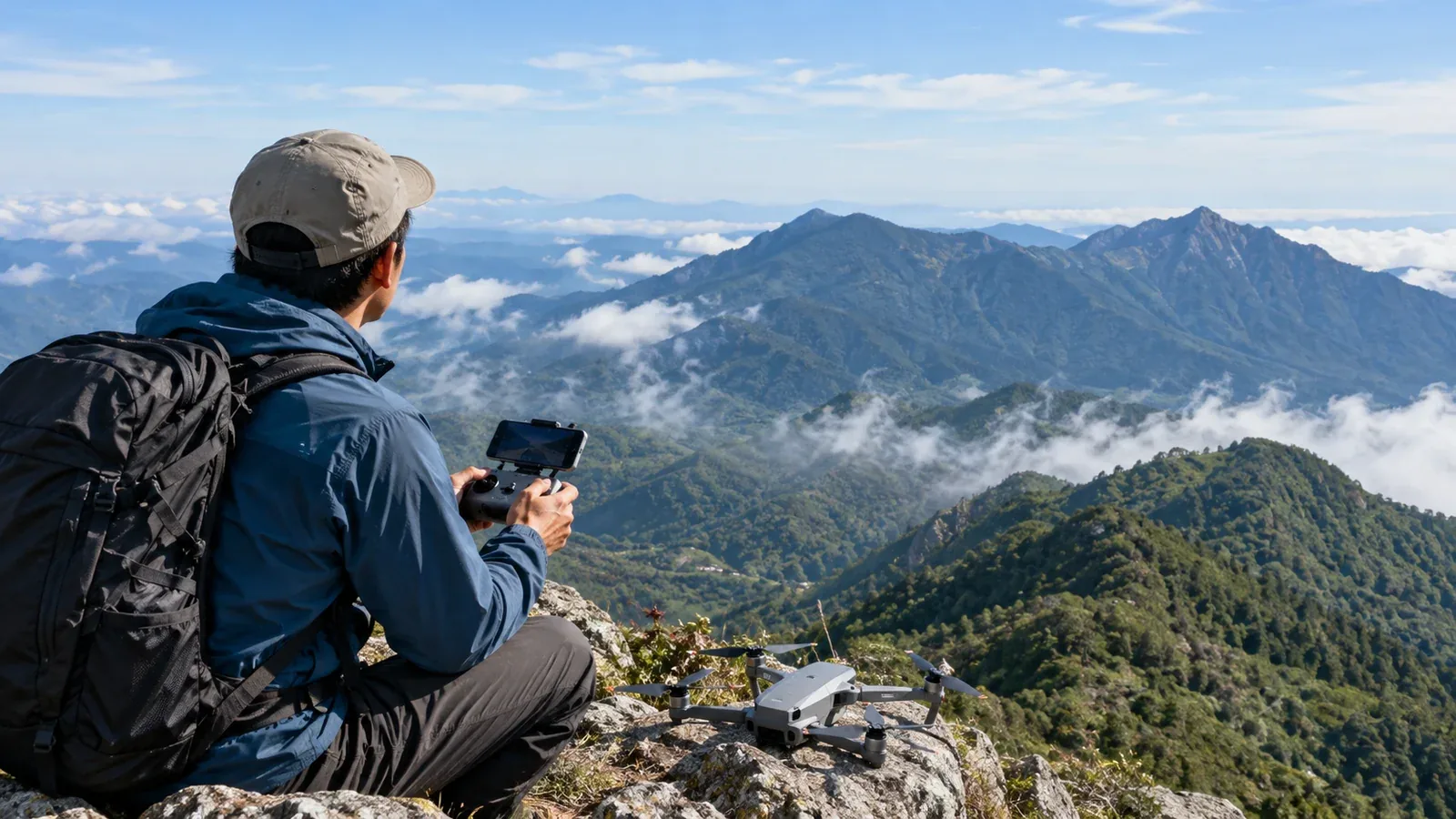
When flying a drone in the mountains, check the airspace, the land you plan to take off from and land on, and the rules of parks or facilities along the way. Find out before you leave whether you can fly at your chosen spot.
This guide shows where to check aviation and other flight restrictions and the rules for places such as national parks and national forests. It also covers taking photos with a phone or camera.
Why mountain drone flights take more planning
In Japan, Civil Aeronautics Act rules on registration and specified flights apply to aircraft that weigh 100 g or more, including the battery. Drones under 100 g are still subject to restrictions in emergency airspace and near designated facilities under the Drone Act. Check transport ministry guidance for registration, permission or approval, and flight plan notification requirements.
Under the Natural Parks Act, flying, taking off or landing a drone in a national park does not in itself require a permit or notice. For photography in a national park, contact the park office in advance and check any local conditions, including restrictions on access.
Land and facility managers such as municipalities, forest offices and mountain huts may set conditions for flights or take-offs and landings. The official Mount Fuji climbing site, for example, asks people to refrain from using drones there.
What to check before you go
1. See whether your route is in a natural park
Use official park maps to check whether your take-off and landing points or the area you want to film are in the park. The trailhead and summit may be in different zones, so check each planned location.
For national parks, consult the environment ministry or the park office. For quasi-national parks, check the relevant prefecture’s official guidance.
2. Tell the park office what you plan to do
For filming in a park, give your filming, take-off and landing locations, dates and purpose to the regional environment office or relevant prefecture or to the park office. Ask early about access restrictions, wildlife and whether the manager’s consent is required.
If you’ll enter a national forest to fly, ask the district forest office about the entry notice or other procedures and where you can take off and land.
3. Check aviation requirements in parallel
Flights near airports, over densely inhabited districts, or 150 m or more above the ground or water directly below the aircraft are specified flights under Japan’s Civil Aeronautics Act. Procedures may also apply to night flights, flights beyond visual line of sight, and flights less than 30 m from uninvolved people or their property. Check emergency airspace notices again right before flying, and keep clear of search and rescue operations.
Use DIPS 2.0 for registration, permission and approval applications and any required flight plan notifications. Check National Police Agency guidance separately for restrictions near important facilities.
4. Ask the site manager about local rules
Ask the owner of the land or the facility manager about take-offs and landings. Depending on the site, contact the municipality, hut operator or shrine well in advance.
Deciding whether to fly on site
Local signs and conditions matter even when you’ve done your research.
- Do not fly if signs prohibit it.
- Do not fly if you cannot meet the conditions of your permission.
- Do not fly if the flight would disturb other hikers or wildlife.
The noise and approach of a drone can affect hikers and wildlife. Keep flights away from crowds, wildlife and rescue operations.
Wind direction and strength can change quickly along ridges and summits. Stay grounded if wind or visibility prevents safe control. If conditions deteriorate in flight, land safely.
Taking photos with a phone or camera
When using a phone or camera, pay attention to posted rules, other hikers’ privacy and the effects of your movements on vegetation.
Photographing other hikers. Ask before publishing photos or video in which someone is identifiable. At a hut or in a shared sleeping area, check the signs or ask staff whether photography is allowed.
Protecting the natural environment. Stay on trails or boardwalks when photographing plants and respect barriers. If you photograph a rare species, keep its exact location private.
Commercial shoots. Setting up equipment or using a facility may require a separate procedure. Explain the purpose and how you’ll shoot to the manager and check in advance.
Keeping up with changing restrictions
Flight restrictions may change when laws or facility designations change. Emergency airspace can be designated in response to disasters or rescue operations. Local rules for filming may also be updated.
Always check current official information before flying. A previous visit or someone else’s social media post can be out of date.
Check before you fly
When planning a shoot, check aviation airspace and flight methods, restrictions around designated facilities, and rules for the park and land you’ll use. Just before flying, check the emergency airspace notices and conditions on site again.
Further reading
- Environment ministry guidance on drones and photography in national parks
- Transport ministry drone flight rules, permissions and DIPS 2.0
- National Police Agency flight restrictions near important facilities
- Forestry Agency entry procedures and official Mount Fuji climbing guidance
References and sources
- Japan Ministry of Land, Infrastructure, Transport and Tourism — Drone flight rules and emergency airspace notices
- Japan Ministry of Land, Infrastructure, Transport and Tourism — Restricted airspace and flight methods
- Japan Ministry of Land, Infrastructure, Transport and Tourism — Drone flight permission and approval procedures
- Japan Ministry of Land, Infrastructure, Transport and Tourism — DIPS 2.0 drone information platform
- Japan National Police Agency — Drone Act and restrictions around designated facilities
- Kanto Regional Environment Office — Drone use in national parks
- Japan Ministry of the Environment — Photography locations and guidance in national parks
- Kanto Regional Forest Office — National forest entry procedures
- Official Mount Fuji Climbing Website — What to know before climbing